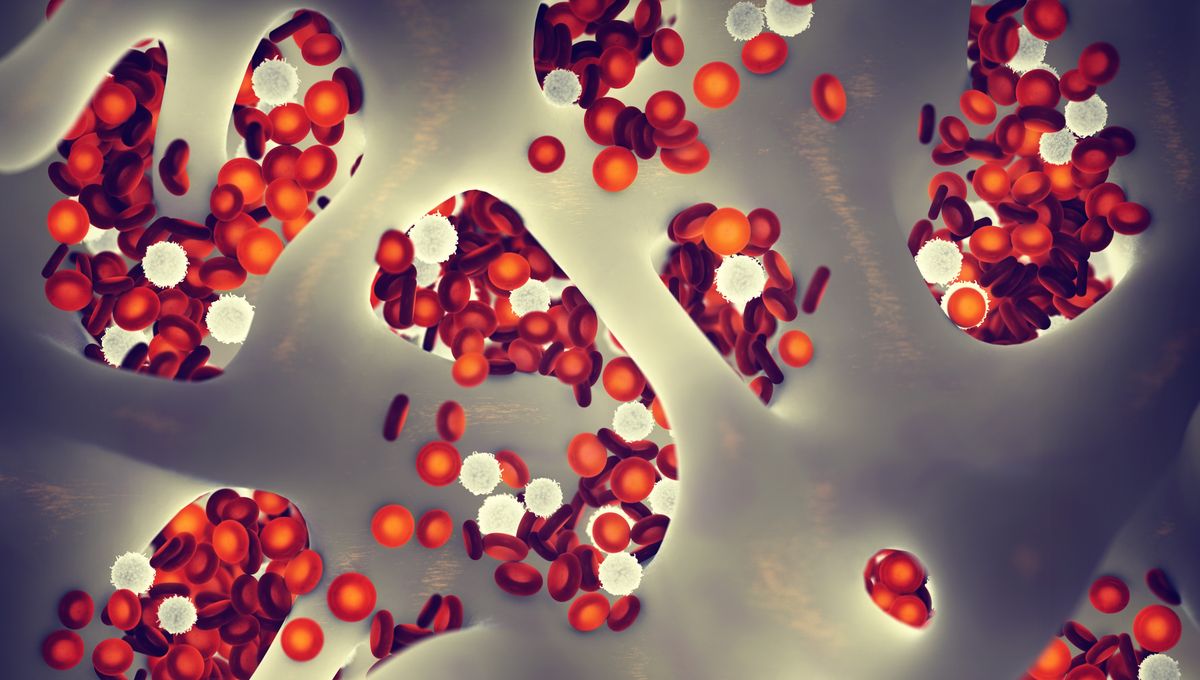
For the seventh time on record, a patient with both HIV and cancer has had the virus eliminated from their body. As in most previous cases, a cure came after the transfer of stem cells designed to address the cancer, rather than the HIV itself. What makes the announcement, coinciding with World AIDS Day, particularly significant is that the donor stem cells appeared less promising than in most previous cases, raising hopes for more frequent replication.
Ever-improving medications mean that HIV infection is no longer the death sentence it once was. Patients in countries with good healthcare systems, or the capacity to afford medication, can live normal-length lives with few, if any, symptoms. Nevertheless, they still have the disease, and the knowledge that if their supply of medication is cut off, as has happened to millions with the defunding of USAID, the risk of developing AIDS becomes very high.
For a tiny, but growing, pool of people, however, HIV infection is something they had, rather than have. In seven cases, this only occurred because the patients also needed to be treated for cancer, in this case, leukemia.
To understand the significance of this event, it’s important to know the history.
The counterintuitive circumstance where having an additional disease leads to a cure for HIV first occurred in 2008 when Timothy Ray Brown, who had lived with HIV for at least 13 years, was given two stem cell transplants for acute myeloid leukemia (AML). Fortunately for Brown, the stem cell donor had a rare mutation in both their versions of the gene that produces the CCR5 receptor, a protein found on the surface of multiple different types of immune cells that can allow HIV to enter them.
People with this mutation (called CCR5 Δ32) have smaller receptors than the rest of the population, making it almost impossible for the virus to get inside the cells it infects. Although it was known that people with the mutation are largely immune to HIV, the fact that bone marrow transplants were sufficient to pass the protection on was a shock. Nevertheless, Brown has remained in remission from HIV ever since.
Before anti-retroviral drugs were available to treat HIV, Brown’s success might have sparked a wave of treatments. However, stem cell transplants are so expensive, painful, and dangerous, the drugs remain a better option for those with HIV alone.
However, when another patient with HIV needed chemotherapy and stem cells for Hodgkin’s lymphoma, a donor with CCR5 Δ32 genes was found. This patient was declared cured in 2020, and similar cases have occurred since.
Finding matching stem cell donors is hard under any circumstances, which is why enormous donor registries are required. Requiring a donor who also has HIV resistance would make the search near impossible. However, in the latest case, the donor carried one copy of the CCR5 Δ32 version of the gene and one normal CCR5 copy. That was thought unlikely to make a difference, since the donor’s cells expressed apparently normal receptors, indicating the CCR5 Δ32 is recessive, in Mendelian terms, as has been thought previously.
The patient, a now 60-year-old man from Berlin known as B2, was diagnosed with HIV in 2009, and started treatment for acute myeloid leukemia in 2015. Six years after B2 stopped taking anti-retroviral drugs, no trace of HIV has been found in his cells.
Naturally, there are a great deal more people with one copy of a rare gene variety than there are with two, so if a single CCR5 Δ32 is enough to offer protection, the pool of protective donors expands dramatically.
Nevertheless, caution is required before assuming this success will be easy to repeat. B2 also has one CCR5 Δ32 gene and one ordinary CCR5 gene. Clearly, the single resistant gene copy was not enough to prevent him from getting infected initially, but whether those with only the common gene variety would experience the same effect is unknown. The current lack of understanding of how a single gene could make such a difference is a major obstacle to knowing whether it would repeat.
In addition to the cases cured through CCR5 Δ32 transplants, claims have been made that one patient has been cured through a combination of drug treatments alone, but this remains controversial.
However, one other patient has been declared cured after a stem cell transplant, but from a donor without the CCR5 Δ32 gene. With the mechanism in that case also not understood, it’s possible that B2 experienced something similar, and the single CCR5 Δ32 copy was a red herring.
The study is published in Nature, along with two others on HIV advances. One describes using combination immunotherapy on 10 people with HIV. For seven of them, while not eliminating the virus entirely, the immunotherapy kept their viral levels low after ceasing anti-retroviral therapy. The other offered clues regarding how to identify factors that might make future combination immunotherapies more effective.

Source Link: 7th Person Cured Of HIV After Stem Cell Donation Offers Hope Of Expanded Treatment Options
