


The Surinam toad (Pipa pipa) doesn’t look like much. Flattened and brownish, you’d be forgiven for mistaking it for a squashed overripe fruit, but something remarkable happens when the time comes to reproduce. Something a lot of people find pretty horrifying.
The rest of this article is behind a paywall. Please sign in or subscribe to access the full content.
Male Surinam toads will lure in females by clicking their hyoid bone, creating a metallic sound she finds irresistible. Once in reach, he’ll grasp her in amplexus (something these amphibians are famously unselective about) and they’ll both swell up until their cloacas are touching. The fertilized eggs are then implanted into the female’s back, and this is where things get nasty.
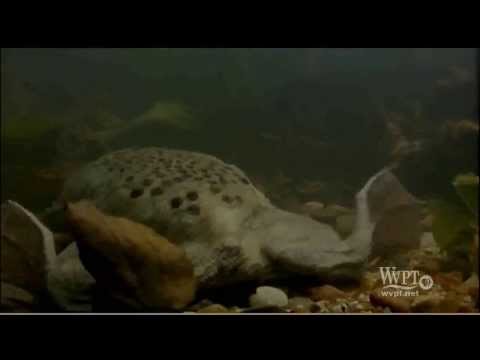
Surinam toad birth
The offspring develop into tadpoles within the mother’s back, but they don’t emerge. That doesn’t occur until they are fully developed toadlets, at which point they will push their way out of her skin, creating a mosaic of honeycomb-like pockets across her back.
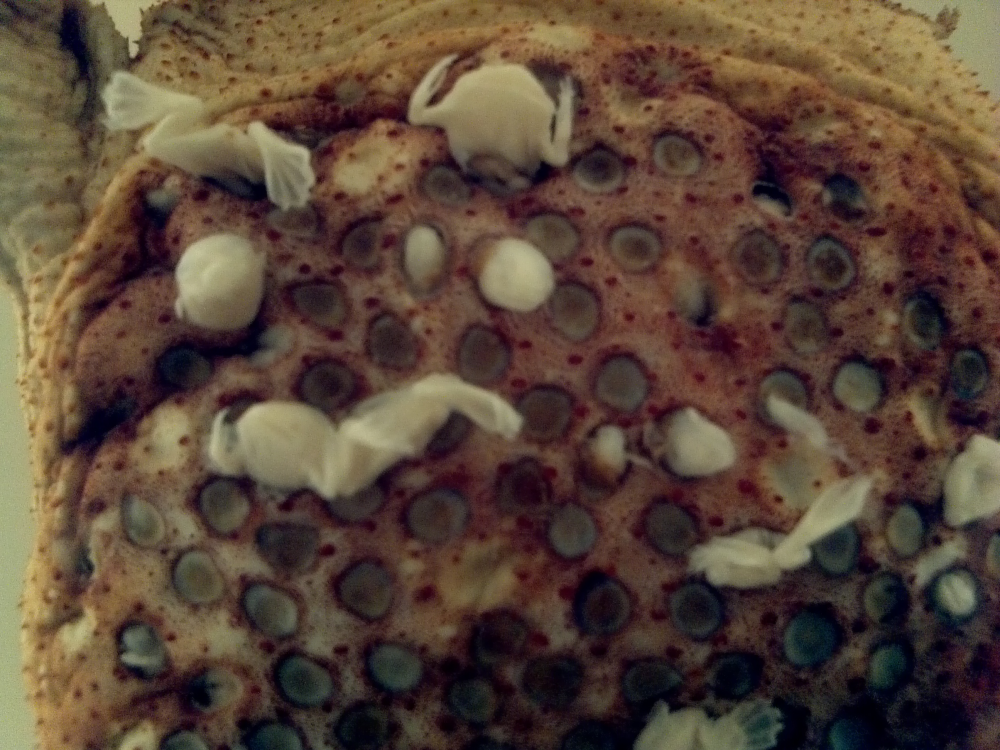
Feeling intense disgust or fear? You could have trypophobia.
If the above image doesn’t have your shoulders by your ears, then congratulations. It seems you are immune to a common condition that makes the Surinam toad pure nightmare fuel for a lot of people.
Trypophobia: fear, or reaction?
The aversion taps into what’s known as trypophobia: a pathological dislike of clusters of holes, or things that look like holes. The symptoms and severity vary, but it generally brings on an intense sense of disgust or fear when faced with anything that has lots of holes in it.
Lotus roots, sponges, honeycomb, or – yes – the pockmarked back of a water-dwelling toad are all it takes to trigger a person with trypophobia. Despite the name, it’s considered a reaction rather than a fear. It’s thought to affect around 10 to 18 percent of people, and could be an adaptive response to avoid parasites.

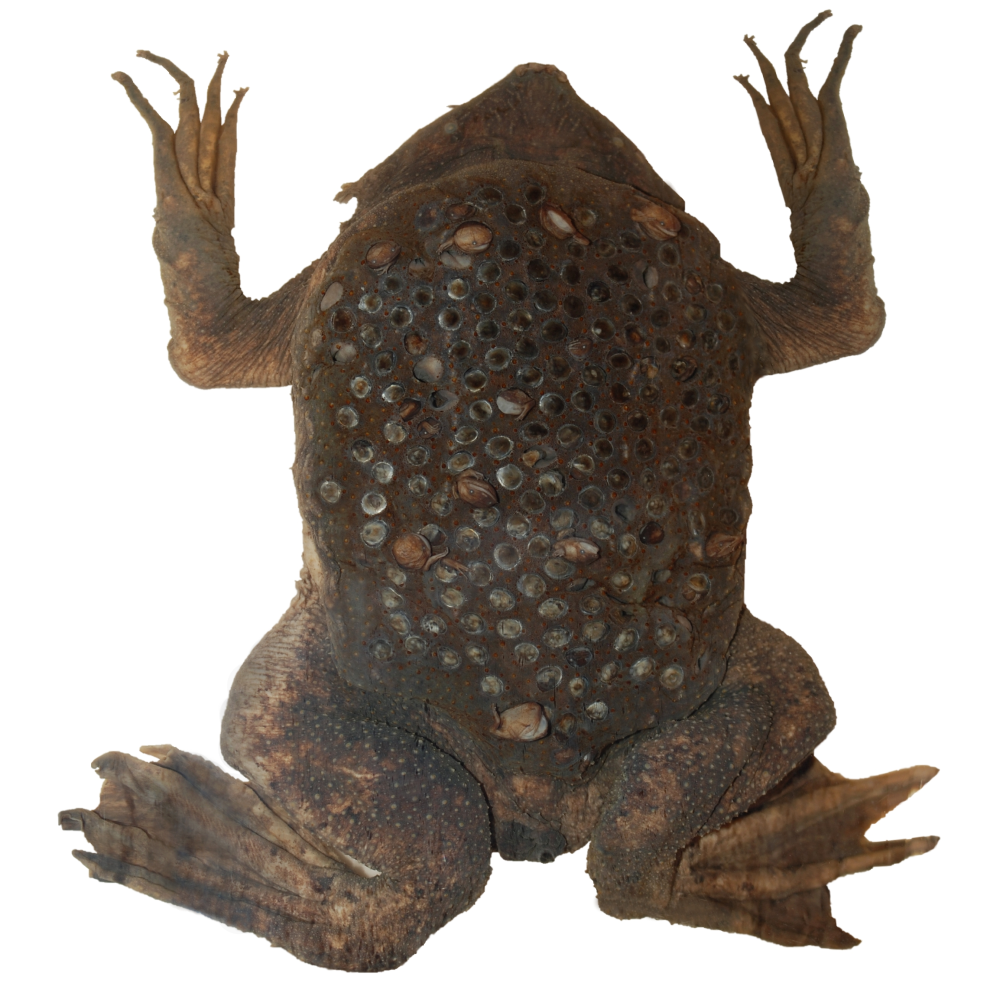
The spotted back of a female Surinam toad may trigger a kind of ectoparasite defense in humans.
“In addition to aversions towards harmless clusters such as bubbles, individuals with trypophobia typically report strong aversion to clusters resembling parasites and infectious disease, such as a cluster of ticks, suggesting that the condition might be an overgeneralized response to cues to the presence of ectoparasites and infectious disease,” wrote the authors of a 2018 study into human ectoparasite defense. “Recent research showed that, in contrast to most phobias—which predominantly involve fear—the aversion towards clusters predominantly involves disgust.”
“Moreover, although many individuals described prototypical disgust feelings such as nausea, the most commonly described feelings were skin sensations including itching, crawling and the feeling as if ‘bugs’ were on the skin[…] Although these sensations resemble those of delusional parasitosis, individuals with trypophobia do not believe that they are infested, but rather feel as if they are infested when they encounter cluster patterns.”
So, it’s possible that for some people, just looking at the gaping holes on the back of the Surinam toad is enough to make them feel like they are infected with some kind of skin-crawling parasite. This could be a beneficial response in making you less likely to touch things that could get under your skin, but it doesn’t affect us all. Just check out this account from one brave scientist who volunteered to be parasitized by 50 hookworms for science.


Source Link: A Common Condition Makes The Surinam Toad Pure Nightmare Fuel For Some People