Hundreds of animals were recently discovered at the bottom of the eastern Pacific, but that was before a deep-sea mining operation churned through the seabed. Once the machinery arrived, biodiversity in this alien-like world dropped by roughly a third.
Parts of the seabed are loaded with critical metals vital for batteries and other technologies driving the “green transition” away from fossil fuels. With skyrocketing demand across the world, several countries are eyeing the deep ocean as the next frontier for resource extraction.
Deep-sea mining uses enormous ships to lower heavy machinery to the abyss, where it grinds across the seabed, scraping off the top layer of sediment to collect polymetallic nodules containing manganese, nickel, cobalt, and other much-needed minerals. The material is then pumped back to the surface, along with whatever life gets caught in its path.
The payoff could be immense, but so could the damage. A growing body of evidence is showing that deep-sea mining could be catastrophic for the unique and undiscovered biodiversity that inhabits the seafloor, one of the least explored places on Earth.
To investigate these risks, an international team of scientists recently studied a major test site for a commercial mining machine in the Clarion-Clipperton Zone of the eastern Pacific Ocean, at a depth of 4,280 meters (14,041 feet).

Who’s this handsome little thing? Imaging an abyssal worm at sea.
Image credit: Natural History Museum & University of Gothenburg
Mining broke ground here in 2022, but researchers monitored the area for two years beforehand and continued for two months after operations started.
Before the machinery arrived, the seabed was brimming with animal life, despite the absence of light and a severe lack of nutrients. The team collected over 4,350 animals larger than 0.3 millimeters, namely marine worms, crustaceans, and mollusks. This totalled 788 different species, many of which have never been identified by science before.
“Many new species have been found during the study which are now being described, and we are ensuring that these data and specimens will be available for future study by all stakeholders,” Dr Tammy Horton, co-lead of the project and researcher at the National Oceanography Centre, said in a statement.
After the mining had shredded up the seabed, the change was stark. Animal numbers dropped by 37 percent within the machine’s tracks, while species diversity fell by 32 percent.
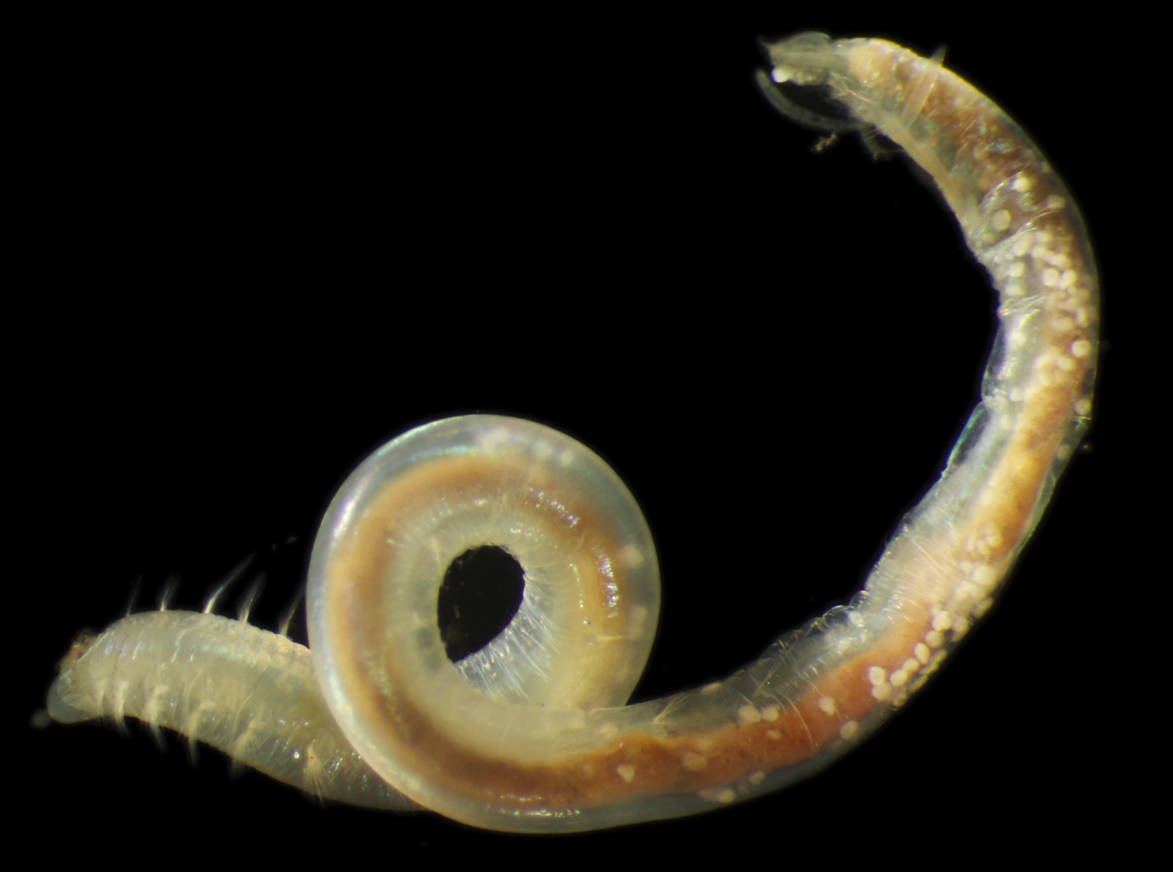
Another handsome guy: Abyssal polychaete worm.
Image credit: Natural History Museum & University of Gothenburg
“Being able to study these remote and poorly known deep-sea regions is extremely important as we consider the potential impacts of deep-sea mining. Finally, we have good data on what the impacts of a modern commercial deep-sea mining machine might be. We have also discovered many new species and shown how the abyssal ecosystem changes naturally over time,” continued Eva Stewart, lead author and PhD student at the Natural History Museum, London and University of Southampton.
“Now it is important to try to predict the potential for biodiversity loss caused by mining. This will require us to survey and undertake taxonomic works in the regions set up by the [International Seabed Authority] as large, protected areas across the [Clarion-Clipperton Zone]. Currently, we have no idea, for the most part, of what lives in them and thus what the risk is of biodiversity loss is in the potential mined regions,” explained Dr Adrian Glover, deep sea scientist at the Natural History Museum, London and senior author.
The study is published in the journal Nature Ecology & Evolution.

Source Link: A Deep-Sea Mining Test Carved Up The Seabed. Two Years On, We're Seeing Devastating Impacts
