You’d think after centuries of cracking open humans and taking a poke around inside we’d have discovered every organ there is to be found in there, but you’d be wrong. In fact, they seem to be popping up all the time.
In 2018, researchers discovered the largest organ in the body, interconnected fluid-filled sacs that run through the collagen and elastin structures in the areas beneath our skin and between other organs and tissues in our bodies. Well, wouldn’t you know it, scientists have just found another new organ inside us. It’s getting pretty crowded in here.
Oncologists at the Netherlands Cancer Institute were using a new kind of scan as part of their research into patients with head and neck cancer. They used positron emission tomography/computed tomography with prostate-specific membrane antigen ligands (PSMA PET/CT) scans, which have been shown to be an effective way of tracking the spread of prostate cancer around the body. Patients are injected with radioactive glucose before the scan, which highlights tumors within the patient by glowing brightly.
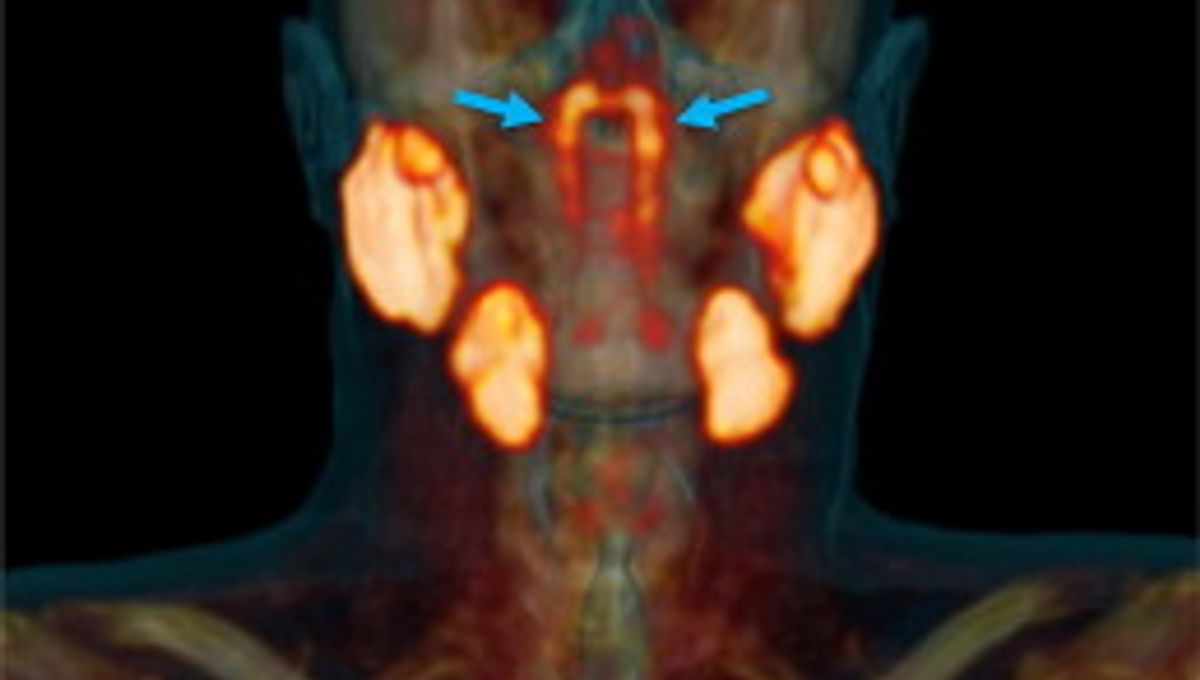
While using this scan on patients, however, the team noticed two areas in the head unexpectedly lit up. As they kept scanning patients, they kept finding the same area lighting up. It turned out all 100 people scanned had bright spots. It wasn’t an anomaly, it was potentially an entirely new organ.
The new discovery, described in the journal Radiotherapy and Oncology, is a set of salivary glands – predominantly mucous glands with multiple draining ducts – positioned in the back of the nasopharynx.
“People have three sets of large salivary glands, but not there,” study author and radiation oncologist Wouter Vogel explained in a statement. “As far as we knew, the only salivary or mucous glands in the nasopharynx are microscopically small, and up to 1000 are evenly spread out throughout the mucosa. So, imagine our surprise when we found these.”
A closer look at the new organ. Valstar et al., Radiotherapy and Oncology, 2020
The team confirmed their findings with colleagues at Amsterdam UMC using cadavers, and have now termed humanity’s newest organ “tubarial glands,” referring to their location. They posit the glands could be a cause of complications for patients undergoing radiation, including dysphagia (trouble swallowing), and knowing about them could help oncologists avoid this area to prevent potential complications.
“Radiation therapy can damage the salivary glands, which may lead to complications,” Vogel explained. “Patients may have trouble eating, swallowing, or speaking, which can be a real burden.”
The team looked at 723 patients who had undergone radiation treatment in this area and discovered that the more radiation that is delivered to the area containing the tubarial glands, the more complications the patients experienced following therapy. This is actually pretty good news going forward.
“For most patients, it should technically be possible to avoid delivering radiation to this newly discovered location of the salivary gland system in the same way we try to spare known glands,” Vogel said.
“Our next step is to find out how we can best spare these new glands and in which patients. If we can do this, patients may experience less side effects which will benefit their overall quality of life after treatment.”

Source Link: A Strange Anomaly On Scans Turned Out To Be An Entirely New Organ, Hidden Within Your Face
