Stimulant drugs that are widely used in the treatment of attention-deficit/hyperactivity disorder (ADHD) have a different mechanism of action than scientists thought. New data reveals these drugs primarily act on the brain’s reward and wakefulness areas, rather than the regions specifically focused on attention as had previously been assumed.
ADHD is an increasingly common diagnosis, and many patients – kids and adults alike – find medication to be a helpful tool in managing their symptoms. An estimated 3.5 million children aged 3-17 take one of these medications in the US alone.
“I prescribe a lot of stimulants as a child neurologist, and I’ve always been taught that they facilitate attention systems to give people more voluntary control over what they pay attention to,” said assistant professor of neurology Benjamin Kay, MD, PhD, in a statement.
However, a new study from Kay and coauthors is casting doubt on this long-held presumption.
The team, led by researchers at Washington University School of Medicine in St. Louis, examined brain imaging data from almost 6,000 children included in the Adolescent Brain Cognitive Development (ABCD) Study, a long-term neurodevelopmental study taking place across multiple centers nationwide.
The data comprised functional magnetic resonance imaging (fMRI) scans, which allowed the team to compare patterns of brain connectivity between children who had taken a stimulant drug on the day of their scan and those who had not.
The results were then validated with an experiment involving five adults who did not normally use stimulant medications and did not have ADHD diagnoses themselves. These adults had their brains scanned before and after taking a dose of methylphenidate, the active ingredient in Ritalin.
What the team saw in both the children and adults were changes in brain connectivity in the wakefulness and reward centers of the brain, activated by the medication – not, as might have been expected, the attention centers.
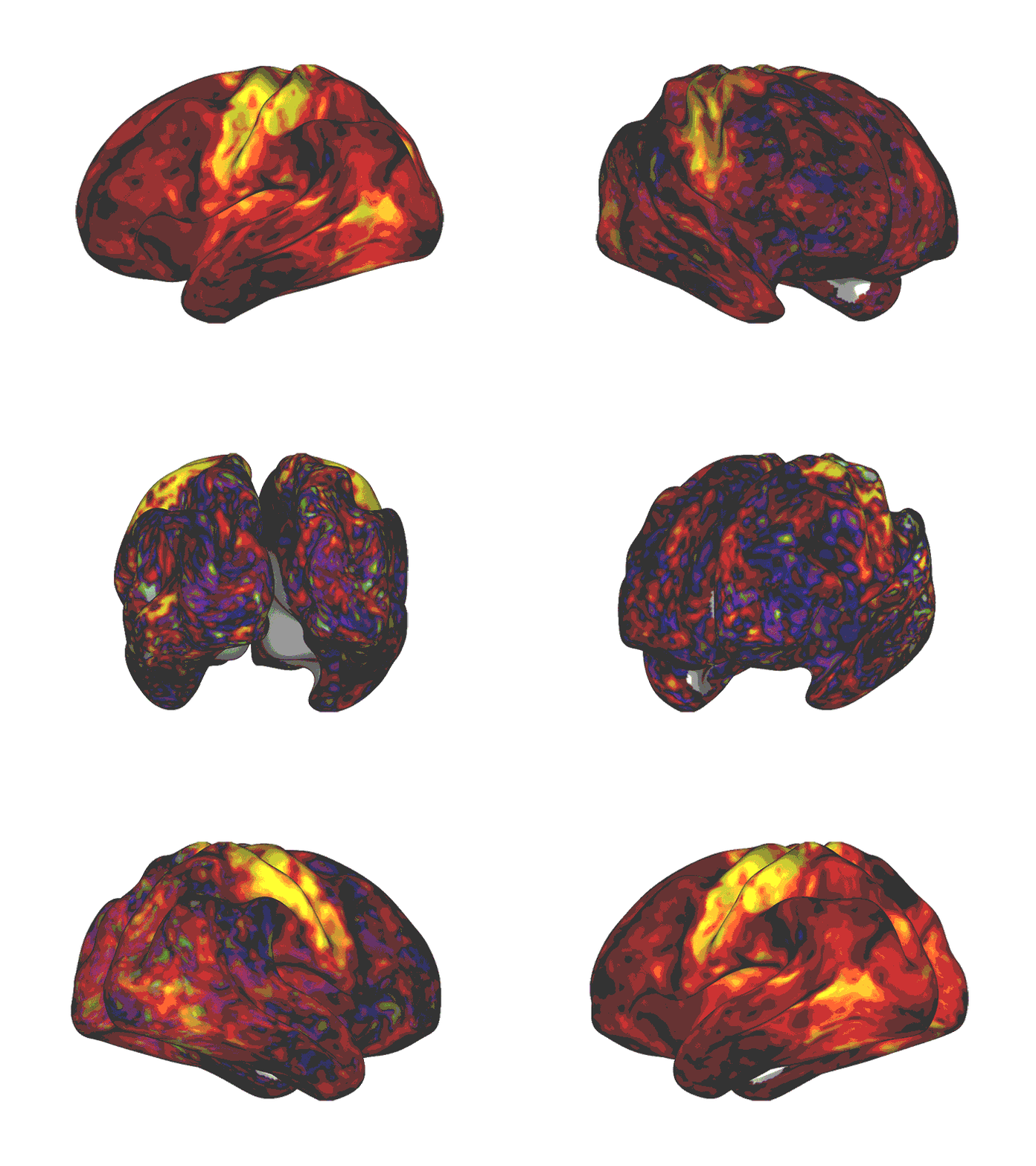
Brain areas highlighted in yellow and orange were activated by the stimulant drugs. These are regions associated with wakefulness and reward.
Image credit: Benjamin Kay
Kay explained that “the improvement we observe in attention is a secondary effect of a child being more alert and finding a task more rewarding, which naturally helps them pay more attention to it.”
“These results also provide a potential explanation for how stimulants treat hyperactivity, which previously seemed paradoxical,” added coauthor and professor of neurology Nico U. Dosenbach, MD, PhD. Although drugs like Ritalin are often misused by those who think of them as “study” or “smart” drugs, it’s a confusing reality that these medications cause people without ADHD to become overstimulated, erratic, and less able to focus – whereas they have pretty much the opposite effect when used in ADHD treatment.
“Whatever kids can’t focus on – those tasks that make them fidgety – are tasks that they find unrewarding. On a stimulant, they can sit still better because they’re not getting up to find something better to do,” said Dosenbach.
Further research revealed that the children with the most severe ADHD symptoms showed the greatest improvements in cognitive test scores after taking the medications. Prescription meds could also counteract the effects of not getting enough sleep in the kids with ADHD, but not in neurotypical kids (who were taking the drugs for unrelated reasons). This is important to note, because people with ADHD often experience sleep disorders as well.
“We saw that if a participant didn’t sleep enough, but they took a stimulant, the brain signature of insufficient sleep was erased, as were the associated behavioral and cognitive decrements,” said Dosenbach.
This is not actually great news, Kay explained, as the effects of sleep deprivation may be masked by medication, meaning that kids are still at risk of long-term health consequences from chronic sleeplessness.
“Not getting enough sleep is always bad for you, and it’s especially bad for kids,” Kay said, urging healthcare providers seeing children with ADHD to consider sleep as a factor in their treatment plans.
Some recent research suggests that up to 25 percent of US adults believe they may have ADHD. As awareness of neurodiversity increases and more people seek diagnosis and treatment, improving scientific understanding of how these treatments work can only be a good thing.
The study is published in the journal Cell.

Source Link: ADHD Meds Used By Millions Of Kids And Adults Don’t Work The Way We Thought They Did
