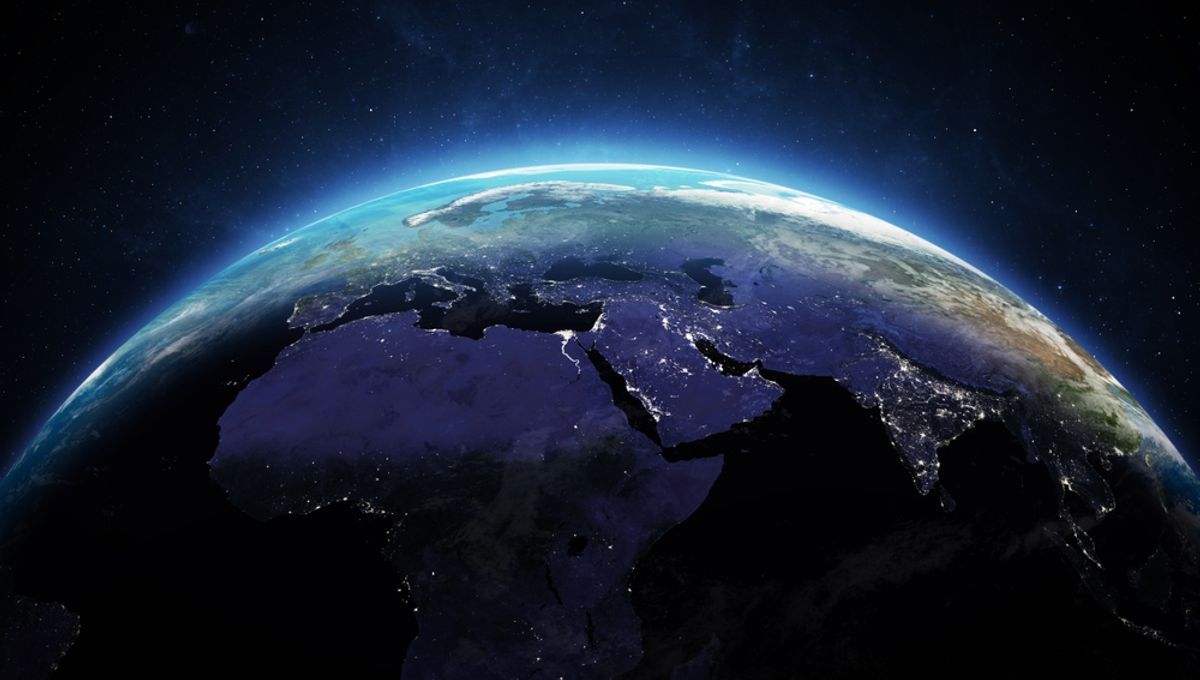
Africa is gradually splitting in two. As with most geological processes, it unfolds at a glacial pace over millions of years, but in time it could cause part of East Africa to break away from the rest of the continent, likely giving rise to a new ocean between the two landmasses.
The rest of this article is behind a paywall. Please sign in or subscribe to access the full content.
This vast breakup is linked to the East African Rift System (EARS), one of the world’s largest rift zones, which runs for thousands of kilometers through multiple African countries, including Ethiopia, Kenya, the Democratic Republic of the Congo, Uganda, Rwanda, Burundi, Zambia, Tanzania, Malawi, and Mozambique.
This rift system means that the African plate is splitting into two – the smaller Somalian plate and the larger Nubian plate – that are pulling away from each other at a super-sluggish snail’s pace of millimeters per year, according to a 2004 study.
Back in 2018, news of a crack emerging in Kenya went viral, with many claiming that this was evidence of Africa snapping in two before our eyes. While this startling scene was related to the EARS, it’s a bit misleading to present it as live evidence of Africa’s great split-up.
As IFLScience previously pointed out, this was likely just a highly localized expression of the valley’s regular rifting activity. The EARS has been in this current process for around 25 million years and the crack in Kenya was an indirect whisper of what’s occurring on the continent.
However, in another 5 million to 10 million years, changes in the EARS could result in a drastically different-looking world. Around this timeframe, we are likely to see a new ocean form between the Somalian plate and the Nubian plate. The great continent of Africa will lose its eastern shoulder and a vast sea will cut off East Africa.
As strange as this may seem, it’s worth remembering that Earth’s surface is in a constant state of flux; it’s just so slow that human experience can’t account for it.
The appearance of the world as we know it is relatively new. The land and sea we see today – of Eurasia, the Americas, Africa, Antarctica, and Oceania – are the product of vast tectonic plates that slot together like a jigsaw puzzle. Very slowly, however, these jigsaw pieces move around on a timescale of millions of years.
Just think of the split-up that the Earth saw around 138 million years ago when South America and Africa divided. If you look at the west coast of Africa and the east coast of South America, you’ll notice they fit together like two jigsaw pieces, beautifully highlighting how these continents were once joined as one.
The departure of East Africa will simply be another chapter in this vast geological storybook. Who knows whether humanity will be around to see any of these changes, but it doesn’t look too hopeful.
A previous version of this article was published in March 2023.

Source Link: Africa Is Splitting Into Two Continents And A Vast New Ocean Could Eventually Open Up
