• Email Us: [email protected]
  • Contact Us: +1 718 874 1545
  • Skip to main content
  • Skip to primary sidebar

Medical Market Report

  • Home
  • All Reports
  • About Us
  • Contact Us

Alaska Saw More Wildfires In The Last Century Than In The Previous 3,000 Years

December 24, 2025 by Deborah Bloomfield

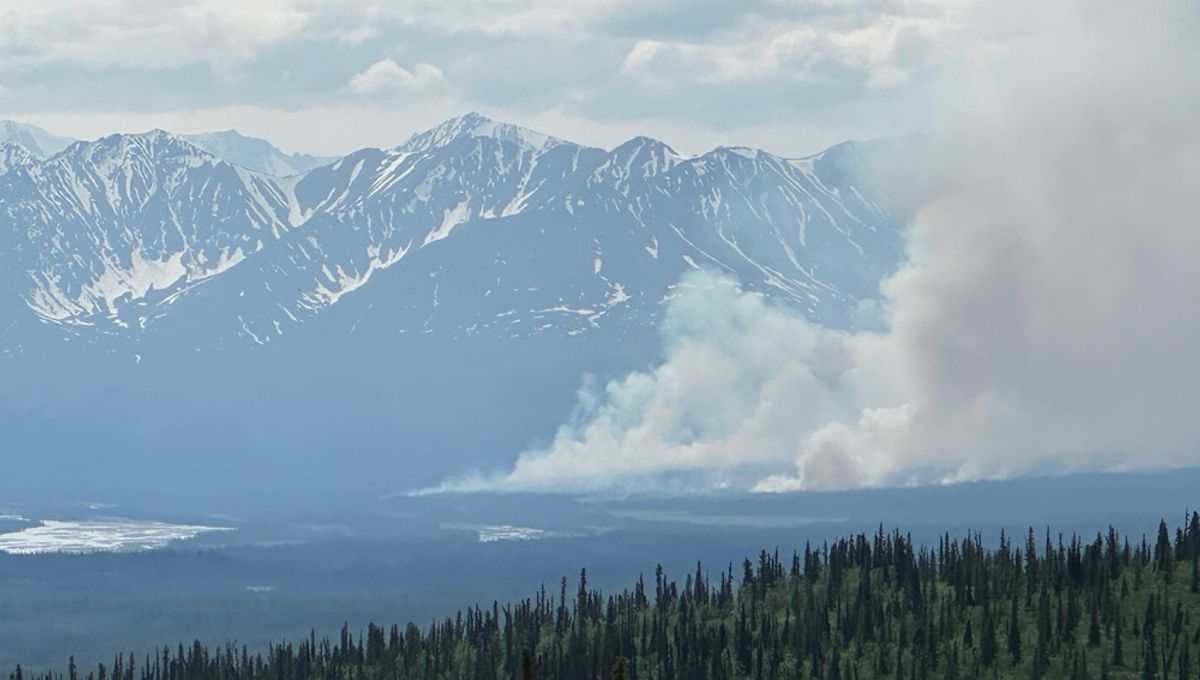
Alaska is perhaps better known for snow and ice than it is fire. But new research shows the Last Frontier has been hit by more wildfires over the last century than at any other time since the rule of Ramses the Great.

The rest of this article is behind a paywall. Please sign in or subscribe to access the full content.

The study’s authors put this down to the impact of global warming, which is causing soil dry out and woody plants to proliferate, providing the perfect conditions for wildfires to flourish. This suggests the recent spurt of wildfires are not an anomaly but a sign of things to come. 

“The interlinked changes across millennia mean recent fires are indicators of a system undergoing rapid transformation,” lead author Angelica Feurdean, a senior researcher at Goethe University, Germany, said in a press release. 

Feurdean and co came to this conclusion after reconstructing 3,000 years of fire history in Alaska’s permafrost. 

Recent satellite data has already shown the number, size and intensity of wildfires have increased in Alaska over recent decades, as has the length of the fire season, but this only paints part of the picture. To understand the wider context, the team dug into the earth and collected nine 20-inch (50-centimeter) core samples. The peat contained within these samples store charcoal, pollen, microbes and plant fossils, some as far back as 1000CE, providing a kind of geological time capsule up to 2015 (when the samples were collected). 

Charcoal, vegetation and hydrological records show that aside from a (geologically) brief interlude of two hundred years between 1000 CE and 1200 CE, fire activity remained relatively low for 2,900 years, from 1000 BCE to 1900 CE. It was only at the turn of the twentieth century that the tide turned and fire activity trended upwards, reaching record levels by the midcentury. It has continued to climb upwards ever since – a finding that correlates with satellite data showing 36 fires occurred in the region between 1969 and 2023. 

Notably, the researchers observe that recent large fires have coincided with lower charcoal levels. This “may be indicative of these fires burning hotter, consuming more fuel and leaving behind less charcoal,” co-author Randy Fulweber, geographic information systems and remote sensing manager at University of Alaska Fairbanks (UAF) Toolik Field Station, said in a press release. 

Adding, “It may suggest a shifting fire regime, one in which fires are really burning hot.”

The study is published in the journal Biogeosciences.

Deborah Bloomfield
Deborah Bloomfield

Related posts:

  1. Hai Robotics picks up $200M for its warehouse robot
  2. Garcia jumps back into action after Ryder Cup letdown
  3. Nuclear Football: Who Actually Has The Nuclear Launch Codes?
  4. 87 Satellites Sent To Space In The Last 24 Hours – Space Is Becoming Ever More Crowded

Source Link: Alaska Saw More Wildfires In The Last Century Than In The Previous 3,000 Years

Filed Under: News

Primary Sidebar

  • US Just Killed NASA’s Mars Sample Return Mission – So What Happens Now?
  • Art Sleuths May Have Recovered Traces Of Da Vinci’s DNA From One Of His Drawings
  • Countries With The Most Narcissists Identified By 45,000-Person Study, And The Results Might Surprise You
  • World’s Oldest Poison Arrows Were Used By Hunters 60,000 Years Ago
  • The Real Reason You Shouldn’t Eat (Most) Raw Cookie Dough
  • Antarctic Scientists Have Just Moved The South Pole – Literally
  • “What We Have Is A Very Good Candidate”: Has The Ancestor Of Homo Sapiens Finally Been Found In Africa?
  • Europe’s Missing Ceratopsian Dinosaurs Have Been Found And They’re Quite Diverse
  • Why Don’t Snorers Wake Themselves Up?
  • Endangered “Northern Native Cat” Captured On Camera For The First Time In 80 Years At Australian Sanctuary
  • Watch 25 Years Of A Supernova Expanding Into Space Squeezed Into This 40-Second NASA Video
  • “Diet Stacking” Trend Could Be Seriously Bad For Your Health
  • Meet The Psychedelic Earth Tiger, A Funky Addition To “10 Species To Watch” In 2026
  • The Weird Mystery Of The “Einstein Desert” In The Hunt For Rogue Planets
  • NASA Astronaut Charles Duke Left A Touching Photograph And Message On The Moon In 1972
  • How Multilingual Are You? This New Language Calculator Lets You Find Out In A Minute
  • Europa’s Seabed Might Be Too Quiet For Life: “The Energy Just Doesn’t Seem To Be There”
  • Amoebae: The Microscopic Health Threat Lurking In Our Water Supplies. Are We Taking Them Seriously?
  • The Last Dogs In Antarctica Were Kicked Out In April 1994 By An International Treaty
  • Interstellar Comet 3I/ATLAS Snapped By NASA’s Europa Mission: “We’re Still Scratching Our Heads About Some Of The Things We’re Seeing”
  • Business
  • Health
  • News
  • Science
  • Technology
  • +1 718 874 1545
  • +91 78878 22626
  • [email protected]
Office Address
Prudour Pvt. Ltd. 420 Lexington Avenue Suite 300 New York City, NY 10170.

Powered by Prudour Network

Copyrights © 2026 · Medical Market Report. All Rights Reserved.

Go to mobile version