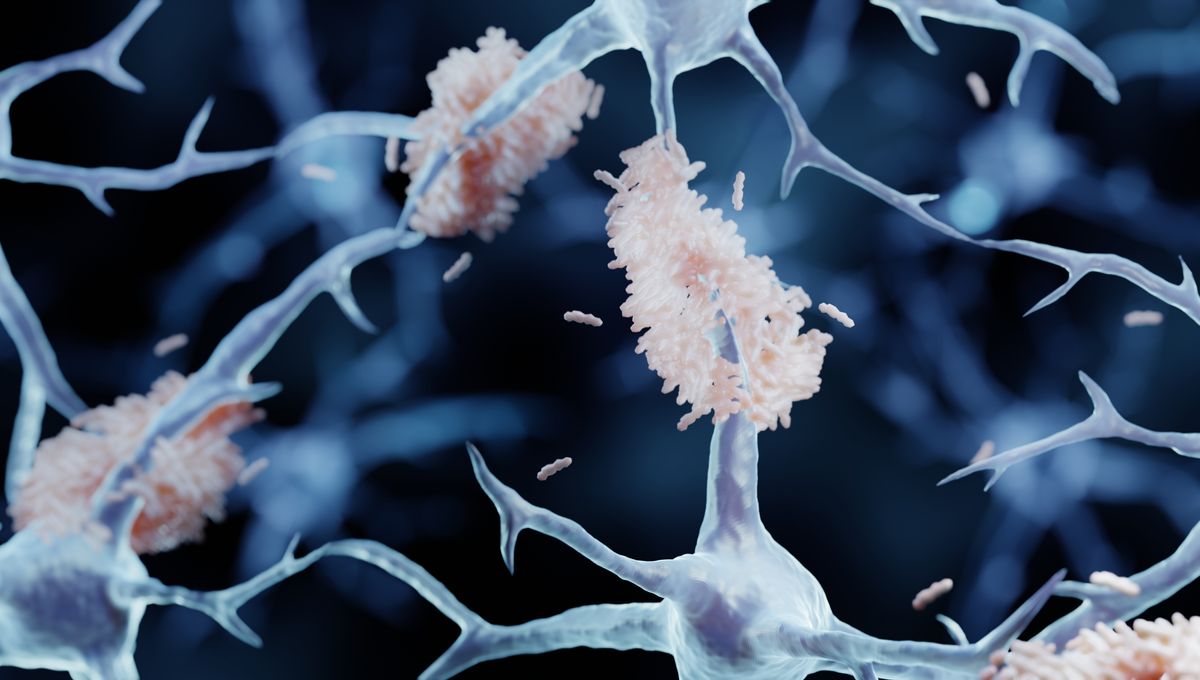
Five people with Alzheimer’s disease developed the condition as a result of a medical procedure decades earlier, a new study reports. While the procedure that has been implicated is no longer in use, the findings could provide important insights into how the disease progresses, and represent the first evidence of Alzheimer’s being transmitted to living people in this way.
Eight cases of patients in the UK who were treated with human growth hormone derived from cadavers (c-hGH) were reviewed by a team from University College London (UCL) and University College London Hospitals NHS Foundation Trust (UCLH). This practice was used between 1959 and 1985, and at least 1,848 patients are known to have received c-hGH – usually during childhood ؘ– to treat various causes of short stature. The cadaver-derived product was withdrawn globally after there were some reports of recipients being infected with prions, and ultimately dying of Creutzfeldt-Jakob disease (CJD).
Prions are misfolded proteins that can spread within and damage the brain by causing other neighboring proteins to also become misfolded. In most cases, prion diseases arise sporadically, with no obvious cause. Outbreaks of prion diseases have also arisen when tainted brain matter enters the diet, as was the case with kuru (caused by ritual cannibalistic funerary practices among the Fore people of Papua New Guinea), and human cases of CJD from meat contaminated with “mad cow disease”.
In these cases, though, the disease resulted from a medical procedure, which is termed “iatrogenic” transmission.
Once the risk of iatrogenic CJD became clear in the mid-1980s, all use of c-hGH in medical procedures was stopped, and the National Prion Clinic at UCLH has continued to monitor numerous affected patients.
Through post-mortem analysis, it began to emerge that there could be something else going on in the brains of those who died of CJD. There was evidence of amyloid-beta pathology, a hallmark of Alzheimer’s disease. However, the symptoms of CJD would have masked any signs of Alzheimer’s in these people when they were alive, so medics could not be sure what the effect of this pathology would have been.
This latest study focuses on eight individuals who did not develop CJD after their c-hGH treatment. Five of them started displaying symptoms consistent with Alzheimer’s-related dementia between the ages of 38 and 55, which progressed and became more severe over time. Of the remaining three, one had no symptoms at all, one had some minor cognitive symptoms, and one met the criteria for a diagnosis of mild cognitive impairment, which can sometimes develop into dementia.
Since the patients with Alzheimer’s were so young when they began to show symptoms, it was unlikely they had the usual form of the disease that occurs in old age. Five of the patients were able to provide samples for genetic testing, which also allowed the team to rule out the rarer inherited type of Alzheimer’s disease.
That only left one logical conclusion for the team: that amyloid-beta proteins were transmitted to the patients when they received their c-hGH treatment as children, leading to them developing Alzheimer’s-like brain pathology in midlife.
Previous research with animal models provides a precedent for this theory, which the team has been developing since as far back as 2015. A study in mice in 2018 confirmed the possibility that amyloid-beta can act like a prion, and that injecting it can lead to the buildup of harmful protein deposits in the brain.
But, and this is very important to stress, all this does not mean that Alzheimer’s is contagious.
“The transmission probably requires direct contact with the brain or the presence of circulating pathogenic forms of the proteins in the bloodstream,” professor of neuropathology Seth Love previously explained to IFLScience.
This was echoed by Professor John Collinge, the lead author of the new study and director of the UCL Institute of Prion Diseases, in a statement: “There is no suggestion whatsoever that Alzheimer’s disease can be transmitted between individuals during activities of daily life or routine medical care. The patients we have described were given a specific and long-discontinued medical treatment which involved injecting patients with material now known to have been contaminated with disease-related proteins.”
What it does mean is that we have more evidence than ever that Alzheimer’s could progress in a similar way to CJD, at least in some cases.
While true iatrogenic cases of Alzheimer’s are likely to be very rare, the team does say that it is important we take a fresh look at medical procedures that could come with a heightened risk of transmission. Primarily, though, in light of the challenges in treating and preventing Alzheimer’s, the findings could help scientists better understand its progression and develop new therapies, which will surely be welcomed.
The study is published in Nature Medicine.

Source Link: Alzheimer's Disease Likely Transmitted To 5 Patients Via Banned Medical Procedure
