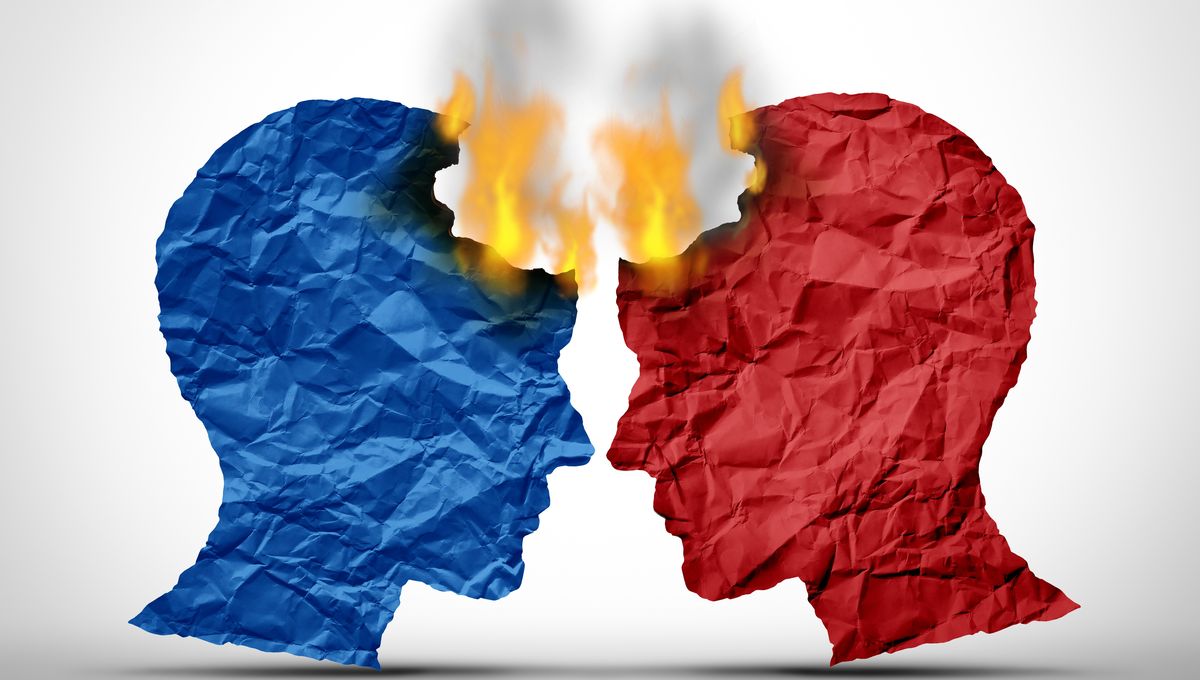
Is civil war looming in the United States? This has been a recurring contention among some political commentators and nationalist subgroups for some time, and what it might look like was even explored in director Alex Garland’s movie Civil War, last year. But despite ongoing political tensions, most Americans do not expect a civil war to kick off in the near future, a new study reports. Even fewer believe a civil war is necessary.
Since 2022, a research project led by Garen J. Wintemute at the University of California, Davis, has been tracking public attitudes towards violence for political gains in the US. The Violence Prevention Research Program (VPRP) offers a complex image of shifting attitudes and concerns about the state of democracy in the country and attempts to highlight the underlying beliefs that may contribute to potential violence.
During 2022, the researchers conducted Wave 1 of their nationally representative longitudinal survey into the possibility of civil conflict in the US. They found that 13.7 percent of US adults strongly or very strongly believed that “in the next few years, there will be civil war in the United States”. This amount then dropped to 5.7 percent in 2023 during Wave 2. However, of this lower number of people who agreed with the statement about civil war, 38.4 percent also strongly or very strongly agreed that a civil war was necessary to “set things right”.
During 2023, the team found that the expectation of civil war and the perception of it as needed were highest among certain subgroups. These were MAGA Republicans, extreme conservatives, people with racist beliefs, those who believed in violence to promote social change, firearm owners who owned assault rifles or had purchased guns in or after 2020, or carried them in public all the time.
Now the researchers have the results for Wave 3, recorded in 2024 (between May 23 and June 14). This coincided with the period just before and after the announcement of Donald Trump’s felony conviction. The team believed that, due to the increased political polarization in the country at the time, the perceived need for civil war would be higher still. However, their darker fears did not seem to be supported by the evidence, which showed that, overall, there is limited support for large-scale political conflict. Even among those who believed it was likely and necessary appeared to be open to change if the right people spoke against violence.
In this wave, participants were asked additional questions related to their support for right- and left-wing insurgency, as well as how they would likely respond in a large-scale conflict (e.g. would they be a combatant and were they prepared to kill other combatants or non-combatants), and how open they were to change their position on the matter.
Of the 10,064 invitations sent to participants in Wave 3, 8,896 responded and completed the survey. In response to the statement “in the next few years, there will be civil war in the United States”, the team found that only 6.5 percent of respondents agreed strongly or very strongly. They also found that only 3.6 agreed with the statement that “the United States needs a civil war to set things right”. This is pretty much the same result that was recorded in Wave 2.
On the subject of participants’ potential behavior during a future conflict, just under half (47.9 percent) said they would stay in the country and sit it out, while 12.4 percent said they would likely leave. Eighty-four percent stated that they would not participate in the conflict, while only 3.7 percent believed they were very or extremely likely to take part. Just 3 percent went so far as to say they thought it very or extremely likely that they would kill a combatant from the opposite side.
Those who thought it unlikely that they would participate in the conflict tended not to think their minds could be changed from this position. However, respondents who did consider participating believed they could be dissuaded by family members (44.5 percent), friends (23.4 percent), a respected religious figure (30.5 percent), a public figure (26.3 percent), or a respected news or social media source (23.6 percent).
Individuals who identified themselves as “strong Republicans”, “MAGA Republicans,” and those who see themselves as “extreme conservatives” were the ones who showed the highest levels of belief in conflict than others. In fact, their beliefs were higher than the national average. Prevalence of these sentiments was also higher among respondents who strongly or very strongly agreed with statements expressing authoritarianism and those with strong or moderate agreement with racist beliefs. Those who agreed with violence as a mechanism for social change were substantially more likely to agree with the expectation of civil war and its need.
Those who owned assault firearms were more likely to expect participating in any future violence than those who only owned handguns, though the overall differences were modest.
“These findings are contrary to our expectation that both would increase as political polarization increased during this election year,” the researchers write in their paper. “They are concordant with the fact that there was no increase in firearm purchasing in 2024 beyond long-term trends.”
While most experts believe a full-scale civil war is unlikely, there are predictions that more sporadic outbreaks of political violence and targeted attacks will occur, especially with the aim of disrupting elections.
“We found little support for an insurgency, and only 3.7 percent of respondents thought it very or extremely likely that they would participate in civil conflict as combatants. Pluralities or majorities of respondents reported that, in the event of insurgency or civil war, they would be neutral nonparticipants”, the team writes.
Overall, the researchers believe that one way to address these issues is to encourage people to express their resistance to violence within their communities or with their families. Clearly, the data shows that words of opposition from elected officials, religious leaders, and respected media groups can make a big difference. This opposition won’t likely change the underlying prejudices or opinions that people hold, but it may decouple them from the call to arms.
The study is published in Injury Epidemiology.

Source Link: Americans Were Asked If They Thought Civil War Was Coming. The Results Were Unexpected
