• Email Us: [email protected]
  • Contact Us: +1 718 874 1545
  • Skip to main content
  • Skip to primary sidebar

Medical Market Report

  • Home
  • All Reports
  • About Us
  • Contact Us

Ancient Bacteria’s DNA Resurrected From Neanderthal Dental Plaque, Producing New Molecules

May 5, 2023 by Deborah Bloomfield

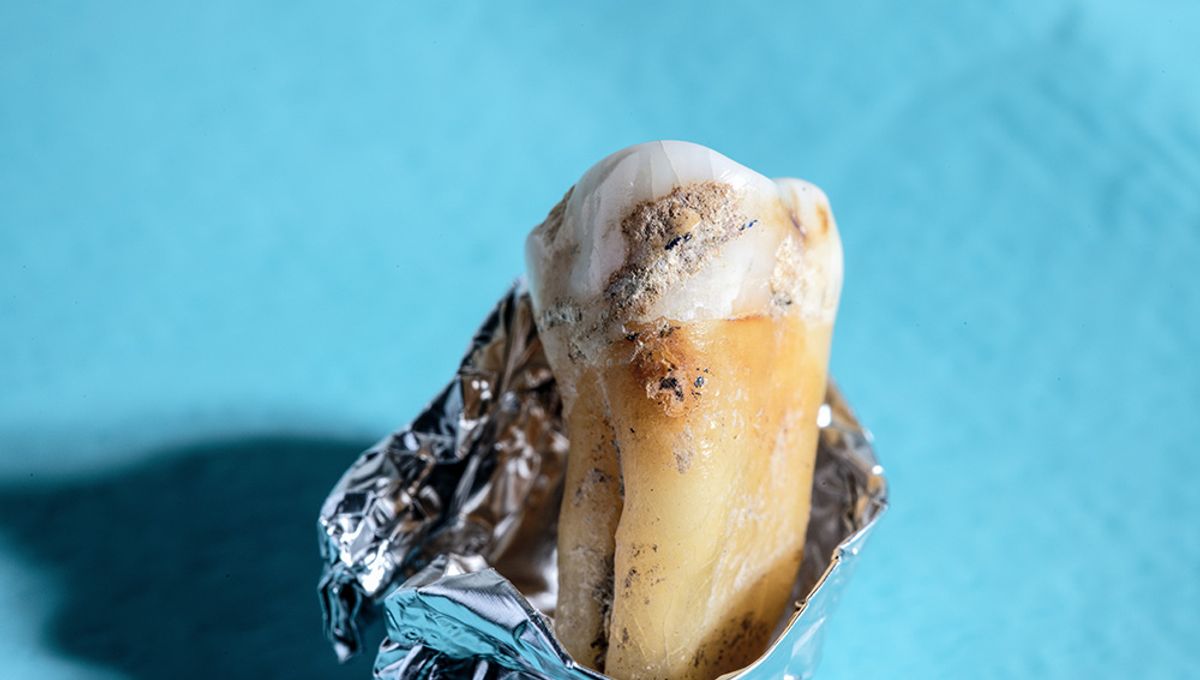
A new study looking at the dental plaque of 12 Neanderthals and 52 anatomically modern humans from the past 100,000 years has uncovered a new class of compound that may have once played an important role in the group’s ecology.

Over the past decade, scientific advances in analyzing ancient DNA have allowed researchers to study the genetic diversity of our ancestors. In this recent study from researchers in the US and Germany, the bacterial genomes of the Middle and Upper Palaeolithic were examined, uncovering an ancient organism, the genome of which the team was then able to recreate.

Advertisement

Using metagenomics, researchers identified 459 different genomes present in the dental plaque of the ancient humans. Of these, they identified a gene cluster that was shared by seven individuals from the Palaeolithic period.

The study speculates that the identification of this group could indicate it was playing an important role in our ancient ancestors’ ecology.

From the gene cluster, the team spliced the sequence into living bacteria, and from this were able to produce a new class of natural molecule that has never been seen before, with researchers naming it “paleofurans”. 

This ground-breaking approach is the first to successfully bring back the function of ancient bacteria, while the use of dental plaque to reconstruct genomes has allowed the researchers to study the microbiome of human mouths from thousands of years ago. 

Advertisement

Outlining the method’s potential for use to explore the biosynthetic potential of ancient organisms, the study goes on to suggest the implications of the research could help us investigate lost microbial diversity, and potentially for use in the creation of antibiotics.

The study of ancient DNA enables us to learn about the different functions and capabilities of genes, and the advent of new methodology provides a promising area for exploration.

This study was published in the Journal Science.

Deborah Bloomfield
Deborah Bloomfield

Related posts:

  1. UK PM Johnson to address lawmakers about Afghanistan on Monday
  2. Pandemic-hit Qantas weighs new pay structure to keep key executives
  3. Air New Zealand reels from Auckland curbs, Australia bubble loss
  4. Stranded Dolphins’ Brains Show Signs Of Alzheimer’s-Like Disease

Source Link: Ancient Bacteria's DNA Resurrected From Neanderthal Dental Plaque, Producing New Molecules

Filed Under: News

Primary Sidebar

  • The First Wheelchair User To Travel To Space Is About To Make History
  • “It Was Bigger Than A Killer Whale”: 66 Million-Year-Old Tooth Suggests Mosasaurs Were Hunting In Rivers, Not Just Seas
  • Killer Whales And Dolphins Team Up In First-Ever Footage Of Cooperative Hunting
  • Why Does Chocolate In Advent Calendars Taste Different From Normal Chocolate?
  • Why Do Sheep And Goats Have Rectangular Pupils?
  • What Kind Of Parents Were Dinosaurs?
  • First Images Of A Tatooine-Like Planet That Orbits Its Two Stars Closer Than We’ve Seen Before
  • JWST Finds Earliest Supernova Yet, From When The Universe Was Just 730 Million Years Old
  • How A Comet On Christmas Day Changed What We Knew About Space
  • What Color Was Diplodocus? First-Ever Sauropod Fossils With Melanosomes Bring Us A Step Closer To Finding Out
  • Why Do NASA’s Voyager Spacecraft Sometimes Get Closer To Earth, As They Head Out Of The Solar System?
  • What Is The Fastest Animal In The World?
  • Would The Burglars Have Survived “Home Alone”? We Asked An Intensive Care Doctor
  • World’s First-Ever Dictionary Of Ancient Celtic Languages Set To Be Created
  • Fresh From Capturing Image Of 3I/ATLAS, NASA’s MAVEN Suffers “Anomaly” And Is No Longer Communicating With Earth
  • Thought “Superflu” Was Bad? Strap In: It’s Norovirus Season In The US
  • Why Does Evolution Turn Everything Into Crabs?
  • Neil deGrasse Tyson And Professor Brian Cox Talk Interstellar Comet 3I/ATLAS And Alien Spacecraft: “It’s Older Than Us”
  • New Species Of Tiny Pumpkin Toadlet Is The Size Of A Pencil Tip, And We Cannot Cope
  • Watch The World’s Most Metal Frog Take Down A Giant “Murder Hornet”
  • Business
  • Health
  • News
  • Science
  • Technology
  • +1 718 874 1545
  • +91 78878 22626
  • [email protected]
Office Address
Prudour Pvt. Ltd. 420 Lexington Avenue Suite 300 New York City, NY 10170.

Powered by Prudour Network

Copyrights © 2025 · Medical Market Report. All Rights Reserved.

Go to mobile version