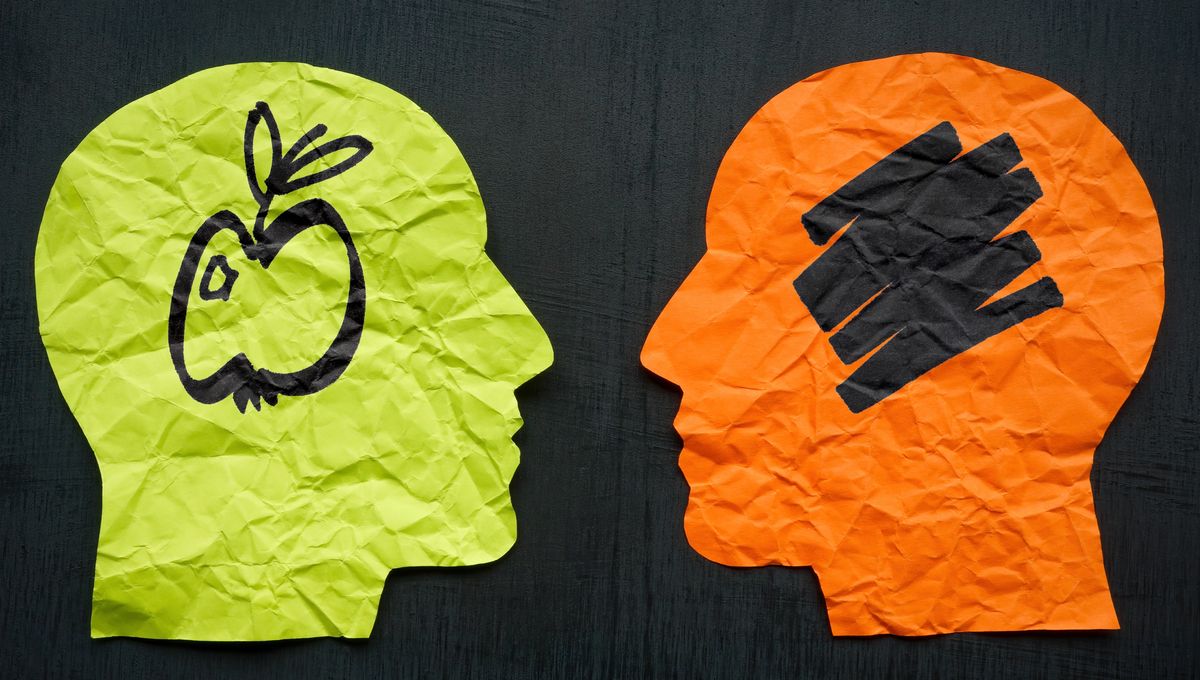
It was only in 2015 that Professor Adam Zeman first came up with a term to describe the peculiar condition of having no mind’s eye. He called it aphantasia, and before it had a name many who resonate with the description had no idea others processed information differently. Now, almost 10 years on, Zeman has published a review of everything we’ve learned so far about this mysterious phenomenon.
Over 50 scientific studies are included, covering a wealth of findings about the 1-5 percent of people who are thought to be aphantasic.
“Coining the term ‘aphantasia’ has unexpectedly opened a window on a neglected aspect of human experience,” Zeman said in a statement. “It is very gratifying that people who lack imagery have found the term helpful, while a substantial surge of research is shedding light on the implications of aphantasia.”
For people who have a visual imagination, it’s almost impossible to understand the experiences of someone with aphantasia, and vice versa. For 43-year-old Mary Wathen, the lightbulb moment came when she was speaking to other parents about playing role-playing games with their children, and it became apparent that everyone else was able to see images in their minds.
“This was totally mind-blowing to me. I just cannot understand what they really mean – where is this image and what does it look like? To me, unless you can see something with your eyes, it’s not there,” she said.
But despite the wildly different way in which those with and without aphantasia may experience the world, Zeman stresses that the consensus among experts is that it is not a disorder and does not mean you have no imagination at all.
As the research has progressed over this last decade, we’ve learned that there are subtypes of aphantasia. Some people may have difficulty recognizing faces, while others don’t; some have issues with autobiographical memory, the memory of your own personal history. In a small number of people with aphantasia, it appears to be linked with traits commonly seen in autistic people.
An inability to visualize scary images means those with aphantasia may not react as strongly to spooky stories. It may also be an advantage in the scientific world, whereas hyperphantasia (a super-vivid visual imagination) may predispose someone to succeed in the arts.
One recent case report even describes a woman who was seemingly able to reverse her aphantasia by taking magic mushrooms. But without resorting to mind-altering drugs, the world of visual imagination is not a total no-go zone for people with aphantasia – research suggests the majority of them still have visual dreams.
The idea that having aphantasia is not always a disadvantage is something that’s become clear to Wathen. “I’m a really good written and verbal communicator – I think that’s because I’m not caught up with any pictures, so I just focus on the power of the word,” she explained. “I’m also a deeply emotional person and perhaps that’s my brain’s way of overcompensating.”
But there are some undeniable downsides, and Wathen particularly wishes she were able to picture her children’s faces when they’re not in front of her.
Overall, and even beyond pure scientific interest, continuing this decade-long tradition of research is important because it highlights that not everyone’s imaginations work the same way.
Wathen said, “I think it’s really important to raise awareness that some people just don’t have this ability – particularly as using visual imagination is a key way that young children are taught to learn and engage.”
“We need to ensure we cater for everyone and encourage other ways of learning and engaging.”
The study is published in the journal Trends in Cognitive Sciences.

Source Link: Aphantasia: Everything We Know So Far About Having No Mind’s Eye
