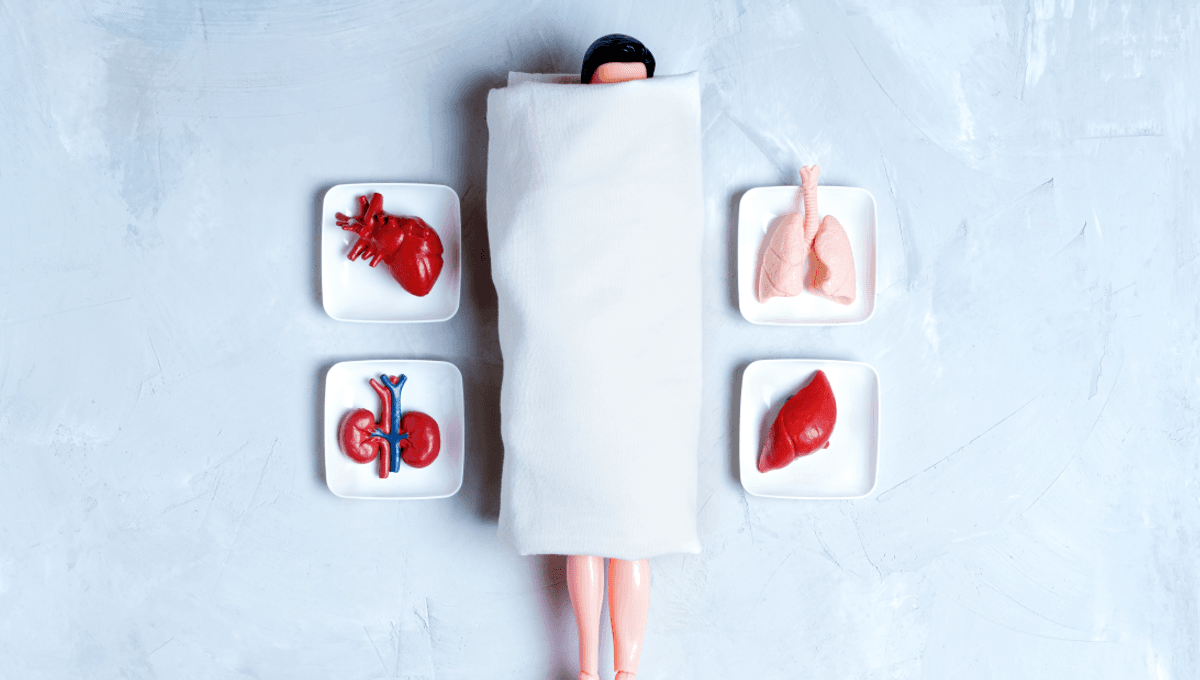
Organ transplantd have come a long way since the first human-to-human heart transplant back in 1967. A new record was set for organ transplants in the United States in 2024, as for the first time ever the country saw more than 48,000 organ transplants in a year. The more we do them, the more we learn.
One strange phenomenon that’s gaining doctors’ attention is the way in which organ transplants can change your personality. A particularly unusual case study involved a woman who, having lived a mostly vegetarian life, found herself suddenly drawn to Kentucky Fried Chicken after receiving a donor heart from someone who loved nuggets.
Taste changes have been reported among people receiving bone marrow transplants, too, such as the person who went from hating pickles to loving them, and another who switched from white wine to red wine.
Transplant changes aren’t limited to dietary preferences, either. People have reported a change in preferences for everything from food to music, art, and sexual orientation. So, why might that be?
It’s a phenomenon Adam Taylor, Professor and Director of the Clinical Anatomy Learning Centre at Lancaster University, UK, has questions about, too. Writing for The Conversation, he explains how the placebo effect could be a contributing factor as the overwhelming joy of getting a second shot at life leads to a fresh perspective. There is, however, reason to believe that some of these changes could run deeper.
If you get a new part – say a heart transplant – your donor heart might produce 20 percent more of something like atrial natriuretic peptide (ANP), or it might be more susceptible to the ANP that’s circulating in your body already, so your resting heart rate goes up because your physiology is adapting and changing.
Professor Adam Taylor
“We know that donor organs are capable of influencing what’s going in the body for many people,” Taylor told IFLScience. “People report these personality changes (sometimes not a complete personality change but little changes) and it’s feasible that – because of a transplanted organ – you are going to have changes in your physiology, and those changes in physiology then influence other organs.”
Personality changes have been reported among heart transplant patients, which is a particularly interesting organ to consider. There’s the capacity for a kind of placebo effect, as many cultures consider the heart to be more than just a big pump, forming a part of who we are from bravery to our capacity to love (“she had a heart of stone,” etc.).
The heart is also a great candidate for altering our physiology, however. Its chambers release peptide hormones that work with our kidneys to regulate fluid in the body, but it can also influence our hypothalamus, acting on our “fight or flight” response and mood.
“For example, the brain requires exposure to various hormones and signalling molecules,” said Taylor. “If you get a new part – say a heart transplant – your donor heart might produce 20 percent more of something like atrial natriuretic peptide (ANP), or it might be more susceptible to the ANP that’s circulating in your body already, so your resting heart rate goes up because your physiology is adapting and changing.”
Another example Taylor gives is that of serotonin – often touted as the “happiness molecule”. Most people think it’s all about the brain, but in truth, the majority of serotonin is produced in the gut and it has a systemic effect across the entire body.
Early studies are reporting somewhere in the region of 90 percent of people who undergo organ transplantation notice a change in personality.
Professor Adam Taylor
It could be said that no organ is an island, and our constituent parts are as interconnected and interdependent as we are. It would almost be more surprising, then, if it were possible to replace an organ without noticing some kind of change in your body and in yourself.
We’ve a lot still to learn about how much of these self-reported changes are rooted in physiology, or if certain organs are more likely to result in personality changes than others. But with organ transplants on the rise, early research suggests we’re going to have a lot more data to work from going forward.
“It’s absolutely something that requires more investigation,” said Taylor. “The problem is that so many more people are now [experiencing this phenomenon] that we’re only just beginning to get enough [data] to be able to look at it, but it’s definitely a thing. Early studies are reporting somewhere in the region of 90 percent of people who undergo organ transplantation notice a change in personality.”
And just a heads up if anyone gets my heart: if you don’t like pickles, you soon will.
Like learning about human anatomy? Don’t miss the January issue of CURIOUS, IFLScience’s e-magazine, where we ask Taylor: Where is the heart in the human body? If you think it’s on the left, you’re almost right…

Source Link: Around 90 Percent Of People Report Personality Changes After An Organ Transplant – Why?
