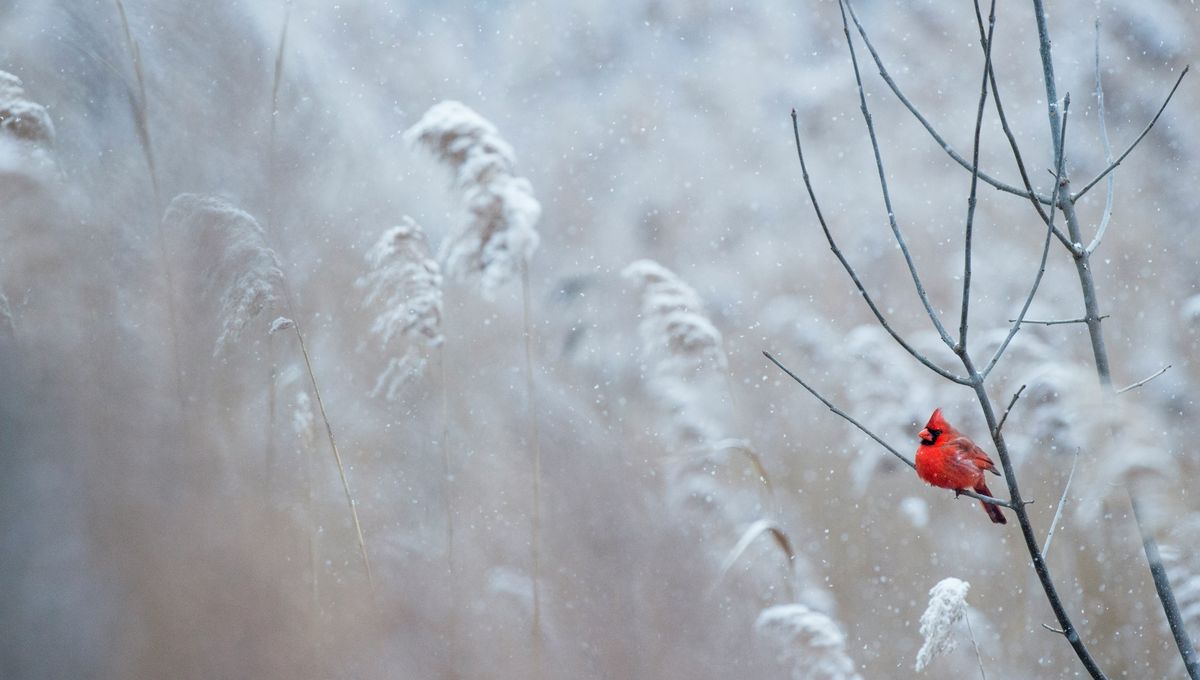
In the Northern Hemisphere, astronomical winter runs from around December 21 or 22 until March 20 or 21, while meteorological winter runs from December 1 to February 28 (or February 29 if it’s a Leap Year). This difference isn’t to annoy climatologists and confuse migratory birds – there’s an understandable reason why these two systems exist.
What is astronomical winter?
In 2025, astronomical winter starts on December 21 and runs until March 20, 2026. It’s marked by the winter solstice (the shortest day and longest night) when Earth’s north pole tilts farthest from the Sun, bringing cooler weather and shorter daylight hours to regions north of the equator.
The exact dates can vary from year to year because Earth takes approximately 365.24 days to complete one full revolution around the Sun, while our calendar year is rounded to 365 days. The extra few hours of difference cause the solstice to drift later each year until it is “reset” by the addition of a leap day every four years.
For instance, 2025’s astronomical winter (in the Northern Hemisphere) will officially start on December 21, but it will kick off on December 22 in 2027. It flicks back to December 21 in 2028, which is a leap year.
Astronomical summer is the other side of the same coin. It starts around June 20/21 in the Northern Hemisphere on the summer solstice (the longest day) and ends around the autumnal equinox, around September 22/23.
This is how humans have organized their lives and civilizations for thousands upon thousands of years. Long before the invention of the mechanical clock and high-tech equipment, our ancestors looked to the skies to understand their time and place on the planet. By observing the Sun’s changing path, people could predict when harsh weather was due to arrive, when it was a good time to hunt certain animals, which foods were in season, and so on.
It made a great deal of sense then, but modern Homo sapiens now have other priorities and concerns.
What is meteorological winter?
Meteorological winter is based on fixed months, starting on the first day of December until the last day of February in the Northern Hemisphere.
Per the National Oceanic and Atmospheric Administration (NOAA), it exists primarily for consistency, repeatability, and data accuracy (things that are very dear to the hearts of scientists). Climatologists and meteorologists found that the astronomical seasons were too “loose” for record-keeping; their start and end dates can change, plus they fall awkwardly in the middle of months.
By comparison, meteorological winter is tidy and predictable. As you can see, the seasons of the Northern Hemisphere are neatly divided into four three-month chunks: winter (December, January, February), spring (March, April, May), summer (June, July, August), autumn (September, October, November). This is a much more effective system for tracking climate trends over longer time spans.
Seasons in the Southern Hemisphere
All of this flips on the other side of the planet: the Southern Hemisphere. This happens because planet Earth is tilted slightly off its axis by about 23.5 degrees relative to its orbit around the Sun. When the Northern Hemisphere leans toward the Sun, it experiences the warmer summer, while the Southern Hemisphere experiences the colder winter because it’s tilted away. Six months later, the tilt effectively reverses, bringing summer to the south and winter to the north.
So, south of the equator, the seasons break up differently:
Meteorological seasons in the Southern Hemisphere
Summer: December, January, February
Autumn: March, April, May
Winter: June, July, August
Spring: September, October, November
Astronomical seasons in the Southern Hemisphere
Summer: December 21–22 to March 20–21
Autumn: March 20–21 to June 20–21
Winter: June 20–21 to September 22–23
Spring: September 22–23 to December 21–22
Are the old seasons changing?
We all have a sense of what each season entails. The cold and dark of winter is ended by spring, a time of gentle rebirth and colorful renewal. Temperatures creep up through summer, the brightest and hottest time of year, before being broken down by autumn with crisp air, falling leaves, and the harvest. And so, on the cycle continues.
However, the seasons as we know them may be starting to change in an unprecedented way. Earlier this year, scientists published a study that argued the human-driven climate disruption is altering Earth’s annual rhythms so significantly that the characteristics and everyday experience of the seasons are becoming increasingly disconnected from their traditional definitions.

Source Link: Astronomical Winter Vs. Meteorological Winter: What's The Difference?
