• Email Us: [email protected]
  • Contact Us: +1 718 874 1545
  • Skip to main content
  • Skip to primary sidebar

Medical Market Report

  • Home
  • All Reports
  • About Us
  • Contact Us

August Is Set For A Rare Double Supermoon Skywatching Extravaganza

July 31, 2023 by Deborah Bloomfield

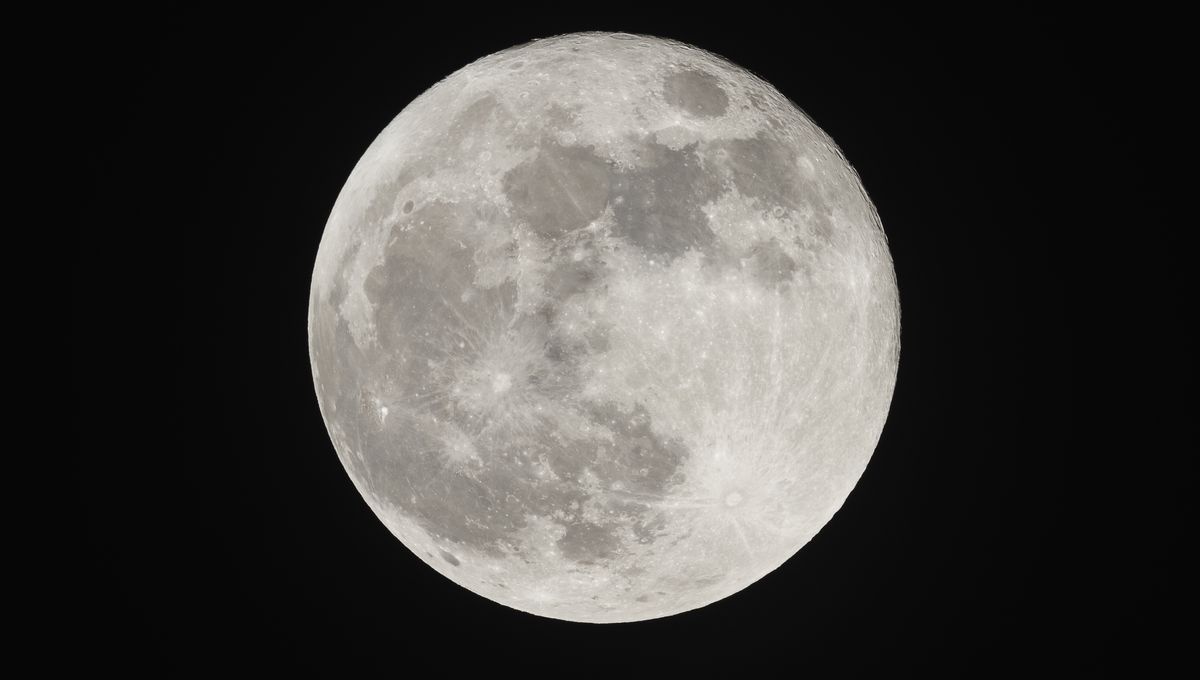
Lunar lovers, this is your month. We are getting two Full Moons in August – a regular and a Blue Moon – and both of them will be particularly close to our planet, getting the appellative “super”. The first Supermoon is going to be tomorrow, August 1, with the following one on August 30, which will be the Blue Supermoon.

The labels added to the Full Moon are not really useful astronomically and they have always had quite loose definitions. The underlying issue is that we humans like things to be regular and the Moon is almost regular, but not quite. Its orbit is almost circular and you usually have 12 Full Moons in a year. Until you have 13.

Advertisement

That 13th odd-one-out Moon is the Blue Moon, but which of the 13 Full Moons is it? The first definition of it came from Maine Farmer’s Almanac’s 1937 edition. Given how the phases of the Moon have historically been used to help agriculture, they used it to describe the third Full Moon in a season where there are four.

This definition wouldn’t work this year though – 2023 has 13 Moons but so well arranged that each season has three. 

The other very popular definition is the second Full Moon in a calendar month, and it came from a misunderstanding of the original Almanac reference by J.H. Pruitt in a 1946 edition of the American magazine Sky and Telescope. 

If that definition seems a bit wishy-washy, let’s get into the concept of Supermoon and its antonym Micromoon. As mentioned above, the Moon’s orbit is slightly off a perfect circle so as the Moon travels around it passes through the closest point – we call it perigee – and a most distant one – apogee.

Advertisement

The average distance between the Earth and the Moon is 384,400 kilometers (238,900 miles), but it can get a couple of tens of thousands of kilometers closer or further. The effect is not incredible, you probably wouldn’t notice if you didn’t know, but it is enough for the Moon to look bigger and brighter when it’s near its perigee, hence the term Supermoon. 

There are three or four Supermoons per year, all in a row. This is due, once again, to the lack of a formal definition. Astrophysicist Fred Espenak defined it as a Full Moon that occurs when the Moon is within 90 percent of its closest approach to Earth.

Tomorrow’s Full Moon will be 357,530 kilometers (222,159 miles) away from the Earth. At the end of the month, the Blue Moon will be closer by about 200 kilometers (120 miles). If you want to capture it with a smartphone follow these tricks.


Advertisement

If the weather for you is overcast, you can still watch the spectacle online. Our friends at the Virtual Telescope Project have a webcast with the Full Moon rising over the Colosseum in Rome. 

Deborah Bloomfield
Deborah Bloomfield

Related posts:

  1. Paris ramps up security as jihadist attacks trial starts
  2. Cricket-‘Western bloc’ has let Pakistan down, board chief says
  3. Biblical Battle Tales Confirmed Using Variations In Earth’s Magnetic Field
  4. The US Army Once Spent Billions On Pixel Camouflage That Didn’t Work

Source Link: August Is Set For A Rare Double Supermoon Skywatching Extravaganza

Filed Under: News

Primary Sidebar

  • Want Your Career To Take The Next Step? How Scientific Conferences Can Be A Catalyst For Change
  • Why Do Little Birds Always Ride On Rhinos? It’s An Incredibly Deep Relationship
  • The World’s Rarest Great Ape Just Got Even Rarer
  • This Is The First Ever Map Of The Entire Sky In An Incredible 102 Infrared Colors
  • Was Jesus Christ Actually Born On December 25?
  • Is It True There Are Two Places On Earth Where You Can Walk Directly On The Mantle?
  • Around 90 Percent Of People Report Personality Changes After An Organ Transplant – Why?
  • This Worm Quietly Lived In A Lab For Decades, But They Had No Idea Just How Old It Truly Was
  • Fewer Than 50 Of These Carnivorous “Large Mouth” Plants Exist In The World – Will Humans Drive Them To Extinction?
  • These Are The Best Fictional Spaceships, According To Astronauts – What Are Yours?
  • Can I See Comet 3I/ATLAS From Earth During Its Closest Approach Today? Yes, Here’s How
  • The Earliest Winter Solstice Rituals Go All The Way Back To The Stone Age
  • We Were F*&@ing Right – Swearing Is Good For You And Now We Know Why
  • Why Do Wombats Have Square Poop? New Discovery Reveals How Their “Latrines” May Act Like Dating Apps
  • IFLScience The Big Questions: Answering Some Of The Biggest Scientific Mysteries Of 2025
  • Astronomers Catch Incredible First Direct Images Of Objects Colliding In Another Star System
  • Billionaire Jared Isaacman Finally Confirmed As Head Of NASA, As Agency Faces Uncertain Future
  • Something Just Crashed Into The Moon – And Astronomers Captured The Whole Event
  • These “Living Rocks” Are Among The Oldest Surviving Life And Are Champion Carbon Dioxide Absorbers
  • Ambitious Iguana “Love Island” For Near-Extinct Reptiles Becomes Epic Conservation Success Story
  • Business
  • Health
  • News
  • Science
  • Technology
  • +1 718 874 1545
  • +91 78878 22626
  • [email protected]
Office Address
Prudour Pvt. Ltd. 420 Lexington Avenue Suite 300 New York City, NY 10170.

Powered by Prudour Network

Copyrights © 2025 · Medical Market Report. All Rights Reserved.

Go to mobile version