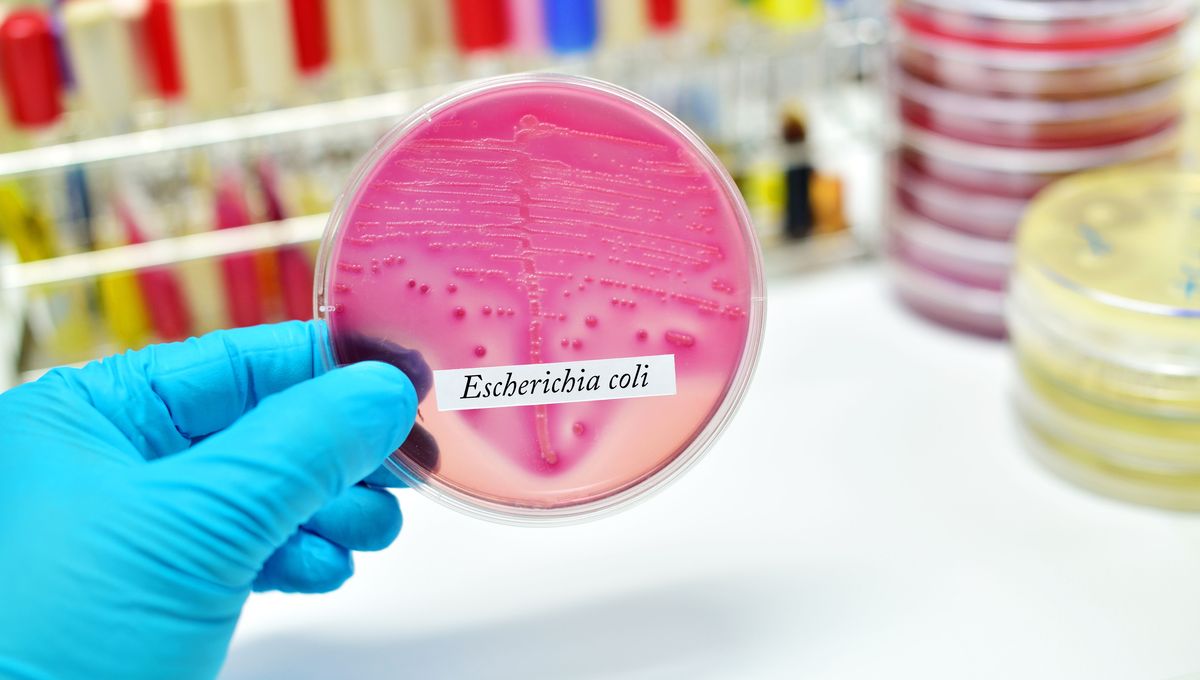
The common bacteria Escherichia coli usually lives harmlessly in our guts, but sometimes escapes to cause serious disease in other organs. Analysis of the difference between the disease-causing “bad bacteria” and the non-toxic “good” versions reveals the harmful ones have lost the capacity to produce cellulose.
Besides its role as an indicator of the health of pollutants in waterways, E. coli is possibly best known for causing diarrhea, sometimes fatally. That is far from the only way it can afflict humanity, however. It’s responsible for 80 percent of urinary tract infections, as well as neonatal meningitis, and a quarter of bloodstream infections. Yet most E. coli are harmless, despite being the same species as the pathogens.
Central to the problem of most pathogenic E. coli is the capacity to escape the digestive system to wreak havoc elsewhere. Professor Mark Schembri of the University of Queensland led a team exploring what distinguished the escaping E. coli from those that know their place. They found mutations affecting the pathway that causes the production of cellulose, which normal E. coli make.
“All E. coli have the capacity to produce cellulose,” Schembri told IFLScience. “It exists in core genes. It’s really intriguing therefore that some have the pathway blocked. This isn’t associated with new genes, but a deterioration of the pathway.”
The cellulose is one of several polysaccharides that surround good E. coli cells. These, Schembri told IFLScience, mask other factors and keep the cell quiet from the perspective of the immune system. “If the pathway is closed it exposes other factors that initiate an immune response, which causes inflammation,” Schembri said. That not only makes for an unpleasant time in the guts, but it creates an opportunity for the E. coli to escape to the bloodstream and infect other organs.
Rather than good and bad E. coli having lived beside each other after some ancient separation, Schembri and his team found multiple mutation events producing the same outcome. In other words, the same thing keeps happening, leading to the appearance of new pathogenic strains.
For good and bad E. coli to both flourish there must be an evolutionary tradeoff, with pros and cons to cellulose production for the bacteria. Schembri told IFLScience his team don’t understand what these are yet, but think it probably reflects the wide diversity of environments in which E. coli live, with some being more amenable to the cellulose producers, and others to those that don’t produce it.
Having taken a wide sample of E. coli from organs outside the digestive system, Schembri’s team think cellulose non-production is the common feature. “We didn’t study E. coli that causes diarrhea,” Schembri told IFLScience. However, he noted that one particularly devastating diarrhea-inducing strain, which infected at least 4,000 people in Germany and killed 53, also lacked the capacity to produce cellulose, which Schembri says is “part of what made it bad.”
The significance could stretch beyond E. coli. The team investigated the related bacterium Shigella, and found it cannot produce cellulose. Meanwhile, Salmonella behaves similarly to E. coli, with mutations to the cellulose pathway associated with toxicity.
Without exploring further, the team can’t say which other pathogenic bacteria have the same issue. Nevertheless, Schembri noted to IFLScience that even where cellulose may not be involved, something similar may occur with the other polysaccharides on the cell surface.
“In 2019 alone, almost 5 million deaths worldwide were associated with bacterial antibiotic resistance, with E. coli causing more than 800,000 of these deaths,” Schembri said in a statement. “As the threat of superbugs that are resistant to all available antibiotics increases worldwide, finding new ways to prevent this infection pathway is critical to reduce the number of human infections.”
It’s unlikely that we can simply switch cellulose production back on to prevent disease. Schembri told IFLScience the team have not worked out a way their discovery can be applied. Nevertheless, he added: “Now we have better knowledge we can use it to build diagnostics. There also appears to be a connection [between cellulose non-production] and antibiotic resistance.” This may be something we can exploit in our battle against disease, but, Schembri acknowledged, “applications are a fair way off.”
The study is open access in Nature Communications.

Source Link: Bacteria Gone Bad Could Have A Surprisingly Simple Cause
