• Email Us: [email protected]
  • Contact Us: +1 718 874 1545
  • Skip to main content
  • Skip to primary sidebar

Medical Market Report

  • Home
  • All Reports
  • About Us
  • Contact Us

Brand New Virus Discovered In Depths Of The Mariana Trench

September 21, 2023 by Deborah Bloomfield

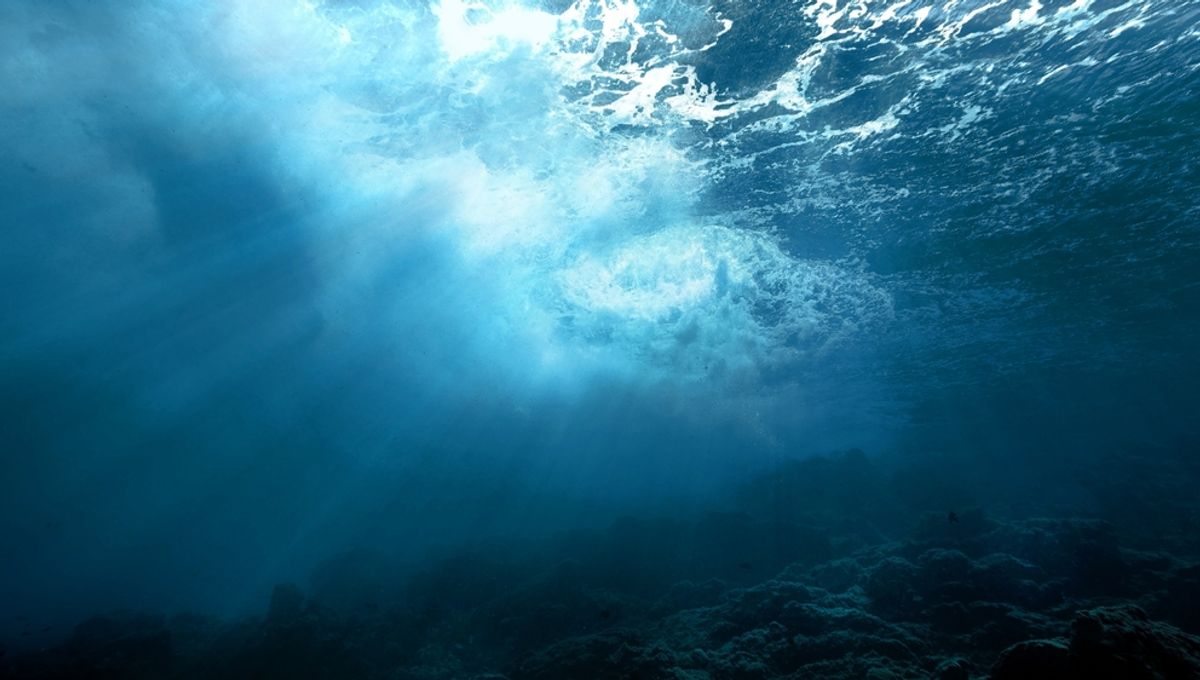
Life is surprisingly persistent in the Mariana Trench, the deepest place on Earth. Whether or not you subscribe to the idea that viruses count as “life”, little is known about the ones that make it their home. In a new study, researchers have identified a previously unknown bacteriophage residing in the trench, and in doing so, expanded our understanding about the diversity of viruses in the depths of our waters.

The newly discovered virus is a bacteriophage (often shortened to “phage”), a kind of virus that infects and replicates inside bacteria. Scientists believe they are the most abundant organisms on the planet and that wherever we find bacteria, it’s pretty likely that phages are there too.

Advertisement

An international team of researchers found the phage within sediment from the Mariana Trench, brought up from a depth of 8,900 meters (29,200 feet). “To our best knowledge, this is the deepest known isolated phage in the global ocean,” said Min Wang, a member of the research group, in a statement.


Catchily named vB_HmeY_H4907, the phage is thought to represent a brand-new family of siphoviruses, which have double-stranded DNA. It infects Halomonas, a group (or more accurately, genus) of bacteria that are often found in the deep sea and at hydrothermal vents and are thought to play an important role in these environments. 

As phages and their host bacteria frequently co-evolve, the researchers conducted a genomic analysis of the new phage’s DNA, in the hope it might provide clues as to its evolution and how it interacts with its Halomonas hosts.

The results of the analysis suggested that it is widely distributed in the ocean, but also evolutionarily distant from the reference viruses used. Significantly, it was also found to be lysogenic – it incorporates its own genome into the host genome, meaning that when the bacteria cell replicates and divides, the viral genetic material is also copied and ends up in the new cells.

Advertisement

This DNA replacement might provide evidence as to how both organisms have been able to persist in such harsh underwater environments, hinting at co-evolution. However, further research is required to fully examine this possibility; the study authors are planning future investigations into the molecular mechanisms driving interactions between deep-sea viruses and their hosts.

They also want to continue the search for new viruses in other extreme environments, in the hopes that it will broaden understanding of viruses and microbial life in the deep sea, and beyond.

The study is published in Microbiology Spectrum.

Deborah Bloomfield
Deborah Bloomfield

Related posts:

  1. Harvard University to end investment in fossil fuels
  2. North Korea says call to declare end of Korean War is premature
  3. Asian stocks fall to near 1-year low as oil prices stoke inflation worries
  4. “Unique” Medieval Christian Art Discovered By Accident In Sudan Desert

Source Link: Brand New Virus Discovered In Depths Of The Mariana Trench

Filed Under: News

Primary Sidebar

  • We May Finally Know What Causes These Bizarre Bright Blue Cosmic Flashes
  • What’s The Biggest Rock In The World?
  • There Is A Very Simple Test To See If You Have Aphantasia
  • Bringing Extinct Animals To Life: Is Artificial Intelligence Helping Or Harming Palaeoart?
  • This Brilliant Map Has 3D Models Of Nearly Every Single Building In The World – All 2.75 Billion Of Them
  • These Hognose Snakes Have The Most Dramatic Defense Technique You’ve Ever Seen
  • Titan, Saturn’s Biggest Moon, Might Not Have A Secret Ocean After All
  • The World’s Oldest Individual Animal Was Born In 1499 CE. In 2006, Humans Accidentally Killed It.
  • What Is Glaze Ice? The Strange (And Deadly) Frozen Phenomenon That Locks Plants Inside Icicles
  • Has Anyone Ever Actually Been Swallowed By A Whale?
  • First-Known Instance Of Bees Laying Eggs In Fossilized Tooth Sockets Discovered In 20,000-Year-Old Bones
  • Polar Bear Mom Adopts Cub – Only The 13th Known Case Of Adoption In 45 Years Of Study At Hudson Bay
  • The Longest-Running Evolution Experiment Has Been Going For 80,000 Generations
  • From Shrink Rays And Simulated Universes To Medical Mishaps And More: The Stories That Made The Vault In 2025
  • Fastest Cretaceous Theropod Yet Discovered In 120-Million-Year-Old Dinosaur Trackway
  • What’s The Moon Made Of?
  • First Hubble View Of The Crab Nebula In 24 Years Is A Thing Of Beauty… With Mysterious “Knots”
  • “Orbital House Of Cards”: One Solar Storm And 2.8 Days Could End In Disaster For Earth And Its Satellites
  • Astronomical Winter Vs. Meteorological Winter: What’s The Difference?
  • Do Any Animal Species Actively Hunt Humans As Prey?
  • Business
  • Health
  • News
  • Science
  • Technology
  • +1 718 874 1545
  • +91 78878 22626
  • [email protected]
Office Address
Prudour Pvt. Ltd. 420 Lexington Avenue Suite 300 New York City, NY 10170.

Powered by Prudour Network

Copyrights © 2025 · Medical Market Report. All Rights Reserved.

Go to mobile version