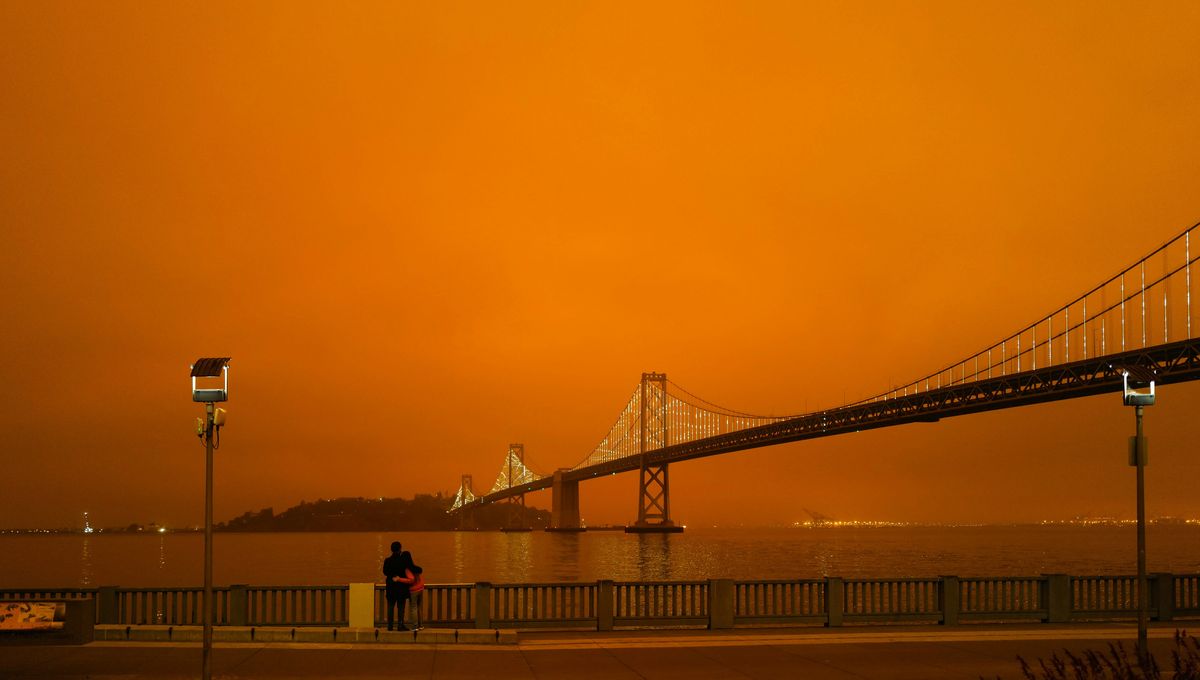
Of the planet’s 34 vital signs, 22 are now at record levels, with many still skidding and nosediving in the wrong direction.
The rest of this article is behind a paywall. Please sign in or subscribe to access the full content.
That’s the central message of this year’s State of the Climate 2025 report, an annual assessment of Earth’s natural systems by an international team of researchers led by Oregon State University. As you might expect, it’s not optimistic reading — though the authors manage to find a few glimmers of hope amid the alarming trends.
Here are some of the big messages from the report:
- Fossil fuels reached new highs: In 2024, global fossil fuel consumption surged to a record peak. Solar and wind power also reached new records, but their combined output was still significantly lower than fossil fuel use.
- Warming accelerates: 2024 was the hottest year on record and likely the hottest in at least the last 125,000 years. The pace of global heating is also ramping up, fueled by reduced aerosol cooling, potent cloud feedbacks, and a drop in the planet’s reflectivity.
- Carbon dioxide at a record level: Levels of CO2 in the atmosphere, the primary greenhouse gas driving climate change, reached a record high in 2024.
- Oceans and forest ecosystems at breaking point: Ocean heat content reached unprecedented levels, while wildfire-linked tree loss soared. By August 2025, the EU’s wildfire season was its worst on record, scorching over a million hectares (10,000 square kilometers).
- Extreme weather is becoming the new norm: The toll from extreme weather surged in 2024 and 2025. As just a few examples, Texas floods killed at least 135 people; Los Angeles wildfires caused over $250 billion in damage; and Typhoon Yagi left more than 800 dead in Southeast Asia.
- Ocean currents show the strain: The Atlantic Meridional Overturning Circulation (AMOC) is weakening, raising concerns about a potential collapse.
All told, these dozens of indicators paint a picture of an interconnected natural system changing at a dizzying pace. The report sternly warns: “a dangerous hothouse Earth trajectory may now be more likely due to accelerated warming, self-reinforcing feedbacks, and tipping points.”
“The last few years have seen vital signs breaking their records by extraordinary margins, like surface temperature, ocean heat content, sea ice loss, and fire-related tree cover loss,” Johan Rockström, a co-author of the report and Director of the Potsdam Institute for Climate Impact Research, said in a statement.
“The accelerating climate crisis presents a range of deeply interconnected risks to the planet’s essential operating systems – from critical tipping elements such as the ocean current system AMOC, to the integrity of Earth’s living biosphere, to the stability of global water resources. But our report also shows how this unprecedented threat to the Earth system – and society – can be mitigated.”
It’s not all bad news
However, it wasn’t all gray skies. The report did discern some reasons to be cheerful. Renewable energy infrastructure is booming and green energy sources, such as solar and wind, have the potential to supply up to 70 percent of global electricity by 2050. Public awareness of climate risks is also rising, helping to shift behavior and policy – slowly, but perceptibly – toward mitigation.
Above all, the researchers were keen to stress that it isn’t too late to act, although, as ever, the window is closing.
“Climate mitigation strategies are available, cost-effective, and urgently needed, and we can still limit warming if we act boldly and quickly, but the window is closing,” said co-lead author William Ripple. “The cost of mitigating climate change is likely much, much smaller than the global economic damages that climate-related impacts could cause.”
The full report is published in the journal BioScience.

Source Link: “Breaking Records By Extraordinary Margins”: 22 Of Earth's 34 Vital Signs At Record Levels
