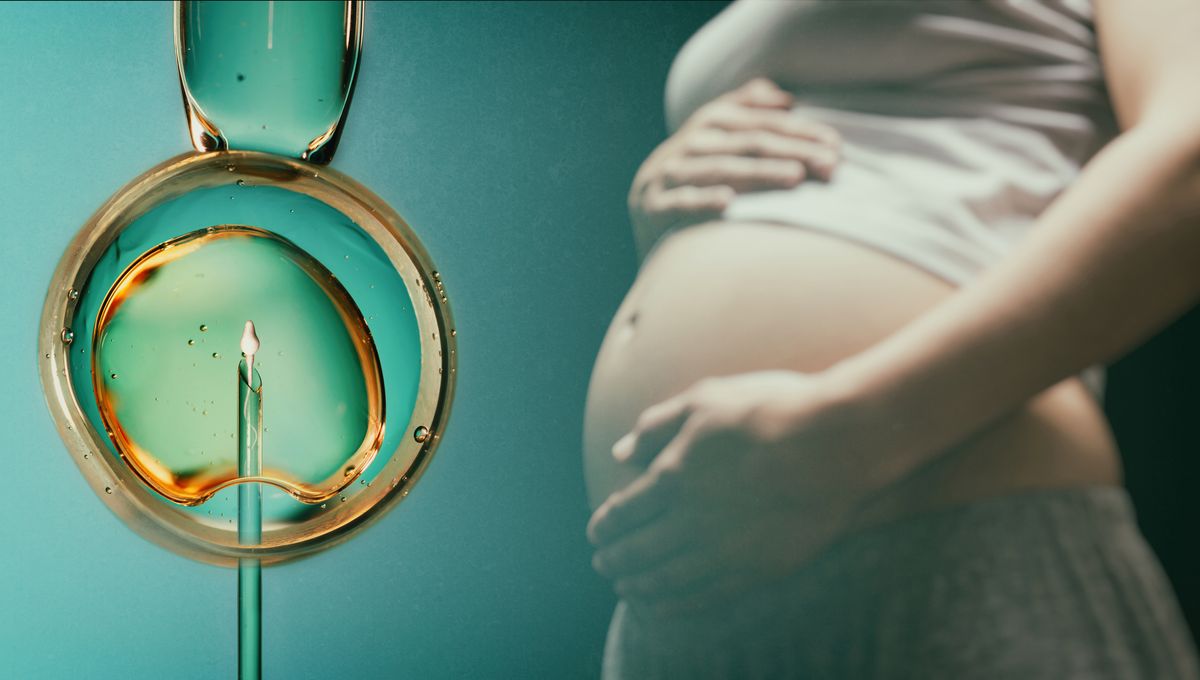
A new, noninvasive test to check the quality of embryos could make a huge difference to people undergoing fertility treatment. Right now, one of the big barriers to success in in-vitro fertilization (IVF) is that it’s difficult to know the best embryos to choose, but this new test could make that much easier.
“Unfortunately, IVF success still involves a big element of chance, but that’s something we’re hoping our research can change,” said co-senior author H. Irene Su of UC San Diego in a statement. This optimism will be welcomed by the thousands who seek IVF treatment each year, just a fraction of the estimated one in six people affected by infertility worldwide.
Since the birth of the world’s first IVF baby Louise Brown, back in 1978 in the UK, reproductive medicine has made great strides. But undertaking a course of IVF can be a long and arduous process for families, especially when you consider that the overall live birth rate for females under the age of 40 in the US is only 20-40 percent.
Doctors are under pressure to select the lab-grown embryos that have the best chance of resulting in a healthy pregnancy for each patient, but this is no easy task.
“Right now, the best way we have to predict embryo outcome involves looking at embryos and measuring morphological characteristics or taking some cells from the embryo to look at genetic makeup, both of which have limitations,” Su explained.
The team wanted to look at things a different way. The new method doesn’t examine the embryos themselves, but uses the leftover liquid medium that was used to grow them. It doesn’t involve any extra steps and doesn’t interfere with the IVF process, something that was very important to the researchers.
While cells are growing, they release small molecules of RNA, called exRNAs. These were only discovered within the last couple of decades, and scientists still aren’t sure of their exact function.
“It’s really only in the last decade that we have started to uncover the uses for exRNAs, and there could be countless other applications we haven’t yet discovered,” said co-senior author Sheng Zhong.
The team took samples of growth medium from embryos at five different stages to gather information about the profile of exRNAs they release as they develop. Around 4,000 of these molecules were identified at each stage. By inputting this data into a machine-learning model, it was possible to predict an embryo’s growth trajectory based on the exRNAs it produced.
The model’s predictions were found to match up with the tests that are currently used to check for embryo quality, suggesting this noninvasive method could potentially be used to weed out the embryos with the most likely chances of success.
The authors caution that it will be some time before any new method can be used in a clinical setting. “We have data connecting healthy morphology to positive IVF outcomes, and now we’ve seen that exRNAs can be used to predict good morphology, but we still need to draw that final line before our test will be ready for primetime,” said Su.
But it’s a promising start, and an innovative way of addressing an old problem.
As Su put it, rather than targeting the embryos directly, “What we’ve done is more akin to looking at what’s left behind at an archeological site to help us learn more about who lived there and what they did.”
The study is published in Cell Genomics.

Source Link: Breakthrough Embryo Test Could Improve The Odds For Thousands Undergoing IVF
