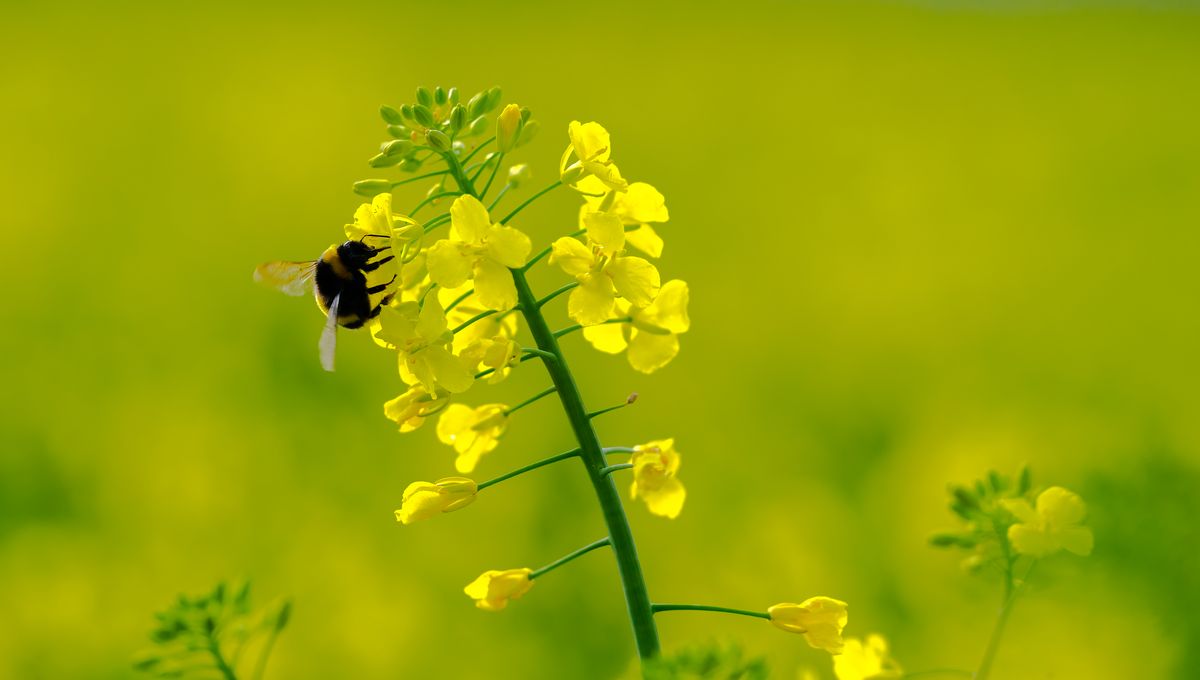
Bumblebees play one of the most important roles on the planet, pollinating many of our agricultural crops. Plus, they can be very cute. Sadly though, our favorite flying fluffballs are also under threat whilst they work; a new study has discovered that bumblebees are unable to detect even lethal concentrations of pesticides in nectar, putting both their health and crop pollination at risk.
A good sense of taste isn’t unusual for bees – they are known for being able to differentiate between sweet, salty, and bitter flavors. It’s this adeptness that researchers from the University of Oxford focused on, wanting to investigate if it could enable the bees to detect pesticide-contaminated nectar, which is generally thought of as tasting bitter, and avoid it.
The team conducted three different experiments, the first to establish that the bees could indeed detect a bitter taste. Quinine, a compound used in treating malaria and known to be bitter, was mixed into a sugar solution at various concentrations. At high concentrations, the bees avoided this solution, indicating they could taste its bitterness.
The last two experiments used a nectar solution mimicking that of oilseed rape, contaminated with a range of concentrations of neonicotinoid and sulfoximine pesticides. The second aimed to determine if the bees could taste the pesticides in the nectar, using electrophysiology to detect neuron activity in the “tastebuds” of the bees’ mouthparts. By tracking how often the neurons fired, they could figure out the strength of the response.
Regardless of whether the bees drank a standard sugar solution, or that laced with pesticides, the responses of the neurons were the same. As a result, the researchers concluded that bees’ mouthparts likely do not have the mechanisms that would allow them to detect pesticides.
The last experiment, a behavioral study, provided further confirmation by demonstrating that the bees didn’t avoid pesticide exposure either. Whether or not the solutions presented to them contained pesticides, the bumblebees consumed the same amount of food – even at concentrations of pesticide so high it could cause them harm.
“As bumblebees cannot taste pesticides and don’t experience immediate negative consequences from drinking them, they likely would not be able to avoid consuming nectar contaminated with pesticides in the field,” explained Rachel Parkinson, lead author of the study, in a statement.
Although not immediate, the negative effects of pesticides on bees can get pretty nasty. One recent study found that glyphosate-based pesticides can cause damage to bees’ color vision and long-term memory, whilst another found that the same pesticides used in the current study can mess with their ability to walk.
The researchers hope that their findings could be used to inform changes to pesticide formulations that could help bumblebees avoid treated crops. “This research is important when considering the use of pesticides on outdoor crops due to the risk posed to bees as they will not avoid drinking these compounds,” said Parkinson.
“Potentially, these findings could be applied towards searching for a non-toxic compound that tastes bad to bees and could be used as a ‘bee deterrent’ on pesticide-treated crops that do not require insect pollination.”
The study is published in eLife.

Source Link: Bumblebees Are Unable To Taste Pesticides, Even At Lethal Levels
