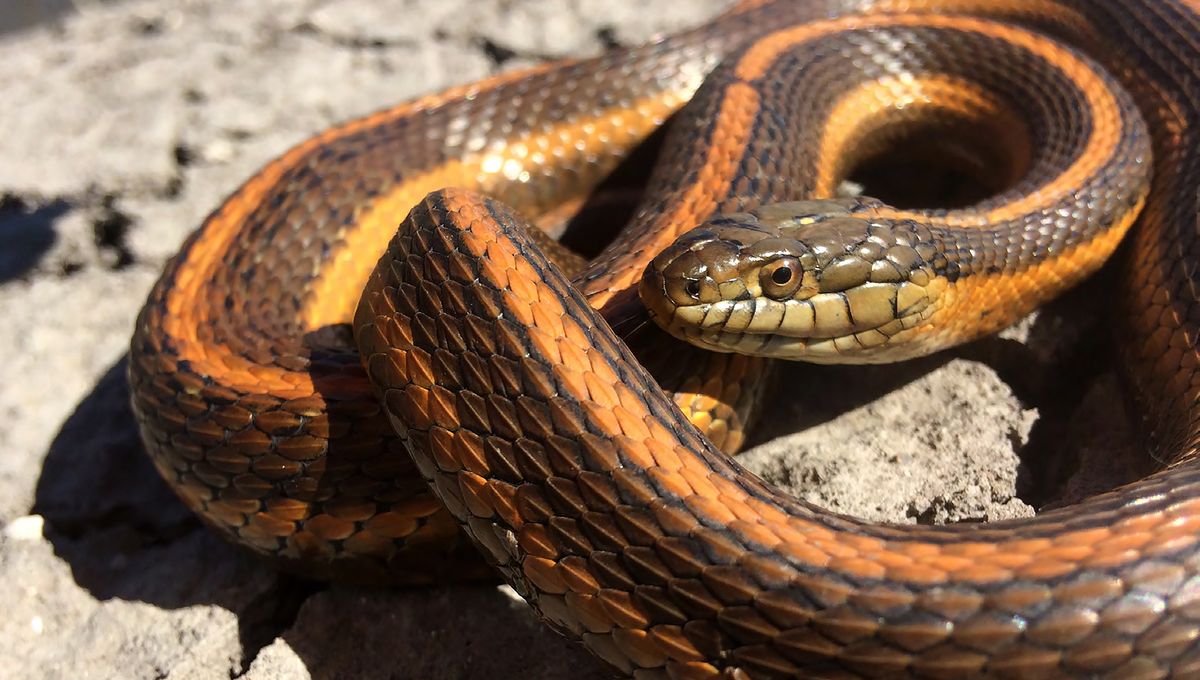
It’s a hiss-toric time for the giant garter snake (Thamnophis gigas), as this wetland-dwelling reptile just became California’s state snake, a designation that’s hoped to bring more awareness to the plight of this vulnerable species.
The rest of this article is behind a paywall. Please sign in or subscribe to access the full content.
The “giant” part of its name is pretty apt – adult giant garter snakes can reach a whopping 1.62 meters (5.3 feet). Sure, it’s no Medusa, but it is the largest of all the garter snakes, which is certainly nothing to be sniffed at.
The species is found exclusively in California, where, as one of the most aquatic garter snakes, it was historically found in wetland habitats like flood basins, freshwater marshes, and tributaries in the state’s Central Valley.
We say “historic” because nowadays, only around 5 percent of this habitat remains. That’s largely the result of urbanization, the development of infrastructure and agricultural land, and the diversion of water.
Couple this with the introduction of invasive species – including other animals that compete with the snakes for resources, and invasive plants that are tackled with methods that may harm the snakes – the impact of climate change-induced flooding and drought, and water pollution, and the result is that the giant garter snake population has reduced by more than 90 percent in the last century, and continues to decrease.
As a result, the snakes have been deemed a vulnerable species on the IUCN Red List, and as a threatened one in California.
While the remaining population can make use of watery agricultural land, like rice fields and irrigation canals, the goal of conservationists is to protect and restore their traditional wetland habitat to help bring the giant garter snake back from the brink.
That’s where Senate Bill 765 came in – the bill to designate the species as California’s state snake. Authored by Senator Roger Niello and supported by conservation organization Save The Snakes and the California Rice Commission, the bill successfully made its way through the state legislature, and was brought into action by Governor Gavin Newsom on October 9.
Now, it’s hoped that the designation will kickstart even more conservation.
“Designating the giant garter snake as California’s official State Snake is more than a symbolic gesture; it’s a crucial step in raising awareness about this vulnerable species and its vital role in our state’s ecosystems,” said Michael Starkey, Founder and Executive Director of Save The Snakes, in a statement made in April 2025, when the bill made it through the Governmental Organization Committee.
“This designation will amplify conservation efforts, fostering public education and ensuring the protection of this unique and ecologically significant reptile for generations to come. It’s a chance to highlight the importance of wetlands and the delicate balance of nature within California.”

Source Link: California Has A New State Snake, And It’s A 1.6-Meter-Long Giant
