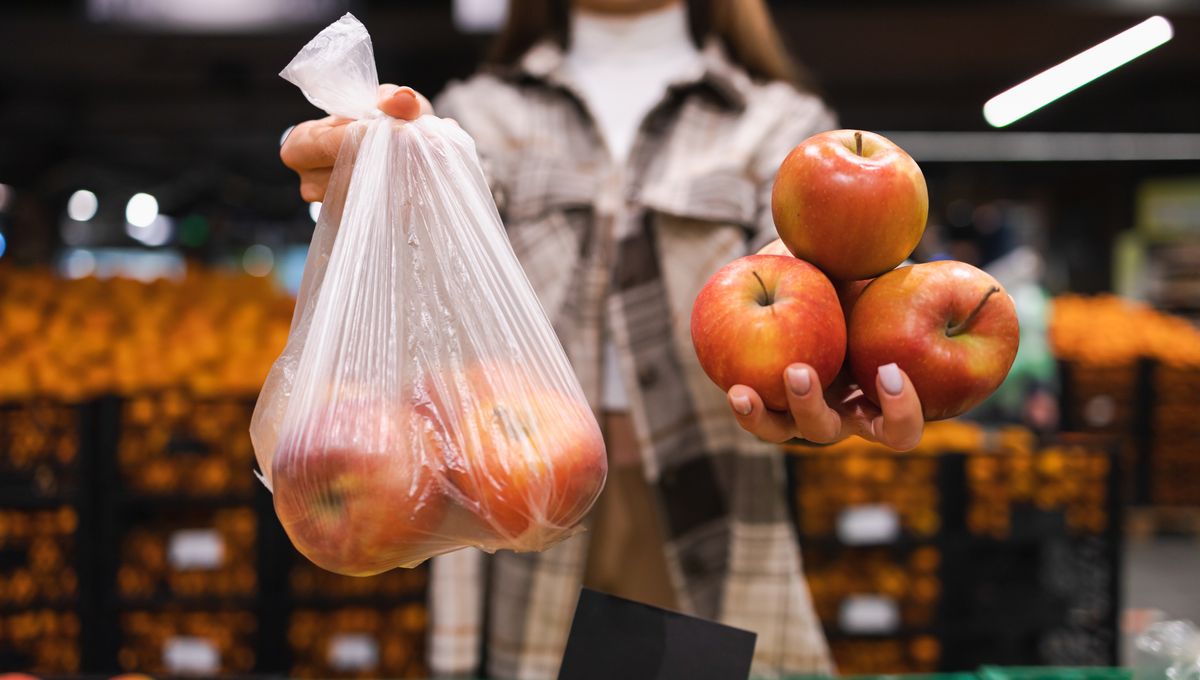
A decade ago, California became the first US state to ban single-use plastic bags. It proved to be a massive failure. Hoping to rectify the problem, the Golden State is doubling down with a new, even bigger plastic bag law.
The initial 2014 ban prohibited grocery stores from distributing free single-use plastic bags for less than $0.10. The idea was that customers would either bring their own bags or purchase “reusable” or recycled paper bags for a small fee.
In reality, shops started selling thicker plastic bags that could be used many times in theory, but were much trickier to recycle (and were scarcely reused anyway).
According to state Senator Catherine Blakespear, one of the new bill’s supporters, a study found the amount of plastic bags thrown away by Californians grew from 157,385 tons before the ban to 231,072 tons by 2022 – that’s a 47 percent increase.
Now, lawmakers are looking to close this loophole. On September 22, California Governor Gavin Newsom signed in a new law that effectively outlaws all plastic shopping bags from being sold at the checkout.
Under the legislation, grocery stores can only offer recycled paper bags or consumers can simply just use their own bags they brought to the shop.
“Instead of being asked do you want paper or plastic at checkout, consumers will simply be asked if they want a paper bag, if they haven’t brought a reusable bag. This straightforward approach is easy to follow and will help dramatically reduce plastic bag pollution,” Senator Blakespear said in a statement.
The law has been supported by several local and international groups focused on protecting the environment, including Californians Against Waste, Heal the Bay, Surfrider Foundation, Monterey Bay Aquarium, Oceana, and Ocean Conservancy.
“Plastic grocery bags have ranked in the top ten most commonly collected items by California Coastal Cleanup Day volunteers in seven of the last 10 years. Over that decade, volunteers have cleaned up enough plastic bags to span the length of the Golden Gate Bridge nearly 30 times,” Dr Anja Brandon, Ocean Conservancy’s Director of Plastics Policy, said in another statement.
“Plastic grocery bags are not only one of the most common plastics polluting our beaches, but also one of the top five deadliest forms of plastic pollution to marine life. But we have a simple solution that has been shown to reduce this type of plastic pollution: banning them. We thank Senator Blakespear, Assembly member Bauer-Kahan, and Governor Newsom for working with advocates to make this bill a reality,” she noted.
While California’s ban has been welcomed by environmentalists, the scale of the planet’s plastic problem needs much more than a statewide ban. Between 75 and 199 million tonnes of plastic is currently lost in our oceans, and that figure is only set to increase.
Much of the world’s plastic emissions come from just a handful of countries. A 2024 study published in Nature found India was the biggest contributor to plastic pollution – producing around a fifth of the total amount – followed by Nigeria and Indonesia. China, previously reported to be the worst, was listed as the fourth biggest producer thanks to recent improvements in collecting and waste processing, followed by Pakistan, Bangladesh, Russia, Brazil, Thailand, and the Democratic Republic of the Congo.

Source Link: California's 2014 Plastic Bag Ban Flopped, So They're Trying Again With A New One
