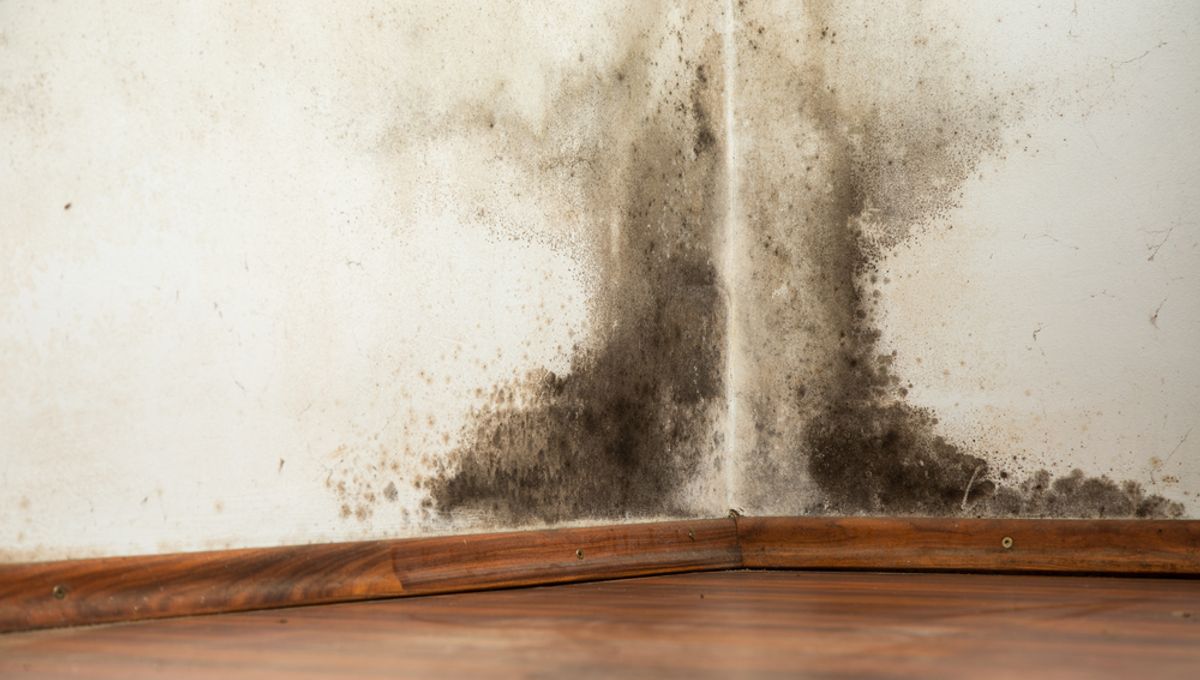
Left untreated, household mold can trigger an array of nasty health problems and damage property. But what if there was a fast and easy way to detect not just the presence of mold in a building, but determine the specific strain of mold that may be infecting your home?
The rest of this article is behind a paywall. Please sign in or subscribe to access the full content.
A team of researchers has built a contraption that uses an electronic nose to sniff out mold. Using UV-activitated nanowires, the device is also able to distinguish between two common strains of indoor mold, Stachybotrys chartarum and Chaetomium globosum, with over 98% accuracy.
“Therefore, our results demonstrate that the e-nose can not only detect but also identify different mold genera, and thus making a significant step toward fast, objective, and cost-effective indoor air quality monitoring,” researchers write.
It is able to do so thanks to microbial volatile organic compounds (MVOCs) released from mold in the form of gases. The e-nose is made of microscopically small wires measuring tens of nanometers or less (nanowires) and sensing material, which is able to calculate the concentration of certain gases based on small changes in electrical resistance.
Using a process called linear discriminant analysis (LDA), a technique that separates objects into two or more groups based on a shared set of features, the technology can identify two types of mold frequently found in damp, water-damaged environments: the slow-growing S. chartarum, or black mold, and the fast-growing C. globosum.
This is because the two molds release different combinations of MVOC. S. chartarum, for example, discharges anisole, 3-octanone and several types of alcohol, whereas C. globosum emits 3-octanone, 2-pentatnone and 1-hexanol, and various secondary metabolites, such as chaetoglobosins and azaphilones. Impressively, improved versions of LDA were able to identify different mold types with 98% accuracy.
Crucially, this technology is quick and affordable, the researchers note, whereas more traditional methods for tracking down mold can be costly both in terms of time and money, requiring sampling and a culture-based laboratory analysis, or the assistance of mold-detection dogs. The first can take three to seven days, while the latter – though very cute – involves training (again, expensive and time-consuming) and is unable to distinguish between different types of mold.
While the device has proved impressively accurate in a laboratory setting, there may be a couple of challenges when it comes to applying the technology to real-life environments. The average home tends to be a lot busier than the typical lab, and the e-nose may come up against interferences from building materials and household products that could impact its mold-sniffing capabilities.
The researchers also believe it will be possible to identify other common molds, such as penicillium – though further research is needed to determine with what accuracy it can do so.
The study is published in the journal Advanced Sensor Research.

Source Link: Can This Electronic Nose "Smell" Indoor Mould?
