


In 2025, botanist Chris Thorogood shared a video following what he described as a “life-changing” encounter in Sumatra. After days of trekking day and night, his team got to witness the opening of a Rafflesia hasseltii bloom – one of the planet’s most elusive plants and the largest flower on Earth (that also happens to smell like decomposing corpses). It was the first sighting in 13 years, and an even rarer moment to have seen the bloom in action, but there are plant species on Earth today that are even harder to find in the wild.
Rarity is a complex thing to measure when you consider that although some species may be extinct in the wild, there could be many of them in botanic gardens (sometimes known from just one sex). As such, the world’s rarest plant? We don’t really know, but what I can tell you is that some of the candidates are very big, very hungry, and very smelly.
Encephalartos woodii
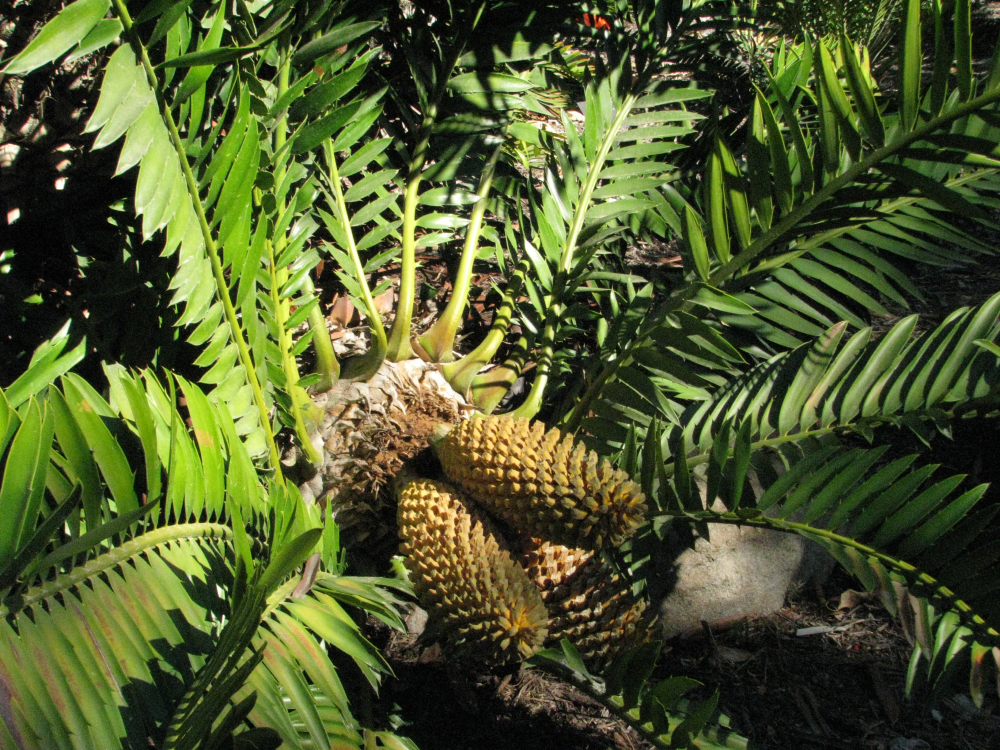
We only know Encephalartos woodii from male plants.
Only one clump of Encephalartos woodii has ever been reported in scientific literature. It was recorded by John Medley Wood back in 1895 in the oNgoye Forest in South Africa’s KwaZulu-Natal province.
There were four trunks within the clump, three of which were eventually removed from the wild to be protected at the Durban Botanic Gardens, while the fourth was sent to Pretoria. Repeated excursions to the region have since failed to identify the species in the wild.
It’s now classified as extinct in the wild, but you’ll find hundreds of specimens being cared for at collections across the globe. These plants are all genetically identical males having come from Wood’s original clump, however, which is why it’s unlikely we’ll be able to re-establish a wild population.
Ravenea moorei

This incredibly rare palm was thought to be extinct in the wild until just a few years ago, with the only known cultivated plant housed in the UK’s Kew Gardens. Then, in 2023, Kew sent a team on a field trip to the Comoro Islands and found 12 adult plants in the tropical rainforest. It was happy news for fans of exceptionally rare palms, but with so few left in the wild, the species remains vulnerable to extinction (and it’s not the only one).
Nepenthes megastoma

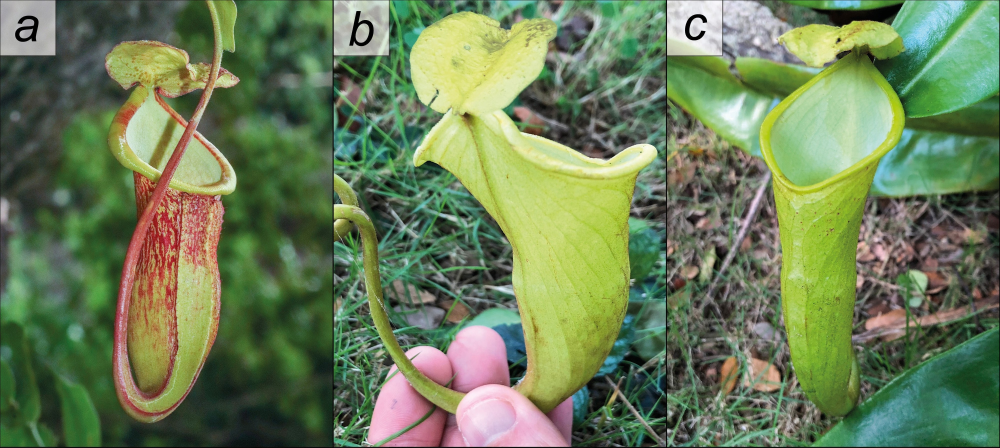
Nepenthes megastoma has evolved to eat insects and live on sheer cliff faces, but it’s still not safe.
Image credit: Altomonte et al., 2025
A new species of carnivorous pitcher plant was recently described from Palawan Island in the Philippines. Named Nepenthes megastoma for its “large mouth”, it’s an impressive specimen, but one that scientists say is already at risk of extinction, with fewer than 50 known plants in existence.
It’s estimated there are only around 19 mature clumps and 12 non-flowering plants in the wild. As such, their risk of extinction is high, as a single typhoon or drought could wipe them out. More pressing, however, is the threat they’re under from human activity, including habitat degradation, poaching, and climate change.
Nymphaea thermarum

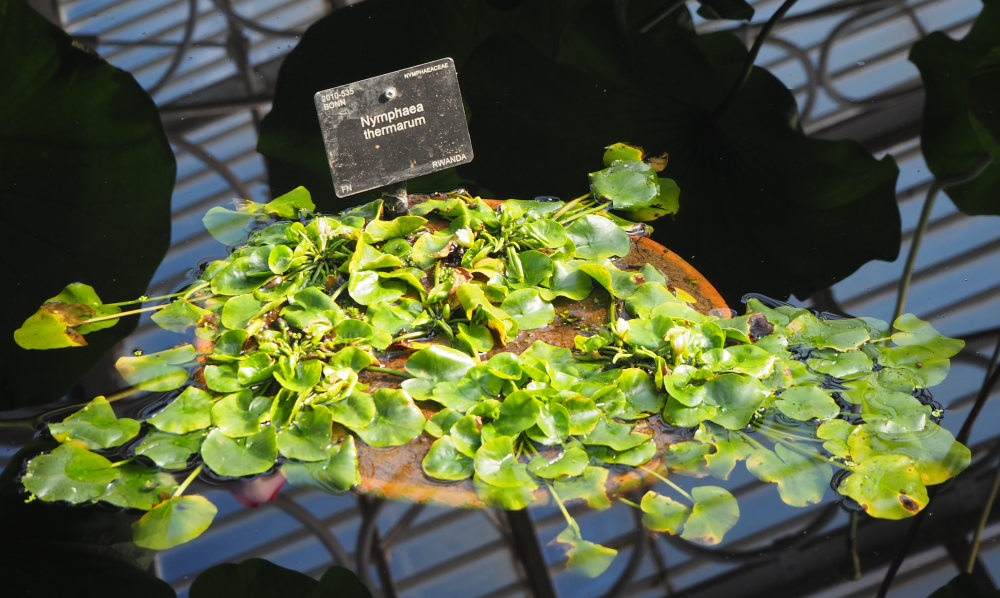
Behold, the world’s smallest water lily.
Some rare plants like to make the job of searching for them that little bit harder by being very, very tiny. Enter: Nymphaea thermarum, the smallest water lily in the world.
These plants grow in small clusters with leaves that can be just 1 centimeter (0.39 inches) across. Even their blooms are capped at a modest 2 centimeters (0.79 inches) long.
It was believed to have gone extinct in the wild after the hot spring it called home was drained for human use. The race was on to propagate a lily from seed (not least because a rat ate the last remaining plant growing in a botanic garden in Germany). Kew was the first to see success, followed shortly by UC Davis. Still, one species seems hell-bent on their demise.
“Funnily enough, rats have also tried taking a bite out of our Nymphaea thermarum,” writes UC Davis, “which is why you’ll find the plant in a cage if you visit our Conservatory.”
Special mention: The “corpse flowers”

We’ve already basked in the corpse-like aroma of Rafflesia, but there is another exceptionally rare plant on Earth that likes to get stinky. Known to science as Amorphophallus titanum, it’s also known as the titan arum or corpse flower because it releases the stench of decomposing flesh when in bloom to attract pollinators.
A recent estimate suggested there could be as few as 162 individuals left in the wild. It’s hardly surprising, then, that people are queueing up to get a whiff when it blooms at botanic gardens – an event that only occurs every 7 to 10 years.
Is smelling like hot death a bit gross? Sure, but don’t you kind of wish you could see it in person now? Yeah, us too.


Source Link: Carnivorous, Enormous, And Corpse-Scented: What Are The Rarest Plants On Earth?