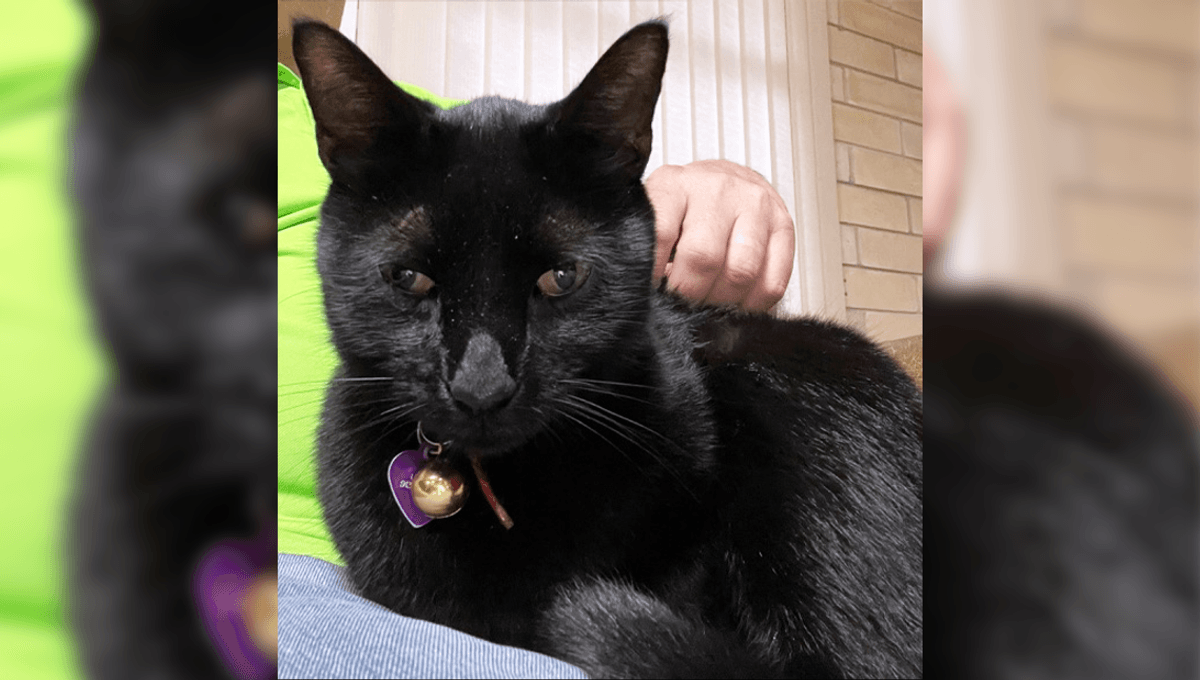
Thanks to some inadvertent feline fieldwork, scientists have detailed the first-ever jeilongvirus to be found in the US – and it also happens to be the first of its kind ever to have been identified at all.
It began when a cat named Pepper strolled into his home in Gainesville, Florida, and dropped a dead mouse at his owner’s feet. A well-intentioned, perhaps, but rather unpleasant offering that would send plenty of us screeching in the opposite direction.
That wasn’t the case for Pepper’s owner, John Lednicky – for him, the mouse was an opportunity.
Lednicky, a research professor at the University of Florida, is an expert in viruses and had been conducting research investigating whether or not rodents were a vector for mule deerpox virus, a type of virus that causes characteristic skin lesions in deer.
When Lednicky and his team tested the mouse, however, there wasn’t any mule deerpox virus to be found. Instead, they discovered that it was infected with a jeilongvirus.
Until this point, the Jeilongvirus genus of viruses had never been seen in the US before; they’d only been found in South America, Europe, Africa, and Asia, where they largely infect rodents, but can also infect bats and felines (don’t worry – Pepper didn’t get sick).
But not only had the researchers – and Pepper – made a US-first discovery, they’d also made a world-first one; genetic testing revealed the jeilongvirus to be distinct from others within the genus. It’s been named Gainesville rodent jeilong virus 1 (GRJV1).
“We were not anticipating a virus of this sort, and the discovery reflects the realization that many viruses that we don’t know about circulate in animals that live in close proximity to humans. And indeed, were we to look, many more would be discovered,” said Emily DeRuyter, first author of the paper detailing the discovery, in a statement.
Jeilongviruses also belong to a wider viral family known as the paramyxoviruses, which are known for being transmitted between species – called a spillover event when it moves to a new host – and causing respiratory infections in humans. The team infected the cells of different species with GRJV1 to see if it had the potential to do the same.
“It grows equally well in rodent, human, and nonhuman primate (monkey) cells, making it a great candidate for a spillover event,” Lednicky explained.
That’s not to say a spillover event is likely to occur – most humans don’t have much contact with the wild rats and mice that carry them – but it’s something that the team says should be investigated.
“Ideally, animal studies would be done to determine whether the virus causes illness in rodents and other small animals,” said Lednicky. “Eventually, we need to determine if it has affected humans in Gainesville and the rest of Florida.”
The study is published in Pathogens.

Source Link: Cat Accidentally Discovers First Of A New, Exotic Virus In The US
