• Email Us: [email protected]
  • Contact Us: +1 718 874 1545
  • Skip to main content
  • Skip to primary sidebar

Medical Market Report

  • Home
  • All Reports
  • About Us
  • Contact Us

Catch The Last Supermoon Of The Year This Week

December 2, 2025 by Deborah Bloomfield

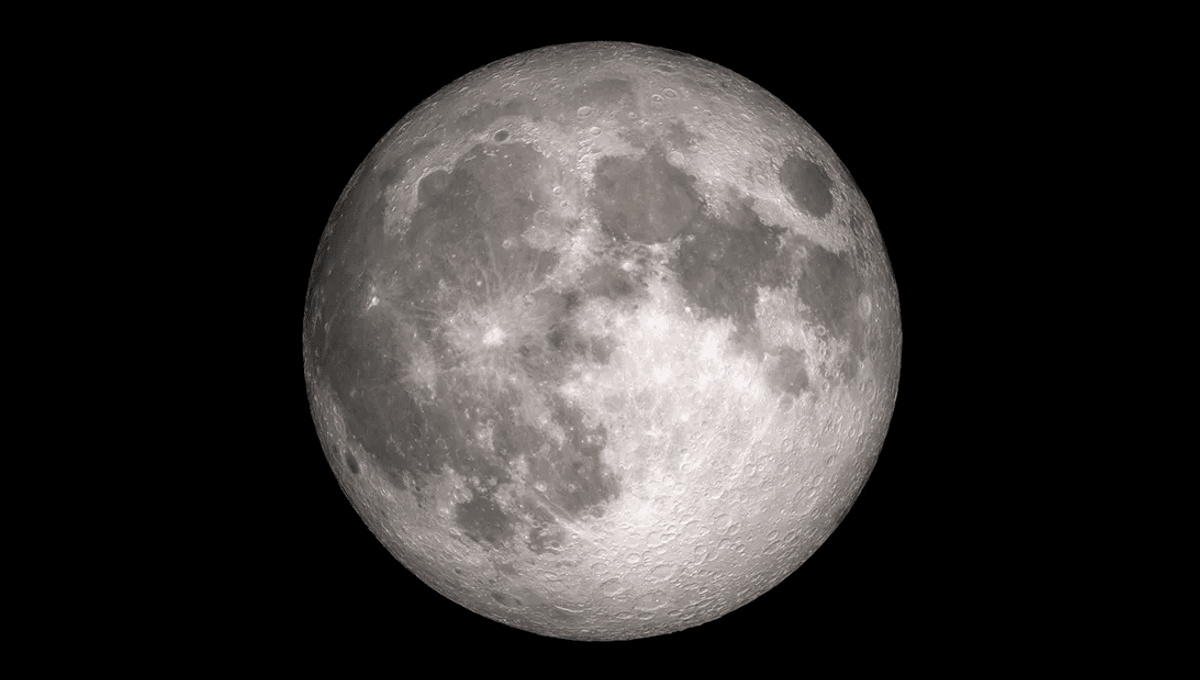
Be ready, werewolves and witches, as well as general lovers of the night sky. The last full Moon of the year is happening on Thursday, December 4, and it will be a supermoon, meaning that it will appear brighter and larger in the sky. This effect is due to the proximity of the Moon as it enters its fullness.

The rest of this article is behind a paywall. Please sign in or subscribe to access the full content.

This time the full Moon will happen when our natural satellite is just 357,219 kilometers (221,965 miles) away, just a few hundred kilometers from its record low in November, which was the closest and thus the brightest full Moon of the year.

The next supermoon is only about a month away, on January 3, and it will be a few thousand kilometers farther still. 

Usually, there are three or four supermoons every year. These last three, in October, November, and now December 2025, are special because they’re all happening within one season, which is a rarer coincidence. The next sequence like this will be during the winter of 2028, with supermoons on January 12, February 10, and March 11.

What even is a supermoon?

There is no formal definition of a supermoon. The term was coined by an astrologer, and in an ironic twist, it has been appropriated by the astronomy community to intrigue more people about the beauty of the Moon. 

The Moon’s orbit is not a circle. While the average distance between the Earth and the Moon is 384,400 kilometers (238,900 miles), as the Moon travels around it can get a couple of tens of thousands of kilometers closer or farther away. 

The definition that we and many others have embraced is that if the full Moon happens within 90 percent of the Moon’s closest approach to Earth, then it’s a supermoon. In terms of distance, that’s within 367,607 kilometers (228,420 miles) away.

The Moon can get as far as over 405,000 kilometers (250,000 miles), so the difference is noticeable if you consistently look at the Moon – up to a 14 percent increase in size and a 30 percent increase in brightness, according to NASA.

“It’s very rare that an orbiting body follows an exactly circular path. The Moon has a slight ‘eccentricity’, meaning it travels in an elliptical path around the Earth – so it’s sometimes nearer and sometimes further away,” explains Professor Sara Russell, a planetary scientist at the Natural History Museum, London.

There will be plenty of photos online of the beautiful full Moon, and while smartphones do not seem to be the ideal camera equipment to capture a bright moon, there are a few simple tricks that can help.

Deborah Bloomfield
Deborah Bloomfield

Related posts:

  1. Oil prices advance amid U.S. supply tightness signals
  2. Singtel divests Australian tower network to AustralianSuper for $1.4 billion
  3. We Can All Learn Echolocation – And Restructure Our Brains – In Just 3 Months
  4. Tourists Swimming With Orcas In Mexico As Tour Guides Exploit Legal Loopholes

Source Link: Catch The Last Supermoon Of The Year This Week

Filed Under: News

Primary Sidebar

  • Gravitational Lenses Confirm That Something Is Still Broken In The Universe
  • Adorable Camera Trap Footage Of Moms And Cubs Heralds Conservation Win For Sunda Tigers
  • Exercise VS Sleep: Which Is More Important When You Don’t Have Time For Both?
  • A Deep-Sea Mining Test Carved Up The Seabed. Two Years On, We’re Seeing Devastating Impacts
  • Enormous New Study Finds COVID-19 mRNA Shots Associated With 25 Percent Lower Risk Of Death From Any Cause
  • What Is The Best Movie Set In Space? We Asked Real-Life Astronauts To Find Out
  • Chernobyl’s Protective Shield Is Broken After A Drone Strike, Warns UN Nuclear Watchdog
  • Isaac Newton Was Born On Christmas Day – And January 4th
  • Why Is December The 12th Month Of The Year When Its Name Means 10?
  • Poor Sauropod Was Limping When It Made Curious 360° Looping Dinosaur Track
  • Inhaling “Laughing Gas” Could Treat Severe Depression, Live Seven-Arm Octopus Spotted In The Deep Sea, And Much More This Week
  • People Are Surprised To Learn That The Closest Planet To Neptune Turns Out To Be Mercury
  • The Age-Old “Grandmother Rule” Of Washing Is Backed By Science
  • How Hero Of Alexandria Used Ancient Science To Make “Magical Acts Of The Gods” 2,000 Years Ago
  • This 120-Million-Year-Old Bird Choked To Death On Over 800 Stones. Why? Nobody Knows
  • Radiation Fog: A 643-Kilometer Belt Of Mist Lingers Over California’s Central Valley
  • New Images Of Comet 3I/ATLAS From 4 Different Missions Reveal A Peculiar Little World
  • Neanderthals Used Reindeer Bones To Skin Animals And Make Leather Clothes
  • Why Do Power Lines Have Those Big Colorful Balls On Them?
  • Rare Peek Inside An Egg Sac Reveals An Adorable Developing Leopard Shark
  • Business
  • Health
  • News
  • Science
  • Technology
  • +1 718 874 1545
  • +91 78878 22626
  • [email protected]
Office Address
Prudour Pvt. Ltd. 420 Lexington Avenue Suite 300 New York City, NY 10170.

Powered by Prudour Network

Copyrights © 2025 · Medical Market Report. All Rights Reserved.

Go to mobile version