• Email Us: [email protected]
  • Contact Us: +1 718 874 1545
  • Skip to main content
  • Skip to primary sidebar

Medical Market Report

  • Home
  • All Reports
  • About Us
  • Contact Us

Chernobyl’s Mutant Wolves Have Evolved Anti-Cancer Abilities

February 7, 2024 by Deborah Bloomfield

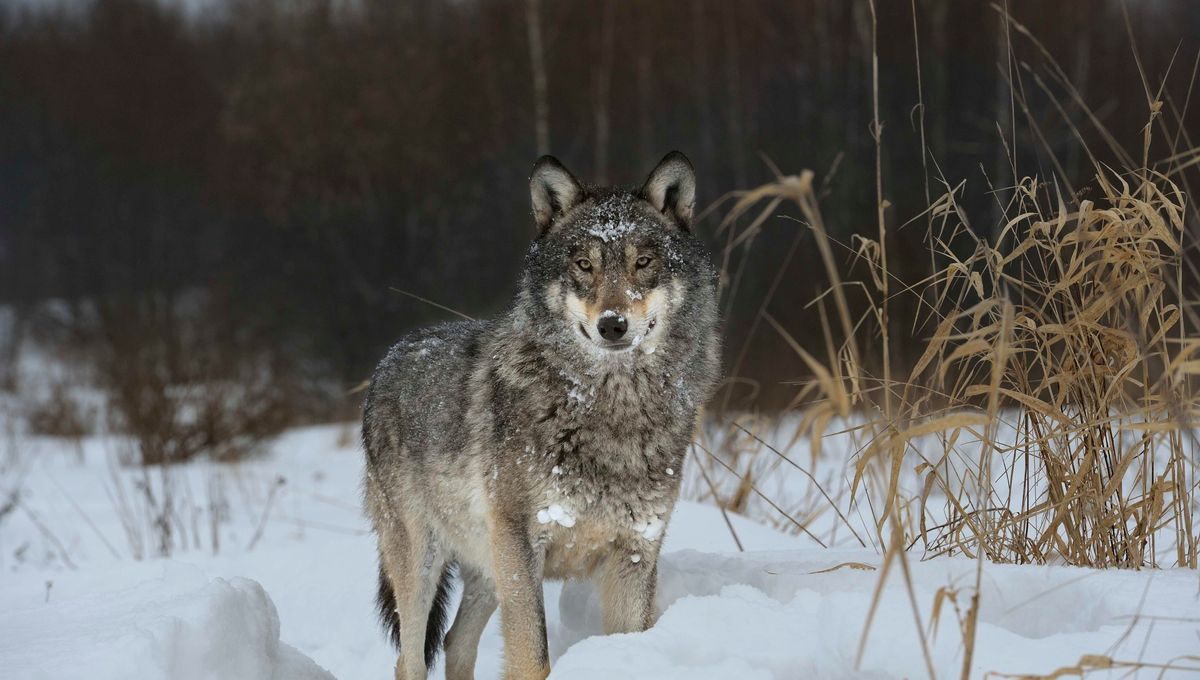
New research is showing that the population of wolves living in the Chernobyl Exclusion Zone (CEZ) is genetically different from their counterparts outside of the region. Remarkably, the irradiated wolves appear to have developed protective mutations that increase their odds of surviving cancer. 

Populations of wolves, as well as other animals, have boomed in the CEZ of Ukraine since the area was abandoned following the infamous 1986 nuclear disaster. In the absence of people, wildlife has been allowed to thrive without disruption of human activity. 

Advertisement

However, to enjoy this freedom, animals must confront the glaring problem of radiation. After all, that is why humans left in the first place. 

To understand how these animals survive against the odds, Cara Love, an evolutionary biologist and ecotoxicologist at Princeton University, has been studying the wolves of Chernobyl for a decade. 

In 2014, Love and her colleagues headed to the CEZ and took blood samples from the wolves to understand their responses to cancer-causing radiation. Some were also fitted with radio collars to gather information on their locations and their exposure to radiation.

“We get real-time measurements of where they are and how much [radiation] they are exposed to,” Love said in a statement.

Advertisement

The research showed that wolves in the CEZ are exposed to more than 11.28 millirem of radiation every single day for their entire lives – that’s over six times the legal limit for human workers.

The researchers also noted that the wolves have altered immune systems, similar to patients undergoing radiation treatment for cancer. Furthermore, genetic analysis suggests that parts of the wolves’ genome have developed some resilience to cancer.

Similar findings have been seen among the hundreds of semi-feral dogs that live in the CEZ. In 2023, scientists found the free-wheeling dogs of Chernobyl were genetically different from pet dogs living elsewhere in the world.

Love’s discovery could have implications for human health too. Love hopes to use the findings to identify protective mutations that increase people’s odds of surviving cancer. 

Advertisement

Unfortunately, the COVID-19 pandemic and the ongoing war with Russia have prevented Love and her collaborators from returning to the CEZ. There’s no telling if and when they will be able to return.

“Our priority is for people and collaborators there to be as safe as possible,” said Love.

The new research was presented last month at the Annual Meeting of the Society of Integrative and Comparative Biology’s Annual Meeting in Seattle, Washington.

Deborah Bloomfield
Deborah Bloomfield

Related posts:

  1. Kobe Bryant designed and signed Hublot watch hits the auction block
  2. North Korea says call to declare end of Korean War is premature
  3. Ukrainian police arrest hacker who caused $150 million damage to global firms
  4. Formula Calculate Any Digit Of Pi, Nobody Noticed For Centuries

Source Link: Chernobyl's Mutant Wolves Have Evolved Anti-Cancer Abilities

Filed Under: News

Primary Sidebar

  • Astronomers Catch Incredible First Direct Images Of Objects Colliding In Another Star System
  • Billionaire Jared Isaacman Finally Confirmed As Head Of NASA, As Agency Faces Uncertain Future
  • Something Just Crashed Into The Moon – And Astronomers Captured The Whole Event
  • These “Living Rocks” Are Among The Oldest Surviving Life And Are Champion Carbon Dioxide Absorbers
  • Ambitious Iguana “Love Island” For Near-Extinct Reptiles Becomes Epic Conservation Success Story
  • Sol 1,540: NASA Releases Video Of Perseverance Rover’s Record-Breaking Drive On Mars
  • Why Carl Sagan Was Way Ahead Of His Time And The Legacy He Left Behind
  • Why Were Pompeii Victims All Wearing Thick Woolly Cloaks In August?
  • We May Finally Know What Causes These Bizarre Bright Blue Cosmic Flashes
  • What’s The Biggest Rock In The World?
  • There Is A Very Simple Test To See If You Have Aphantasia
  • Bringing Extinct Animals To Life: Is Artificial Intelligence Helping Or Harming Palaeoart?
  • This Brilliant Map Has 3D Models Of Nearly Every Single Building In The World – All 2.75 Billion Of Them
  • These Hognose Snakes Have The Most Dramatic Defense Technique You’ve Ever Seen
  • Titan, Saturn’s Biggest Moon, Might Not Have A Secret Ocean After All
  • The World’s Oldest Individual Animal Was Born In 1499 CE. In 2006, Humans Accidentally Killed It.
  • What Is Glaze Ice? The Strange (And Deadly) Frozen Phenomenon That Locks Plants Inside Icicles
  • Has Anyone Ever Actually Been Swallowed By A Whale?
  • First-Known Instance Of Bees Laying Eggs In Fossilized Tooth Sockets Discovered In 20,000-Year-Old Bones
  • Polar Bear Mom Adopts Cub – Only The 13th Known Case Of Adoption In 45 Years Of Study At Hudson Bay
  • Business
  • Health
  • News
  • Science
  • Technology
  • +1 718 874 1545
  • +91 78878 22626
  • [email protected]
Office Address
Prudour Pvt. Ltd. 420 Lexington Avenue Suite 300 New York City, NY 10170.

Powered by Prudour Network

Copyrights © 2025 · Medical Market Report. All Rights Reserved.

Go to mobile version