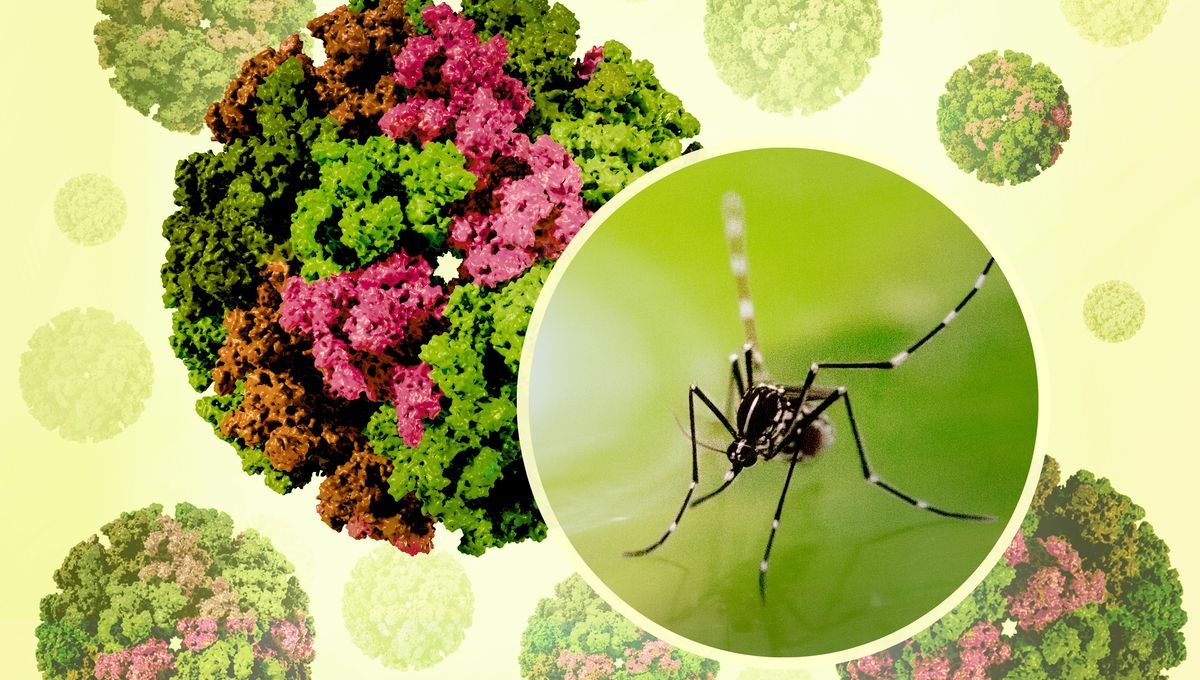
A chikungunya virus outbreak in China is prompting US health authorities to take another look at their guidance for travelers. The virus was first identified back in the 1950s, and since then outbreaks have been growing more frequent – but what are the symptoms, and can it be prevented?
How do people catch chikungunya virus?
Chikungunya is spread via the bite of infected Aedes albopictus mosquitoes. Also known as the Asian tiger mosquito or forest day mosquito, these critters are the same ones responsible for spreading dengue. Aedes aegypti, also known for transmitting dengue as well as yellow fever and Zika virus, can be vectors of chikungunya too.
In the first few days following infection, people with chikungunya have high enough levels of virus circulating in their bloodstream to infect other mosquitoes that may bite them. There’s also a risk of spreading the virus through blood transfusions, handling infected blood in a lab, or to health professionals taking blood samples from patients.
In rare cases, the virus may spread to a fetus in-utero or to a newborn at birth, but there have been no reports of infection via breast milk according to the Centers for Disease Control and Prevention (CDC).
What are the symptoms of chikungunya virus disease?
Not everyone infected with chikungunya will develop symptoms, but in those who do they typically come on between four and 8 days after infection.
The key symptoms are a sudden-onset fever and often severe joint pain. This can persist for months or even years in some cases. The word chikungunya comes from the Kimakonde verb kungunyala, which roughly translates as “to walk bent over”, reflecting the painful symptoms that patients experience.
Other symptoms include muscle pain, headache, and fatigue – all things that mimic other diseases, so it can be hard to distinguish between chikungunya and other mosquito-borne infections like dengue.
Most people will recover fully, though there is a small risk of organ damage and even death. Neurological complications, such as encephalitis, have been reported.
Are there any treatments, and can it be prevented?
There are no specific drugs for chikungunya, so treatment revolves around relieving the symptoms as much as possible.
People living in or visiting areas where chikungunya transmission has been documented are advised to take steps to avoid mosquito bites – a good idea in general, since they are the deadliest animals on the planet.
Tips to dodge mosquito bites include wearing clothing that covers as much skin as possible, using window and door screens, and applying insect repellants.
There are also two approved vaccines against chikungunya: a live-attenuated vaccine called IXCHIQ and a virus-like particle vaccine called VIMKUNYA. Both are available in the US, and the CDC recommends vaccination for people traveling to an area with a current outbreak, as well as laboratory workers who are considered at higher risk of exposure.
If you’re concerned about upcoming travel to an area where you may be exposed to chikungunya, it’s best to seek medical advice as early as possible to find out whether the vaccine may be right for you.
What’s happening in China?
It’s been reported that the CDC is considering issuing a travel notice for China due to an ongoing chikungunya outbreak in Guangdong Province.
According to the South China Morning Post, the city of Foshan alone has now recorded over 5,000 cases and has upgraded its emergency response to a level III – China’s public health system has four response tiers, with level I being the most serious emergency.
Local health authorities are saying that the majority of patients had mild cases of the disease, but the sheer number is enough to ping the radar of global health officials.
At time of writing, China was not officially on the CDC’s list of either current outbreaks or “elevated risk” nations.
In related news, a recent study from China modeled how chikungunya transmission may evolve in the future due to factors like climate change. The results suggested that high-risk zones in the country are likely to shift northwards, meaning that regions beyond Guangdong may soon have to grapple with this public health threat.
As to how the wider global community will respond, that remains to be seen.

Source Link: Chikungunya Virus Is Spreading In China: As CDC Considers Travel Advisory, Here’s What To Know
