• Email Us: [email protected]
  • Contact Us: +1 718 874 1545
  • Skip to main content
  • Skip to primary sidebar

Medical Market Report

  • Home
  • All Reports
  • About Us
  • Contact Us

Climate Change Is Turning Ibex Nocturnal – But It’s Putting Them In Danger

February 16, 2024 by Deborah Bloomfield

The climate crisis and the warming of the planet is having a devastating effect on the natural world and the animal species that live in it. While polar bears have been found to be at greater risk of starvation due to a lack of sea ice, another species is facing the opposite problem, being put in greater danger of predation as their behavior changes to beat temperature extremes.

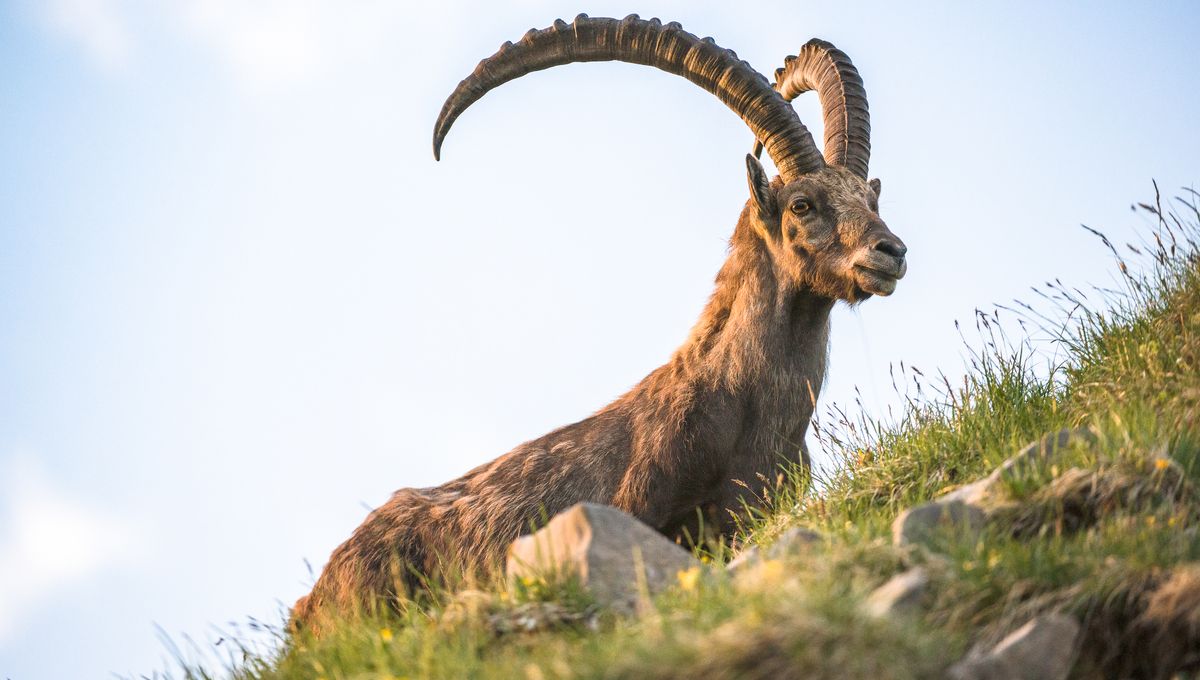
Alpine ibexes (Capra ibex) living in two protected areas within the Gran Paradiso National Park in the Italian Alps were studied, as they are a cold-adapted species known to be sensitive to the effects of global warming. 

Advertisement

Typically the ibexes feed on grasses and vegetation at lower altitudes of the mountains during the day, spending the night away from their main predator of wolves (Canis lupus) high up on the mountainside. However increasing daily temperatures have meant more time on the mountain and a switch to feeding during the cooler nighttime. While this might sound like a sensible solution it has one big problem: the wolves.

The 47 ibex were tracked using motion-sensing tracking collars between 2006 and 2019. During warmer days the ibex become less active during the day and more active at night. This put the ibex at greater risk of predation by wolves in the open grassy areas lower down the mountain, where they are less protected.

This species also exhibits a high level of sexual dimorphism, meaning the males and females of the species look very different. These differences, such as the males having horns while the females have less fat, alter their risk factors for the dangers of both overheating and predation. The team found more nocturnal activity in response to higher daily temperatures, even when the females had kids.

Given that the ibex has typically been a diurnal species, their eyesight is also more compromised by feeding at night, making them further vulnerable to wolf attacks. The team found that the goats were more active during nights that were brighter thanks to the Moon, meaning they were better able to detect predators and the benefits of foraging at night outweighed the risks. 

Advertisement

As climate change continues to raise temperatures in this region, the ibex are likely to continue this behavior and put their survival at even greater risk. 

The study is published in Proceedings of The Royal Society B: Biological Sciences.

Deborah Bloomfield
Deborah Bloomfield

Related posts:

  1. Paris ramps up security as jihadist attacks trial starts
  2. Cricket-‘Western bloc’ has let Pakistan down, board chief says
  3. Ancient Bison Found In Permafrost Is So Well Preserved Scientists Want To Clone It
  4. Where Inside Us Do We Feel Love?

Source Link: Climate Change Is Turning Ibex Nocturnal – But It's Putting Them In Danger

Filed Under: News

Primary Sidebar

  • US Just Killed NASA’s Mars Sample Return Mission – So What Happens Now?
  • Art Sleuths May Have Recovered Traces Of Da Vinci’s DNA From One Of His Drawings
  • Countries With The Most Narcissists Identified By 45,000-Person Study, And The Results Might Surprise You
  • World’s Oldest Poison Arrows Were Used By Hunters 60,000 Years Ago
  • The Real Reason You Shouldn’t Eat (Most) Raw Cookie Dough
  • Antarctic Scientists Have Just Moved The South Pole – Literally
  • “What We Have Is A Very Good Candidate”: Has The Ancestor Of Homo Sapiens Finally Been Found In Africa?
  • Europe’s Missing Ceratopsian Dinosaurs Have Been Found And They’re Quite Diverse
  • Why Don’t Snorers Wake Themselves Up?
  • Endangered “Northern Native Cat” Captured On Camera For The First Time In 80 Years At Australian Sanctuary
  • Watch 25 Years Of A Supernova Expanding Into Space Squeezed Into This 40-Second NASA Video
  • “Diet Stacking” Trend Could Be Seriously Bad For Your Health
  • Meet The Psychedelic Earth Tiger, A Funky Addition To “10 Species To Watch” In 2026
  • The Weird Mystery Of The “Einstein Desert” In The Hunt For Rogue Planets
  • NASA Astronaut Charles Duke Left A Touching Photograph And Message On The Moon In 1972
  • How Multilingual Are You? This New Language Calculator Lets You Find Out In A Minute
  • Europa’s Seabed Might Be Too Quiet For Life: “The Energy Just Doesn’t Seem To Be There”
  • Amoebae: The Microscopic Health Threat Lurking In Our Water Supplies. Are We Taking Them Seriously?
  • The Last Dogs In Antarctica Were Kicked Out In April 1994 By An International Treaty
  • Interstellar Comet 3I/ATLAS Snapped By NASA’s Europa Mission: “We’re Still Scratching Our Heads About Some Of The Things We’re Seeing”
  • Business
  • Health
  • News
  • Science
  • Technology
  • +1 718 874 1545
  • +91 78878 22626
  • [email protected]
Office Address
Prudour Pvt. Ltd. 420 Lexington Avenue Suite 300 New York City, NY 10170.

Powered by Prudour Network

Copyrights © 2026 · Medical Market Report. All Rights Reserved.

Go to mobile version