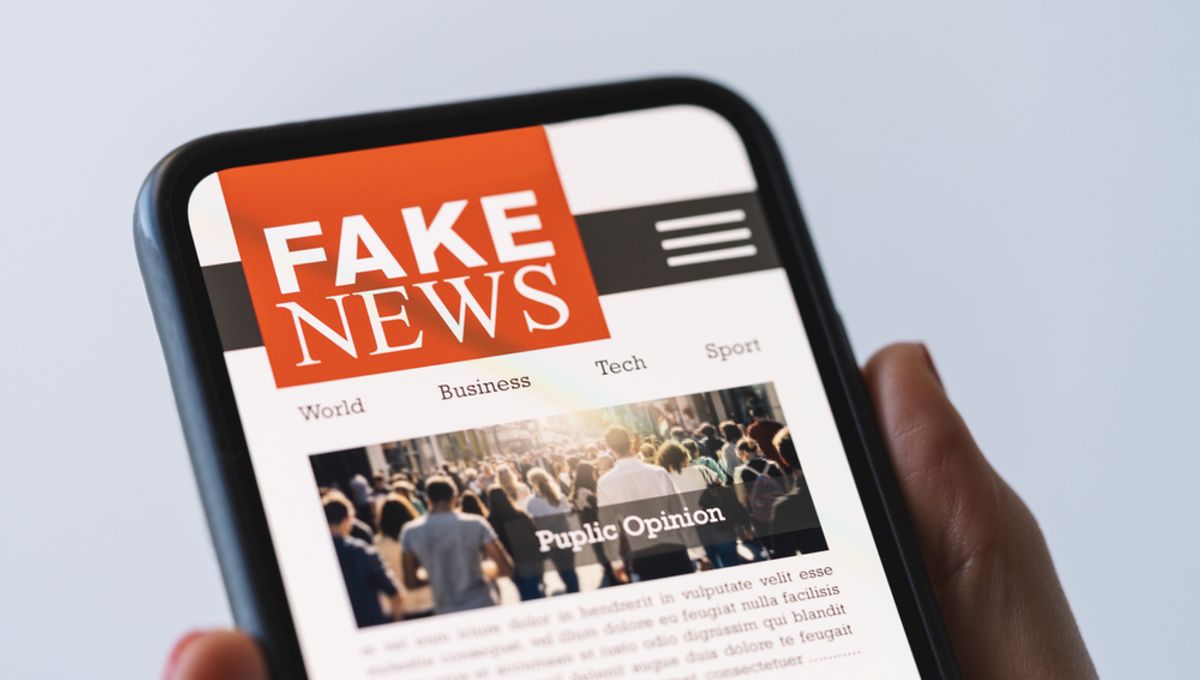
Fake news is mostly shared by people with right-wing political leanings and without knowing it is false, according to a new study. The findings suggest that the issue of misinformation may not be due to malintent, but rather a failure to fully understand the shared information, highlighting that education may be the best route to solving it.
Unfortunately, fake news is everywhere. Whether it’s disinformation (false news that intends to deceive you) or misinformation (false news not shared deliberately), social media has become a breeding ground for incorrect information to flourish and spread to far more people than possible prior. Experts are already warning that the worst is yet to come, however, as generative AI continues to learn and repeat incorrect data – and even its own misinformation.
Understanding how this fake news spreads is our best bet at stopping it. Prior research has suggested that the political right is more likely to believe misinformation, but who is more likely to spread it?
An international team from Australia, England, and Germany delved further into the types of people that share this false information. The researchers surveyed almost 2,400 people from the UK and Germany, asking detailed questions to discern their ability to identify fake news, their inclination to share it, and their political leanings.
The results showed that people are not deliberately sharing false information the majority of the time, with very few people sharing it with malintent. Of the cohort studied, older, high-income people were better at spotting the fakes from the facts, particularly left-leaning people. As people got older, they became better and better at doing this, while young people were more likely to share fake news overall. Young people were also more likely to share disinformation with intent in the United Kingdom.
The findings suggest that there is a political divide between people when it comes to fake news, with those on the right more likely to share it. However, an important takeaway is that the vast majority of people seem to be sharing it without meaning to deceive people, but rather because they simply believe it is true. This highlights a bigger issue than just a small group of people trying to cause distrust – it demonstrates a lack of adequate education and critical thinking to help people understand what is true.
The data is self-reported, so there is the possibility people were less likely to own up to deliberately sharing fake news. There was also a limited number of 16–35-year-olds, and fewer highly-educated people in the UK compared to Germany, so the samples may have some biases there.
The team hopes further research can show the social mechanisms underpinning the spread of fake news, but the study provides a strong foundation that most people mean well, they just get it wrong sometimes.
The research was published in the journal Nature Scientific Reports.

Source Link: Conservatives More Likely To Spread Fake News, But Mostly Don't Mean To
