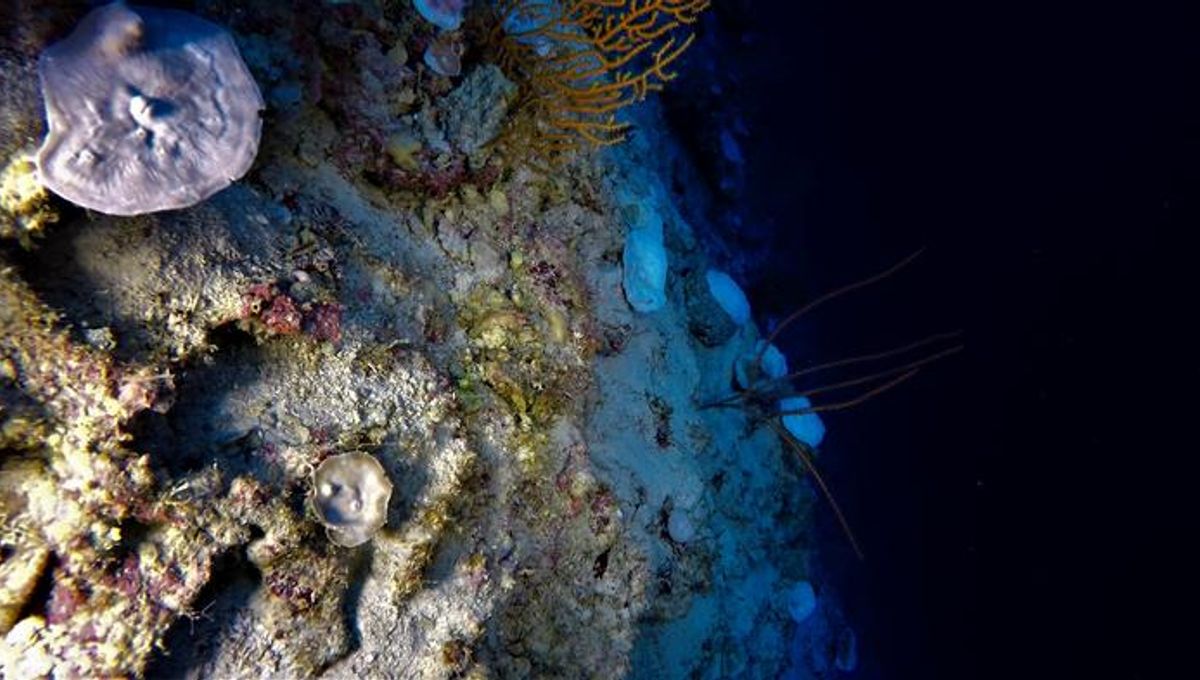
More than 90 meters (295 feet) below the surface of the Indian Ocean, global warming has made its mark, with scientists discovering the deepest known evidence of coral reef bleaching.
We generally think of deep-sea corals as being relatively safe from the clutches of climate change, so when a team of scientists from the University of Plymouth first came across bleaching damage during a research cruise in November 2019, they were taken aback.
“There are no two ways about it, this is a huge surprise,” said Phil Hosegood, the project’s lead, in a statement. “Deeper corals had always been thought of as being resilient to ocean warming, because the waters they inhabit are cooler than at the surface and were believed to remain relatively stable. However, that is clearly not the case and – as a result – there are likely to be reefs at similar depths all over the world that are at threat from similar climatic changes.”
Over the next six months, researchers used a combination of in situ monitoring, underwater robots with cameras, and satellite-generated data on ocean conditions and temperatures, to identify bleaching and determine the cause. Underwater camera footage showed that up to 80 percent of the reefs in certain parts of the seabed had been damaged, at depths where they would normally be expected to be resilient to bleaching.
The source of the damage? A 32 percent rise in the temperatures below the surface of the Central Indian Ocean, from 22°C to a toasty 29°C (71.6°F to 84.2°F). Even small changes in temperature can cause corals to expel the algae that give them color, so this finding aligns with the level of damage witnessed by the team.
Researchers think the increase is down to a deepening thermocline, which is the layer between the warmer surface water and the cooler, deeper water. It’s an otherwise naturally occurring cycle that is being intensified by climate change.
“What we have recorded categorically demonstrates that this bleaching was caused by a deepening of the thermocline. This is down to the regional equivalent of an El Niño, and due to climate change these cycles of variability are becoming amplified,” explained lead author Clara Diaz. “Moving forward, bleaching in the deeper ocean here and elsewhere will likely become more regular.”
Nicola Foster, study co-author, added, “This will likely result in a loss of biodiversity and a reduction in the critical ecosystem services that these reefs provide to our planet.”
The researchers highlight that whilst there is no way to stop the thermocline changing, increasing research and knowledge of the planet’s largely understudied deep-sea coral reefs could give us an idea of what’s to come.
“What we can do is expand our understanding of the impacts that these changes will have throughout these environments of which we have so little knowledge. In the face of fast-paced global change, that has never been more urgent,” Hosegood concluded.
The study is published in Nature Communications.

Source Link: Coral Bleaching Found 90 Meters Below Ocean Surface, The Deepest Ever Seen
