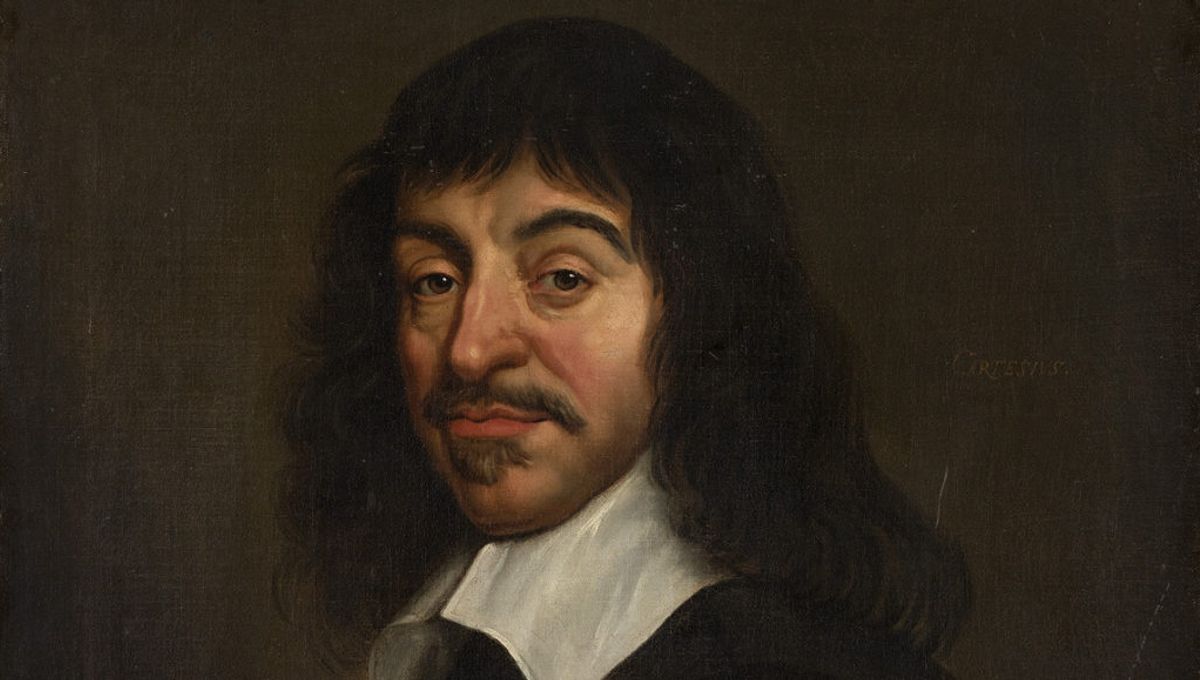
Smack bang in the middle of your brain sits a tiny structure called the pineal gland, which has puzzled neuroscientists and philosophers for centuries. Among those to speculate on the role of this little blob was one René Descartes, whose suggestion that the soul sits within it kickstarted one of the most stubborn pseudoscientific theories of the past few hundred years.
The idea that “I think, therefore I am” forms the basis of Cartesian dualism, the influential strand of philosophical logic that states that the mind and body are two completely separate entities. Put forward by Descartes in 1637, the concept illustrates that we can be sure that we exist in essence, even if the entire physical world is an illusion.
What we can’t be certain of, however, is the nature of our own essence, though Descartes certainly did his best to resolve this uncertainty. In his 1649 book Les Passions de l’âme (The Passions of the Soul), for instance, he described the pineal gland as “the seat of the soul,” later referring to it as “the soul’s headquarters”.
Expanding on these claims, Descartes suggested that the function of the pineal gland is to unite the sensory inputs from our two eyes, two ears, and multiple tactile receptors into a single impression that can be presented to the soul. “There is no other place in the body where they can be united in this way, except as a result of being united in this gland,” he wrote.
To be clear, this is most definitely not the purpose of the pineal gland. While we may not fully understand how it works, we do know that it secretes melatonin and plays a key role in regulating our circadian rhythm – otherwise known as the body clock.
Analyzing the long-term consequences of Descartes’ error, the authors of a new study trace the evolution of crackpot ideas regarding the pineal gland over the past 380 years. For instance, in 1888, Russian-American mystic Helena Blavatsky – who founded the theosophical movement – claimed that the wee gland was in fact referenced by 11,000-year-old Indian scriptures as the Ajna chakra, or Third Eye, as it is sometimes known.
This, of course, was not the case, and the study authors find no evidence that any ancient texts ever mentioned the gland.
Yet the idea didn’t go away, and in the 1920s, New Age philosopher Rudolf Steiner suggested that calcite deposits that build up on the pineal gland were designed to absorb spiritual energies. Naming these accumulations “brain sand”, Steiner suggested that people who lack the substance are unable to interact with higher forces and become spiritually and intellectually impoverished.
“If [the calcites] are not there, the person does not have this brain sand, this mineral quality, and they become an idiot or a cretin,” he wrote.
As it happens, we still don’t really know why the pineal gland calcifies as we age, but it’s certainly got nothing to do with any spirits entering our brains. Nonetheless, the pineal gland remains a target for science-deniers and conspiracy theorists.
And while they don’t directly blame Descartes for this, the study authors can’t help but conclude that he may have influenced some of these ridiculous theories. “The considerable authority of Descartes, based on his extensive and still inspiring approaches to thinking, has certainly contributed to the fact that more than 380 years later, similar speculative claims about [the pineal gland] are still being made,” they write.
The study is published in the Journal of the History of the Neurosciences.

Source Link: Descartes Thought The Pineal Gland Was "The Seat Of The Soul" – And Some People Still Do
