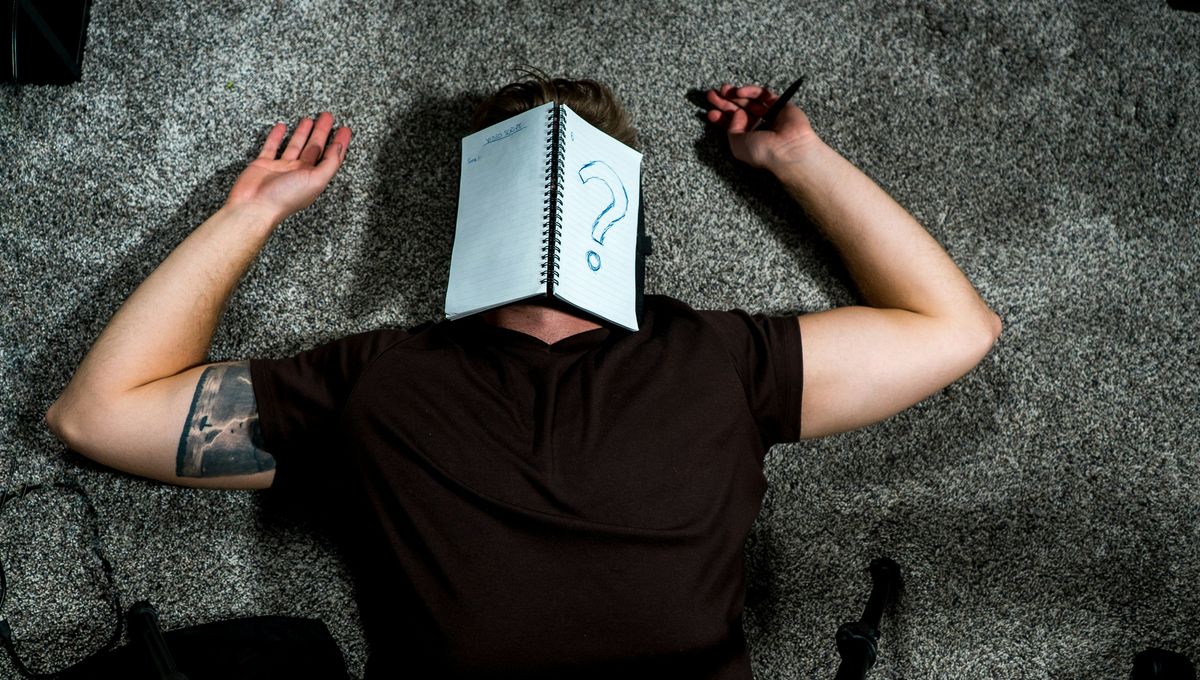
We’re willing to bet that at some point in your life, you’ve been advised to “sleep on it”. When wrestling with a difficult problem, going to bed and revisiting it in the morning really does seem to help us see things more clearly – but this is not just a placebo effect. There’s some actual science behind why sleeping on a problem is a good idea.
We know sleep is an essential thing for the human body, but for the longest time that was about all scientists were really sure of. The actual functions of sleep were much less clear. Even very widely accepted theories have been challenged by recent research, and there are heaps of studies about what happens in the brain while we sleep, and different ways that sleep can go wrong – not to mention, how to apparently fix them.
One thing we do know is that while we’re asleep, our brains are keeping busy. Dreams are the manifestation of this that we sometimes remember, but there’s a whole lot of stuff going on behind the scenes too.
Memory and problem-solving
According to one theory called the active systems consolidation theory, our brains play over old memories while we’re asleep.
“This memory reactivation during sleep is assumed to have a two-fold function, on the one hand stabilizing and strengthening initially labile memory to representations making them less susceptible [to] interference, and on the other hand reorganizing and integrating new memories into the pre-existing network of long-term memories in a process of system consolidation,” explains a 2021 paper.
As well a significant role in the formation of long-term memories, it’s thought this process assists with problem-solving.
In 2018, a study put forward the idea that synergy between the REM and non-REM phases of sleep allows us to access more creative solutions to our problems. It was a theory; there were still elements of the model that hadn’t been researched, as lead author Penny Lewis told The Atlantic at the time, but a large body of work has come out since then as neuroscientists continue to grapple with these questions.
The 2021 study, for instance, tested this by training participants on a problem-solving video game. The subjects went away for either a day of wakefulness or a night of sleep before being asked to solve a new puzzle.
The authors wrote that “sleep improved problem solving, with 62 percent of subjects from the Sleep group solving the problem compared to 24 percent of the Wake group.”
This finding corroborated that of an older study from 2019, which was the first to demonstrate that it was possible to almost “hack” this function of the brain. The 57 participants were presented with puzzles associated with random sounds. While they slept, half of the sounds associated with puzzles they had not solved were played to them – and in the morning, it was these puzzles that the participants had more success solving.
“We know that people rehearse or ‘consolidate’ memories during sleep, strengthening and reorganizing them. It’s also known that this natural process can be boosted by playing sounds associated with the information being rehearsed,” said first author Kristin Sanders in a statement at the time.
It was another tick in the column for “sleep helps problem-solving”, but there was an important caveat.
“[N]o matter how much sleep I get, I’m not going to suddenly figure out black holes or find a cure for a rare disease, because I don’t have the necessary background knowledge,” explained senior author Mark Beeman.
So, a good night’s sleep can help us solve problems where we have all the pieces, but we just can’t figure out how to fit them together. It’s unlikely you’ll wake up after a nap and find yourself magically able to solve the problem of room-temperature quantum computing, for example.
Decision-making
As well as working out a puzzling conundrum, there’s evidence to suggest that sleep can help us make better decisions.
A 2024 study from scientists at Duke University found that sleeping on a choice helps us avoid the phenomenon of primacy bias. That’s when we’re unduly influenced by the first information we encounter about something, even if more useful information comes to light later.
This is not always an issue – it would be a bit inconvenient to, say, curl up for a nap in the deli before deciding which sandwich to have for lunch – but for some choices it’s helpful to get a bit of distance before we commit. Sleep can allow us to do that. For the participants in this study, according to lead author Allie Sinclair, sleep allowed them to make “more rational choices”.
The power of dreams
Dreams themselves might also be an important tool when it comes to problem-solving. Or, more specifically, hypnagogia – the state between sleeping and waking where mental imagery may appear to us.
Thomas Edison was apparently a fan of this, using a variation of a method you may have come across as the “spoon test”. The idea is that if you fall asleep holding an object like a spoon in your hand, as soon as you drift off you’ll drop it and the noise will wake you up. Edison reportedly used it to ensure his daytime naps didn’t go on too long, swearing that spending time in the liminal space between sleeping and waking fueled his creative thinking.
The thing is, he may have been onto something.
“In 2021, French scientists put Edison’s claim to the test,” writes Dan Denis, a psychologist at the University of York, in The Conversation. The conclusions of that study were pretty clear from the title alone: Sleep onset is a creative sweet spot.
The participants in the study were faced with a math problem, which had been designed with what Denis describes as a “hidden rule” that would help them solve it faster, if only they could see it.
After a quick nap, enforced by holding a cup that would drop with a loud noise as soon as they nodded off, the participants took another look at the problem. Those who woke up after only a brief nap had more success, compared to those who either stayed awake or fell more deeply asleep.
Denis points to another study that also corroborated this finding: “So it turns out that Edison was right, sleep onset really is a creative sweet spot, and sleeping on it works.”
Now again, it’s probably not the best idea to tell your instructor you “just need to close your eyes for a minute” when you’re in the middle of your driving test, for example. Clearly, there are some situations where sleeping on a problem is impractical, and this isn’t really meant to be a useful how-to guide.
But it is a snapshot of some of the fascinating research that’s still going on in this field. There’s so much left to discover about what sleep can do for us. But it’s good to know that, like so many things grandma told us, sleeping on a difficult problem is sound advice rooted in real science.

Source Link: Does Sleeping On A Problem Actually Help? Yes – It’s Science-Approved
