• Email Us: [email protected]
  • Contact Us: +1 718 874 1545
  • Skip to main content
  • Skip to primary sidebar

Medical Market Report

  • Home
  • All Reports
  • About Us
  • Contact Us

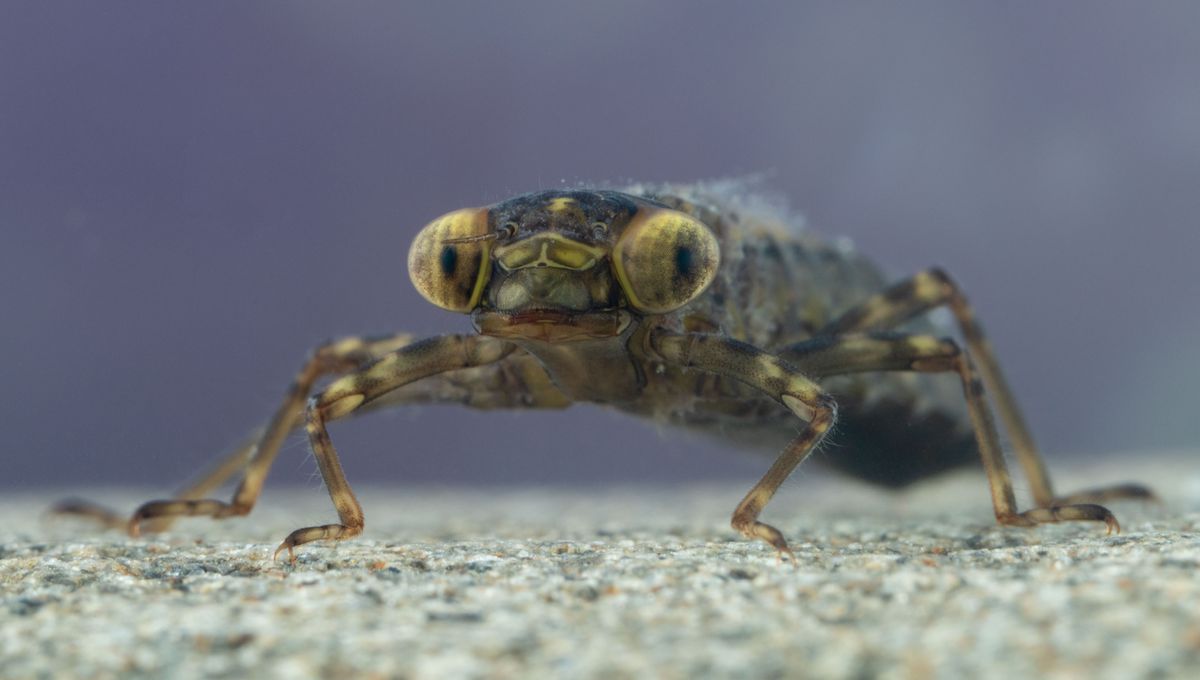
Dragonfly Babies Breathe Through Their Butts – But That’s Not All

November 25, 2024 by Deborah Bloomfield

We all know that the animal kingdom is full of creatures doing some pretty remarkable and sometimes downright weird activities. Whales are creating bubble nets to catch krill, while in the insect world, juvenile dragonfly nymphs are breathing through their butts. 

Dragonflies are pretty ancient and have been flying about on Earth since the Paleozoic Era, roughly 350 million years ago. Now, around 7,000 species live on every continent on Earth apart from Antarctica. What most people don’t realize about these pretty flying dragons is that they are actually voracious predators, even as juveniles.

Advertisement

There are three life stages of a dragonfly: egg, larva, and adult. Females can lay hundreds of eggs, which are most often deposited on plants near the water level. Some species inject their eggs directly into stream beds. After hatching is the most important stage, as well as the longest. Dragonflies spend most of their lives in the larval or nymph stage – depending on the species, it can take anything from a few months to over five years. 

Juvenile dragonflies have a bizarre collection of pretty surprising adaptations that all stem from their behinds. Their ability to grab their prey is directly related to their butts. Water is drawn in through the anus, then the nymph tenses its muscles against all that water, which in turn raises the pressure inside the rectum and pushes its mouthparts out. This strike can take just 10 to 30 milliseconds. 

As well as catching prey, the nymphs can also use their back ends as a kind of jet propulsion system to push them through the water. Water stored in the rectal chamber can be forced back out at high pressure, thereby pushing the nymph forward at high speed. 

Even more impressive is that the rectal chamber also contains gills. The water passes over these gills and oxygen is extracted by them, therefore these dragonfly nymphs are breathing through their butts. It is thought that the rectal gill evolved from the end of their colon. 

Advertisement

Once they grow up into adults, dragonflies breathe through holes and tubes in the sides of their bodies called spiracles. There is even an intermediate stage at the last stage of a juvenile, before it becomes an adult, known as an instar, where it is simultaneously able to breathe air through spiracles and through the rectal gill. 

Deborah Bloomfield
Deborah Bloomfield

Related posts:

  1. Audi launches its newest EV, the 2022 Q4 e-tron SUV
  2. Dinosaur Prints Found Under Restaurant Table Confirmed As 100 Million Years Old
  3. Archax: Japanese Engineers Make Transformer Robot That Actually Works
  4. How Do We Know There Is Anything Beyond The Observable Universe?

Source Link: Dragonfly Babies Breathe Through Their Butts – But That's Not All

Filed Under: News

Primary Sidebar

  • One Of The World’s Rarest, Smallest Dolphins May Have Just Been Spotted Off New Zealand’s Coast
  • Gaming May Be Popular, But Can It Damage A Resume?
  • A Common Condition Makes The Surinam Toad Pure Nightmare Fuel For Some People
  • In 1815, The Largest Eruption In Recorded History Plunged Earth Into A Volcanic Winter
  • JWST Finds The Best Evidence Yet Of A Lava World With A Thick Atmosphere
  • Officially Gone: After 40 Years MIA, Australia’s Only Shrew Has Been Declared “Extinct”
  • Horrifically Disfigured Skeleton Known As “The Prince” Was Likely Mauled To Death By A Bear 27,000 Years Ago
  • Manumea, Dodo’s Closest Living Relative, Seen Alive After 5-Year Disappearance
  • “Globsters” Like The St Augustine Monster Have Been Washing Up For Centuries, But What Are They?
  • ADHD Meds Used By Millions Of Kids And Adults Don’t Work The Way We Thought They Did
  • Finding Diamonds Just Got A Whole Lot Easier Thanks To Science
  • Why Didn’t The World’s Largest Meteorite Leave An Impact Crater?
  • Why Do We Cry? Find Out More In Issue 42 Of CURIOUS – Out Now
  • How Many Senses Do Humans Have? It Could Be As Many As 33
  • 6 Astronomical Events To Look Forward To If You Live Long Enough
  • Atmospheric Rivers Have Shifted Toward Earth’s Poles Over The Past 40 Years, Bringing Big Weather Changes
  • Is It Time To Introduce “Category 6” Hurricanes?
  • At The Peak Of The Ice Age, Humans Built Survival Shelters Out Of Mammoth Bones
  • The World’s Longest Continuously Erupting Volcano Has Been Spewing Lava For At Least 2,000 Years
  • Rare Flat-Headed Cat Rediscovered In Thailand Following First Confirmed Sighting In Almost 30 Years
  • Business
  • Health
  • News
  • Science
  • Technology
  • +1 718 874 1545
  • +91 78878 22626
  • [email protected]
Office Address
Prudour Pvt. Ltd. 420 Lexington Avenue Suite 300 New York City, NY 10170.

Powered by Prudour Network

Copyrights © 2025 · Medical Market Report. All Rights Reserved.

Go to mobile version