In 1903, the Wright brothers made the first sustained human flight, flying the first plane above Kitty Hawk, North Carolina for a then-impressive 12 seconds. Before that, on November 21, 1783, in Paris, France, the first hot air balloon ride took place.
But there were other attempts at flight that came before that – and given that they aren’t hailed as the first human flights, you’d better believe they weren’t what you’d term a “success”. Some are likely just stuff of legend, but one with significant historical backing took place in the 11th century CE, and did not end well for the monk who attempted it.
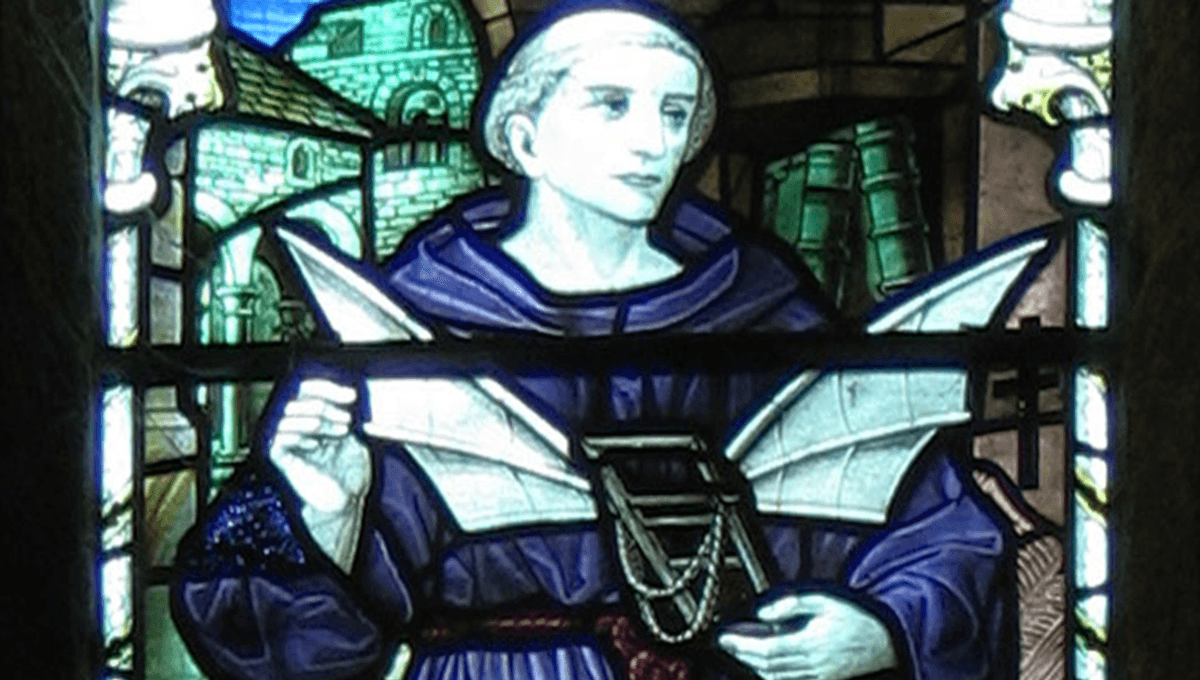
Around 1000 to 1010 CE, as estimated by historian Lynn White Jr from historical accounts, Eilmer of Malmesbury, England, made his historic flight. 12th century CE historian William of Malmesbury provided an account mentioning Eilmer, in relation to the appearance of Halley’s comet in April 1066.
“A comet, a star foretelling, they say, change in kingdoms appeared trailing its long and fiery tail across the sky,” William wrote. “Where a certain monk of our monastery, Eilmer by name, bowed down with terror at the sight of the brilliant star, sagely cried ‘thou art come! A cause of grief to many a mother art thou come; I have seen thee before; but now I behold thee much more terrible, threatening to hurl destruction on this land.”
While mentioning Eilmer, the generally informed historian clearly thought it a good time to relay an anecdote about him, likely gleaned when he entered the Abbey of Malmesbury in his youth.
“He was a man learned for those times, of ripe old age, and in his early youth had hazarded a deed of remarkable boldness. He had by some means, I scarcely know what, fastened wings to his hands and feet so that, mistaking fable for truth, he might fly like Daedalus, and, collecting the breeze on the summit of a tower, he flew for more than the distance of a furlong,” equivalent to 201 meters (660 feet), he wrote of the flight.
A more modern take on the wingsuit.
Though we don’t have any good representations of the flying equipment used for this one-way flight, the account mentions “pennae”, referring to feathers or wings.
“We must conclude that Eilmer flew with rigid wings of considerable size, since they were attached both to his arms and legs,” White wrote of the tale. “Probably they were intended to flap like those of a bird, but were hinged in such a way that they would not fold upward but would soar like a glider.”
While a furlong sounds like he gained some reasonable air time, in the end, gravity did its job.
“Agitated by the violence of the wind and a current of air, as well as the consciousness of his rash attempt, he fell and broke both his legs, and was lame ever after. He used to relate as the cause of the failure that he had forgotten to provide himself with a tail.”
Though Eilmer gained notoriety for much of the Middle Ages, his place in flight history became mostly forgotten later down the line.
If only he had remembered to wear a tail.

Source Link: Early Attempt At Human Flight Came 900 Years Before The Wright Brothers. It Did Not End Well
