Humans have been living continuously in space for nearly 25 years, with astronauts and cosmonauts living aboard the spacecraft since astronaut Bill Shepherd and cosmonauts Yuri Gidzenko and Sergei Krikalev first boarded the International Space Station (ISS) on Halloween, 2000. But all good things must come to an end.
The initial pieces of the ISS were launched in 1998, and by the time operations are over in 2030, they will have been in space for two years longer than their planned lifespan. It is these parts, forming the structure of the space station, that mean the ISS can not continue beyond 2030.
“Much of the space station can be repaired or replaced in orbit, while other parts can be returned to the ground for repair and relaunched. These parts include the solar arrays, communications equipment, life support equipment, and science hardware,” NASA explains. “However, the primary structure of the station, such as the crewed modules and the truss structures, cannot be repaired or replaced practically.”
As spacecraft dock and undock to the ISS, and the space station moves in and out of sunlight, this places stress on those structures. While the space station looks like it will pass its initial lifespan (unless Elon Musk somehow gets his way), the end is in sight, and NASA and other space agencies are preparing for microgravity research without our international orbiting laboratory.
“In the future, the United States plans to transition its operations in low Earth orbit to commercially-owned and -operated destinations to ensure continued access to essential research and technology development,” NASA explains of its International Space Station Transition Plan. “It is NASA’s goal to be one of many customers in a robust commercial marketplace in low Earth orbit where in-orbit destinations as well as cargo and crew transportation, are available as services to the agency. As NASA transitions operations and services in low Earth orbit to private industry, the agency will focus on human missions beyond this region at the Moon and Mars.”
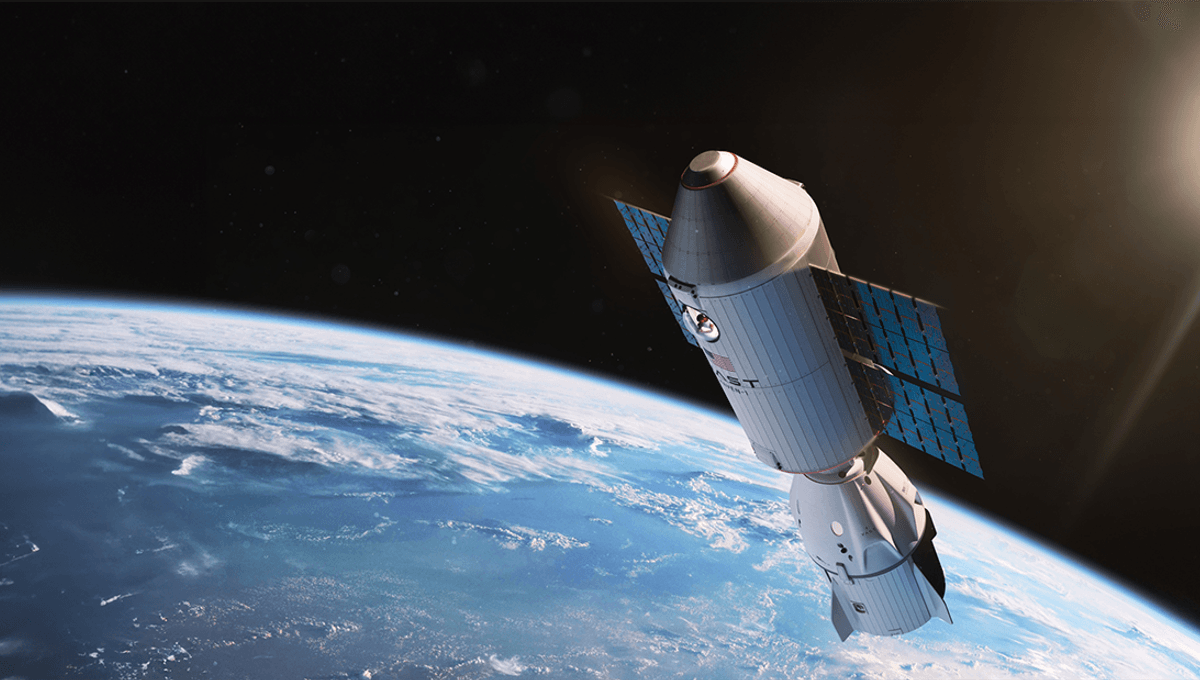
One such commercial space station, supported by NASA, is Vast’s Haven-1. Currently expected to launch in May 2026, the space station is a little smaller than what current astronauts are used to. While the ISS has a volume of approximately 900 cubic meters (31,000 cubic feet), Haven-1 will have around 45 cubic meters (1,590 cubic feet).
The size of the space station means there won’t be a large and continuous presence on board. Instead, the startup is attempting to deliver a small and safe laboratory, which astronauts will stay inside for about 10 days at a time, after docking to it on SpaceX’s Dragon spacecraft. Over its operational lifespan of three years, only four stays are currently planned.
“The number one priority for Haven-1 as a demonstration of a minimum viable product space station is safety,” Vast CEO Max Haot explained to BBC Science Focus. “Number two is to make it happen within this unprecedented timeline. A rapid timeline also means lower cost.”
While cost is a big factor in the space station’s design, the company is also focusing on comfort for the crew.
“People want to sleep in different ways on the ISS,” Haot added. “A lot of astronauts like to have pressure applied to their bodies when they sleep – we’ve heard that some of them wedge themselves in cupboards in the ISS.”
Working with NASA astronaut Drew Feustel, the team came up with inflatable beds, designed to apply pressure to the crew as they rest. As well as supporting a number of microgravity experiments, the space station will have a viewing window, allowing astronauts an ISS-level view of the Earth below.
“We know we can do it and we’re doing it unprecedented time,” Haot added in a video. “Probably five times faster and five times lower cost than anyone else has built a space station module.”
While Vast aims to be the first commercial space station, it is not the only commercial company attempting to keep humanity’s presence in space. Axiom is planning its own space station, which may support four crew members as soon as 2028. This space station’s assembly is a little more ambitious and a little more complicated than Haven-1, with plans to dock to the ISS as the station is built, before separating ahead of the ISS deorbit. Hopefully, between the two, Blue Origin’s Orbital Reef and the Tiangong space station, humanity will continue to have a presence in space after the ISS takes a dive into the sea.

Source Link: Earth's First Commercial Space Station Set To Launch In 2026
