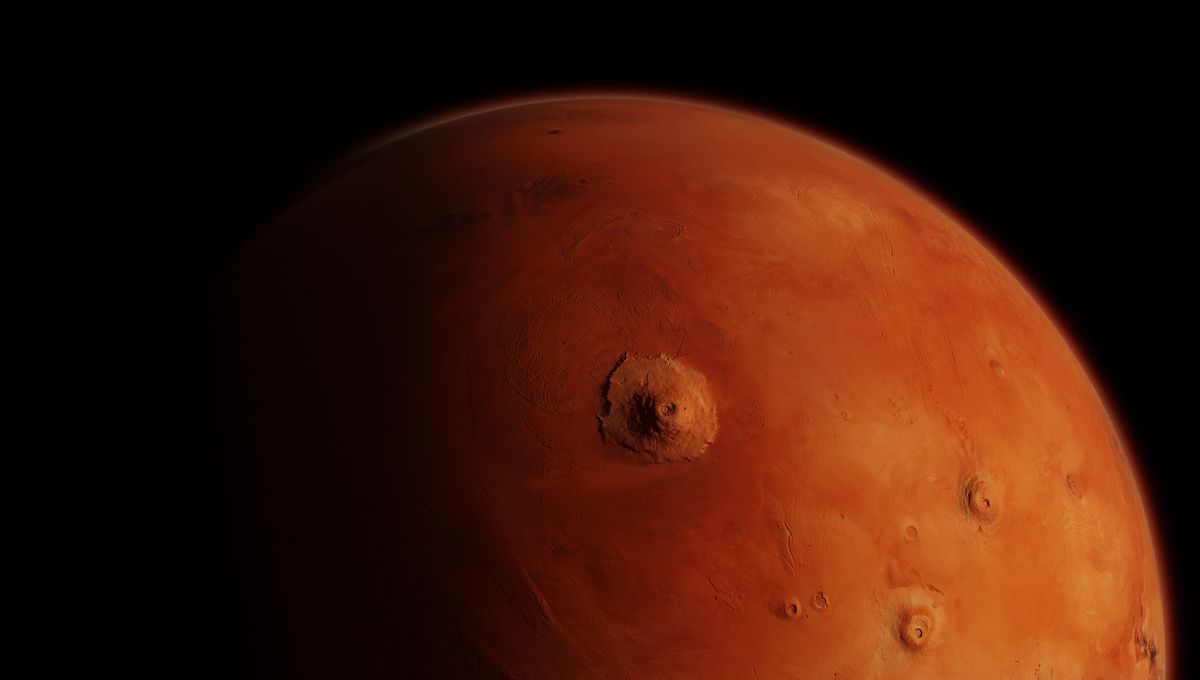
SpaceX has had an interesting week. A few days ago, the ninth test of Starship ended up with the vehicle burning in the atmosphere over the Indian Ocean. Yesterday, the company shared a presentation by founder and CEO Elon Musk on their plan for uncrewed and human Mars exploration and settlement. Calling the timeline ambitious is almost an understatement.
Every 780 days, Mars and Earth are at the ideal position in their orbits when a launch between the two planets would take the minimum amount of energy, allowing for the between seven and 10 months of travel time. Musk wants Starship to launch in the next window of opportunity, which opens in November 2026, giving a 50/50 chance they can do that.
The tentative game plan for Mars sees five landers next year, 20 in the next launch window (2028-2029), 100 in the following one (2030-2031), and 500 in 2033. The first passengers will be Musk’s Optimus robots, embroiled in controversy last year when their interactions with humans at an event were remotely controlled.
For the 2028 launch, there might be humans on it, or it might again just be robots. The following one will have humans. The large number of launches is to bring as much material as possible to Mars to make the planet self-sustaining. Musk doesn’t know how much material is needed for people to live successfully on Mars.
“My guess is about 1 million tons. It might be 10 million tons… I hope it’s not 100 million tons,” Musk said during the presentation.
All of this hinges on the ability of Starship to successfully travel across interplanetary space, land, and then launch back from another planet. At this point in time, Starship has not performed even a single landing on Earth, and in the previous two tests, the vehicle exploded minutes after launch.
Musk claimed that with every Starship test, they are learning more, so that they can eventually send hundreds of thousands, if not millions, of people to Mars. He said that they will be able to bring everyone who wants to go to the Red Planet, as well as bringing all the equipment to make Mars self-sustaining.
There are many questions worth analyzing here. Why would people go to Mars? How will they get there safely? How can they be safe on Mars? How will Mars become self-sustaining? Is this plan deliverable?
The first is open to interpretation. The dream of traveling in space is shared by many, but what happens when that dream needs to face reality? What will people do on Mars? Also, Mars is not some paradise, but a frigid desert covered in toxic soil and bombarded by radiation. And talking about radiation, how will the settlers be protected against radiation on the journey to Mars?
The self-sustaining aspect is also an enormous ask. In their book A City On Mars, experts Dr Kelly and Zach Weinersmith tackle the many challenges in making that a reality, such as making sure that we can feed a population and how to do medicine in space.
“What I would invest in immediately would be what are called closed-loop ecologies. These are systems in which you essentially have a sealed container and you create an ecosystem in it,” Zach Weinersmith told IFLScience in an exclusive interview. “Basically a mini-Earth. We’ve only done it a few times. So far the maximum scale we’ve done is eight [people] and we don’t know how it scales.”
“The first big surprise for me was how little we know about space medicine that is relevant to life in a space settlement. Hundreds of astronauts have been to space aboard stations orbiting the Earth, and I assumed we had learned most of what we needed to know from these astronauts and the experiments they ran in orbit,” Dr Kelly Weinersmith told IFLScience.
“But the Earth’s magnetosphere protects these space stations and their inhabitants from space radiation, which wouldn’t be the case on Mars. So we don’t really understand the radiation risks. And while we know that life in freefall orbiting the Earth is bad for bones and muscles, we don’t know if life in Mars’ 40 percent gravity will completely alleviate those problems or not. And of course, Mars has other problems as well, like toxic regolith that is kicked up in worldwide dust storms…”
Last but certainly not least is the deliverability of said plan. Starship needs to demonstrate so many crucial capabilities over the next several months for even a fraction of this plan to be attempted. Musk claimed in 2016 that the first SpaceX uncrewed mission to Mars would take place in 2018, but this was then delayed to 2020. This was put together with the idea of having humans on Mars by 2024. None of those claims materialized. His claim that there’s a 50/50 chance that the new plan will happen seems optimistic at best.

Source Link: Elon Musk Has Announced His Bombastic Plan To Get Humans To Mars
