• Email Us: [email protected]
  • Contact Us: +1 718 874 1545
  • Skip to main content
  • Skip to primary sidebar

Medical Market Report

  • Home
  • All Reports
  • About Us
  • Contact Us

Every 36 Million Years, The Planet’s Shifting Plates Trigger A Massive Change

July 12, 2023 by Deborah Bloomfield

Every 36 million years, the planet’s marine ecosystems experience surges in biodiversity. New research has discovered the cycle is indirectly triggered by geological changes led by plate tectonics influencing sea levels, paving the way for new life to thrive.

When continents dry up and then flood again, barren stretches of land can become extensive shallow seas that are a playground for biodiversity. The change opens up new ecological niches, driving explosions of life as species evolve to be the fittest to fill the free real estate.

Advertisement

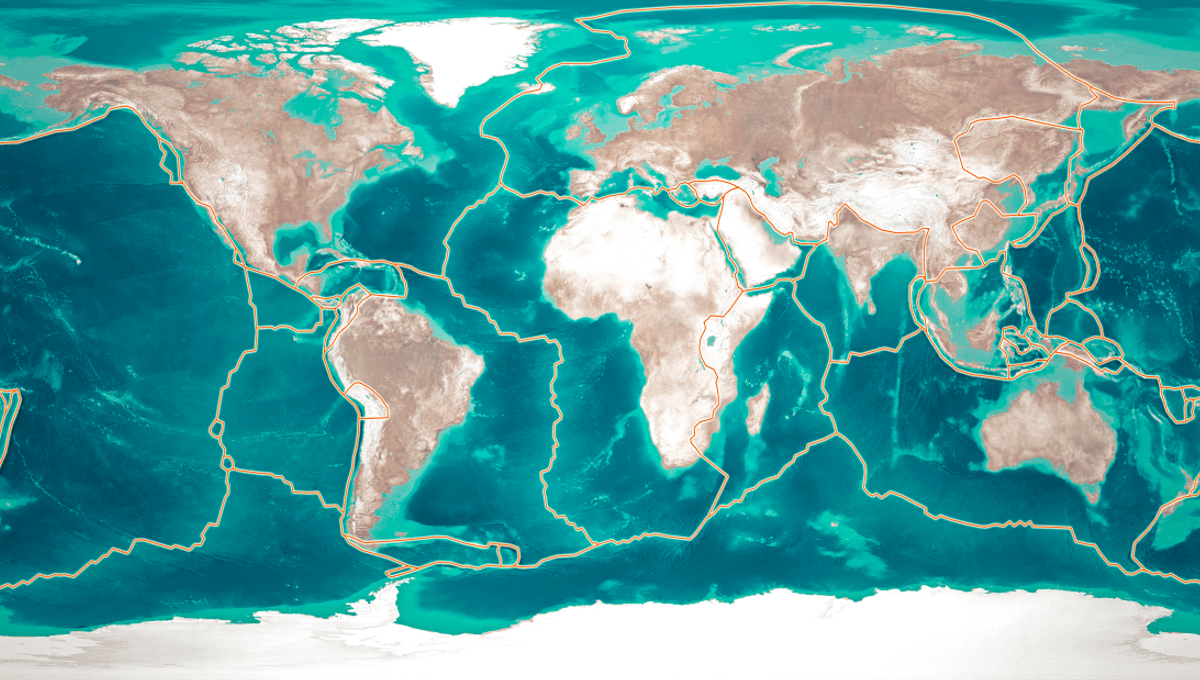
One way in which these periods of droughts and floods can occur comes with the shifting of Earth’s tectonic plates that force changes in sea levels. Researchers exploring the phenomenon now report they’ve identified a cycle of around 36 million years in which marine biodiversity explodes as an indirect consequence of tectonic activity.

“In terms of tectonics, the 36-million-year cycle marks alterations between faster and slower seafloor spreading, leading to cyclical depth changes in ocean basins and in the tectonic transfer of water into the deep Earth,” said Professor Dietmar Müller from the University of Sydney in a statement. “These in turn have led to fluctuations in the flooding and drying up of continents, with periods of extensive shallow seas fostering biodiversity.”

The cycle was identified after a review of data regarding sea-level variations, Earth’s interior mechanisms, and marine fossil records, which showed that there were big changes cycling in tandem across the board. It seems that peaks and troughs in marine biodiversity are linked to changes in sea level brought on by the movement of tectonic plates, which are constantly moving, but it figures that the cycle is so regular.

Advertisement

“This research challenges previous ideas about why species have changed over long periods,” Müller said. “The cycles are 36 million years long because of regular patterns in how tectonic plates are recycled into the convecting mantle, the mobile part of the deep Earth, similar to hot, thick soup in a pot, that moves slowly.”

The Cretaceous Winton Formation is a glowing example of how changing sea levels can transform the environment, as the fossils here date back to a time when most of the continent was underwater.

“The Cretaceous Winton Formation stands as a testament to the profound impact of these sea-level changes, capturing a snapshot of a time when Australia’s landscape was transformed and fascinating creatures roamed the land,” Müller concluded.

The study is published in the journal Proceedings of the National Academy of Sciences.

Deborah Bloomfield
Deborah Bloomfield

Related posts:

  1. Tennis-Scrappy Sakkari survives gruelling three-setter to beat Andreescu
  2. Cricket-NZ players reach Dubai after ‘specific, credible threat’ derailed Pakistan tour
  3. Accel, Tiger and Stripe’s COO back Mexico City-based Higo as it raises $23M for its B2B payments platform
  4. The Cat Flap Is Surprisingly Ancient, And Not The Work Of Isaac Newton

Source Link: Every 36 Million Years, The Planet’s Shifting Plates Trigger A Massive Change

Filed Under: News

Primary Sidebar

  • Around 90 Percent Of People Report Personality Changes After An Organ Transplant – Why?
  • This Worm Quietly Lived In A Lab For Decades, But They Had No Idea Just How Old It Truly Was
  • Fewer Than 50 Of These Carnivorous “Large Mouth” Plants Exist In The World – Will Humans Drive Them To Extinction?
  • These Are The Best Fictional Spaceships, According To Astronauts – What Are Yours?
  • Can I See Comet 3I/ATLAS From Earth During Its Closest Approach Today? Yes, Here’s How
  • The Earliest Winter Solstice Rituals Go All The Way Back To The Stone Age
  • We Were F*&@ing Right – Swearing Is Good For You And Now We Know Why
  • Why Do Wombats Have Square Poop? New Discovery Reveals How Their “Latrines” May Act Like Dating Apps
  • IFLScience The Big Questions: Answering Some Of The Biggest Scientific Mysteries Of 2025
  • Astronomers Catch Incredible First Direct Images Of Objects Colliding In Another Star System
  • Billionaire Jared Isaacman Finally Confirmed As Head Of NASA, As Agency Faces Uncertain Future
  • Something Just Crashed Into The Moon – And Astronomers Captured The Whole Event
  • These “Living Rocks” Are Among The Oldest Surviving Life And Are Champion Carbon Dioxide Absorbers
  • Ambitious Iguana “Love Island” For Near-Extinct Reptiles Becomes Epic Conservation Success Story
  • Sol 1,540: NASA Releases Video Of Perseverance Rover’s Record-Breaking Drive On Mars
  • Why Carl Sagan Was Way Ahead Of His Time And The Legacy He Left Behind
  • Why Were Pompeii Victims All Wearing Thick Woolly Cloaks In August?
  • We May Finally Know What Causes These Bizarre Bright Blue Cosmic Flashes
  • What’s The Biggest Rock In The World?
  • There Is A Very Simple Test To See If You Have Aphantasia
  • Business
  • Health
  • News
  • Science
  • Technology
  • +1 718 874 1545
  • +91 78878 22626
  • [email protected]
Office Address
Prudour Pvt. Ltd. 420 Lexington Avenue Suite 300 New York City, NY 10170.

Powered by Prudour Network

Copyrights © 2025 · Medical Market Report. All Rights Reserved.

Go to mobile version