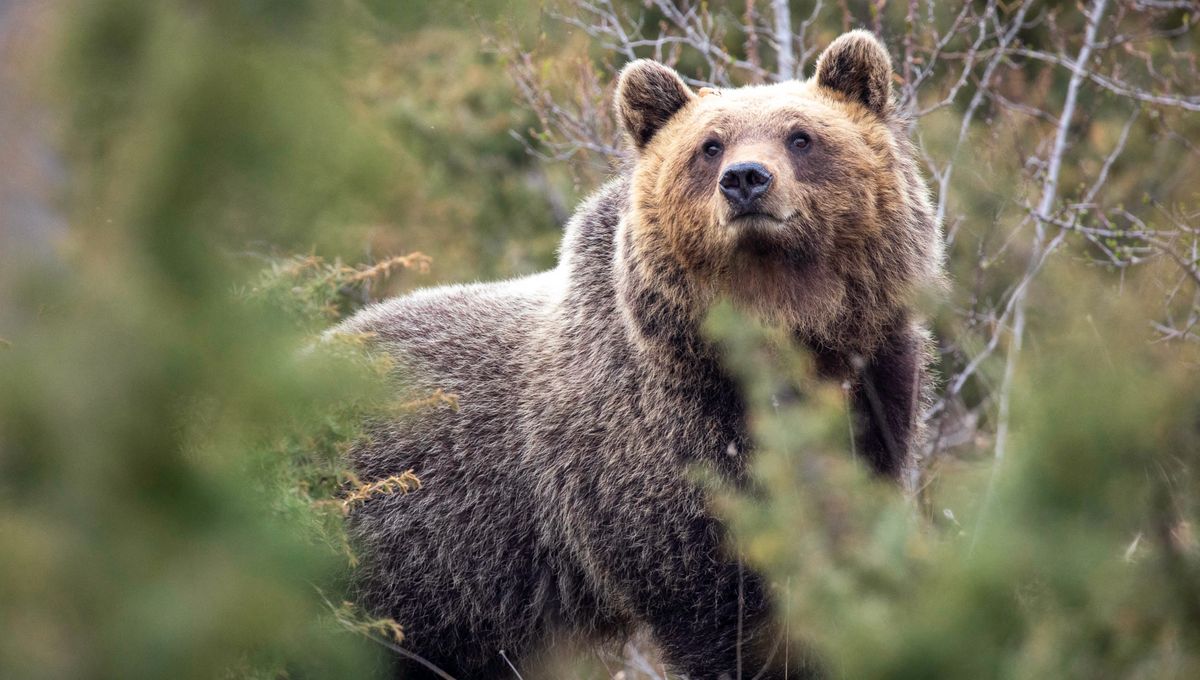
Are bears getting soft on us? After centuries of living in close proximity with people, a population of brown bears has evolved to become unusually calm for a species famous for its mightiness and no-nonsense temper.
The Apennine brown bear (Ursus arctos marsicanus), also known as the Marsican brown bear, is a critically endangered subspecies found in the mountains of central Italy, where only about 50 individuals remain in the wild.
They diverged from other European brown bears around 2,000 to 3,000 years ago, meaning they have been completely isolated since Roman times. They are distinguished from their brown bear brethren by slightly smaller body size, unique facial features, and a tolerance for living close to human communities.
In a new study, scientists at the University of Ferrara sequenced the genomes of 12 Apennine brown bears to see how this intense isolation and unique circumstances have been imprinted on their DNA. These genomes were then compared to those from a larger European population in Slovakia and American brown bears.
The analysis showed that the Apennine population in Italy has experienced higher rates of inbreeding compared to other brown bears, which is not surprising given their small, secluded population.
Additionally, the research revealed signs of natural selection within genes related to behavior and aggression.
“More interestingly, however, we showed that Apennine brown bears also possess selective signatures at genes associated with reduced aggressiveness,” Giulia Fabbri, study author from the University of Ferrara, said in a statement.
Friendliness likely became a feature in the population through a couple of different avenues. Around 2,000 to 3,000 years ago, when the population first became distinct, Central Italy experienced a rapid spread of agriculture and increased human activity. Forests were cut and fragmented, isolating the bears from the wider European population. Aggressive individuals were more likely to be killed in encounters with humans, while calmer bears survived and passed on their genes.
“The general implications of our findings are clear,” concluded Giorgio Bertorelle, another researcher involved in the study. “Human-wildlife interactions are often dangerous for the survival of a species, but may also favor the evolution of traits that reduce conflict. This means that even populations that have been heavily and negatively affected by human activities may harbor genetic variants that should not be diluted, for example, by restocking.”
Apennine brown bears continue to be threatened by habitat loss and meddling humans, but another flaw may be quietly lurking in their genetics. In February 2025, another team of Italian researchers found that the bears have a genetic mutation that affects their mitochondria and impairs their cellular energy production.
The population has adapted remarkably to a changing world, but it is not out of the woods yet.
The new study is published in the journal Molecular Biology and Evolution.

Source Link: Evolution In Action: These Rare Bears Have Adapted To Be Friendlier And Less Aggressive
