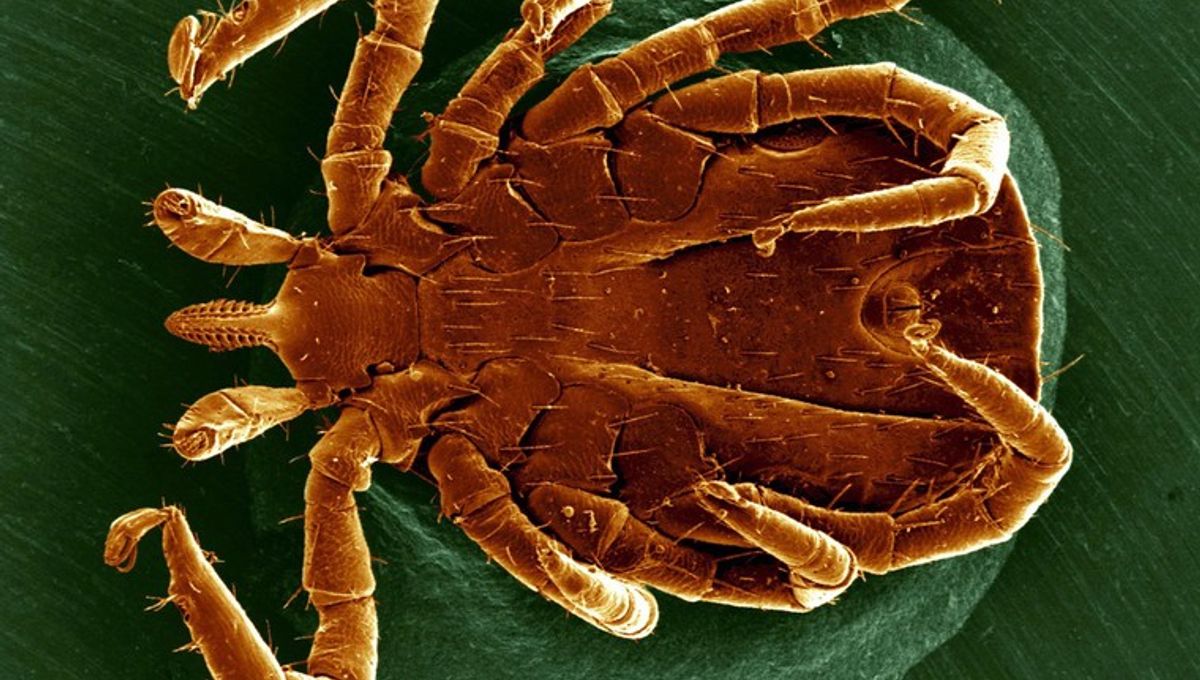
Cases of Crimean-Congo hemorrhagic fever (CCHF) – known as one of the World Health Organization’s (WHO) nine “priority diseases” due to its severity – are threatening to arise across broader parts of Europe, with experts saying it’s ”highly likely” it will spread within the UK in the near future.
CCHF is a tick-borne disease that’s typically found in Africa, the Balkans, the Middle East, and Asia. In recent years, however, cases of this nasty disease have been popping up in some expected parts of the world, such as Spain.
Ticks infected with the virus were first identified in western Spain in 2010. Since 2013, there have been 12 confirmed human cases of CCHF in Spain, including four deaths.
Now, there are fears that the disease could spring up in the UK.
Professor James Wood, Head of the Department of Veterinary Medicine at the University of Cambridge, told the UK Parliament’s Science, Innovation, and Technology Committee on June 14 that “tick-borne infections like Crimean-Congo haemorrhagic fever are highly likely to spread to the UK through ticks at some point.”
“There are other infections that can be mosquito-borne, such as Rift Valley fever, which could be the next thing to arrive. The challenge will be early detection because our clinicians do not know what they look like,” Professor Wood added.
CCHF is not a pleasant disease to catch. As per the Centers for Disease Control and Prevention (CDC), the CCHF virus causes severe viral hemorrhagic fever, starting with symptoms like headache, high fever, back pain, joint pain, stomach pain, and vomiting. As the disease progresses, it can result in large areas of severe bruising, severe nosebleeds, and uncontrolled bleeding at injection sites.
Its deadliness varies on a few factors, but fatality rates in hospitalized patients have reportedly ranged from 9 percent to as high as 50 percent depending on the outbreak.
It belongs on the WHO’s current list of “priority diseases” alongside COVID-19, Ebola and Marburg virus disease, Lassa fever, Middle East respiratory syndrome coronavirus (MERS-CoV) and Severe Acute Respiratory Syndrome (SARS), Nipah and henipaviral diseases, Rift Valley fever, Zika, and “Disease X” (a hypothetical outbreak caused by a pathogen currently unknown to cause human disease).
The WHO believes these are the infectious diseases that pose the biggest risk to global health and have the potential to start an epidemic.
A single case of CCHF was reported in the UK last year, but the woman had recently traveled to Central Asia where she likely caught the disease. Instead of odd imported cases, the real concern is whether the disease becomes endemic within the ticks of the English countryside – something that’s looking increasingly likely.
Climate Change is one of the prime reasons that CCHF is causing more and more worries. As Europe and other parts of the world become warmer, the potential habitat range for the ticks that carry this virus is expanding. Furthermore, with balmier weather, people are more like to spend more time outdoors, upping their risk of being exposed.
With the shockingly hot summer that’s currently baking parts of Europe, it’s becoming increasingly hard to ignore the climate crisis and the many ways it’s changing our world.

Source Link: Expert Warns A "Priority Disease" Threatens To Spread In The UK
