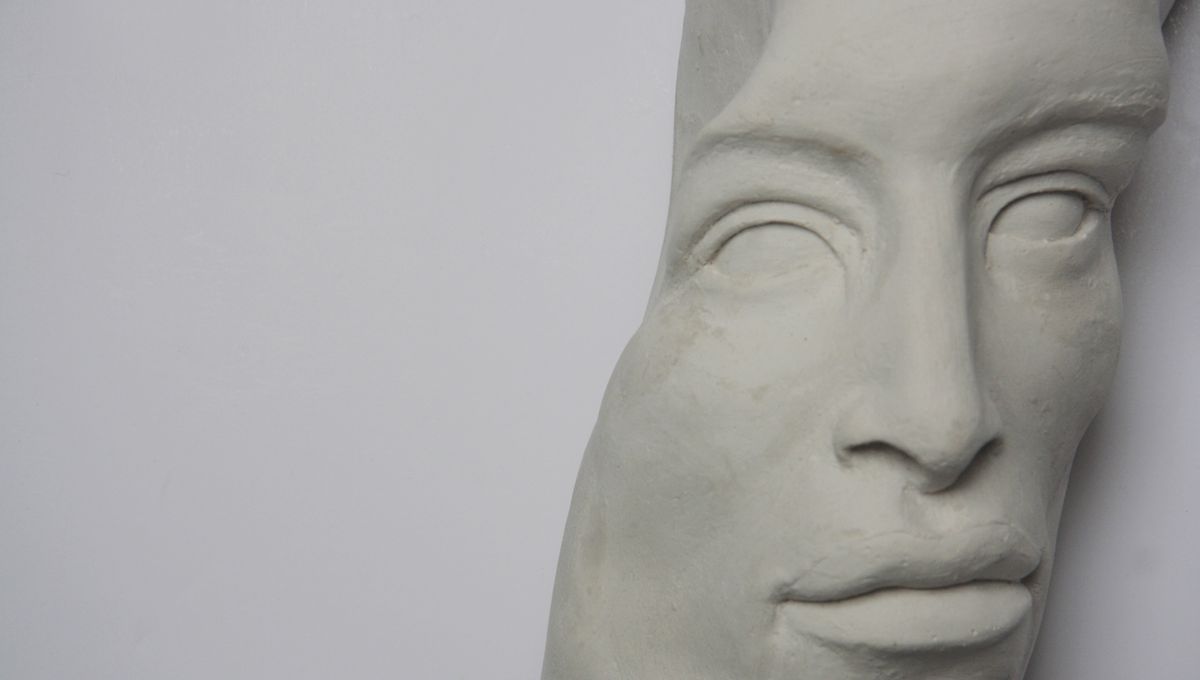
Faces are a central part of human interaction and sometimes the main source of information about the people we meet. Throughout history, faces have been the subject of fascination and fear, providing insights into someone’s identity and emotional state while also being a focus for social judgments and prejudices. And, according to a new review, they have also been the target of punishments for many cultures across the centuries.
From ancient Egypt to Medieval Europe and even in modern contexts, people have attacked faces – deliberately disfiguring them – to punish and humiliate others.
To say faces play an important role in our social interactions is a bit of an understatement. From early infancy, we learn to process faces. In fact, infants’ visual world is often limited to just other people’s faces and they are naturally more drawn to them than they are other objects.
They have also played a key role in our evolutionary history, as perceived facial attractiveness can be understood as a sign of health, though there has been some research that has challenged this idea.
Nevertheless, judgements around attractiveness – which are made rapidly – have deep cultural and social significance. Across history, people have associated attractiveness with trustworthiness and more positive moral characteristics. In contrast, those deemed to be attractive or to have less conventional faces are often seen as less trustworthy and having poorer personality traits.
With such a high premium being placed on faces as a source of social meaning, it is no surprise that they have been the focus of punishment across history. According to a new review paper, faces have often been deliberately disfigured as a way to punish legal or moral transgressions.
“Motivations for targeting the face may be rooted in its central role in identity, beauty, symmetry, and symbolic purity,” the authors explain.
The earliest evidence of intentional disfiguration appears on the remains of Neolithic skulls recovered from southern Syria. These include damage to the person’s nose, upper jaw, and cheekbones. There are also signs of deliberate efforts to deface the eye sockets and mouth areas. Although we have little knowledge of punitive traditions in this context, it is thought that these mutilations reflect symbolic hostility.
Cutting off people’s noses or removing their ears has been seen in many cultures from across the world. It was a common punishment in New Kingdom Egypt (1550-1070 BCE), where it was threatened for various infractions, but perhaps not always carried out. The idea was that removing the nose and the ears would damage the person’s spirit in the afterlife, robbing them of their senses and limiting their interaction with the divine.
Woman have often been the most common target of facial disfigurement. In Anglo-Saxon England, young woman could have their noses, lips, or foreheads damaged as a punitive measure. In later Medieval contexts, women were disfigured as a punishment for sexual deviance, especially for adultery. For instance, King Knut’s 2nd law code specified that women adulterers should have their nose and ears removed.
Similar practices occurred in Medieval India and were recorded in legal codes. Facial mutilation could be a punishment for anything from theft and assault to adultery or treason.
Then, with the advent of modernity came new ways for people to disfigure one another. From the 1740s, acid attacks became more common as people gained access to chemicals such as sulfuric acid, which was being produced at an industrial scale. Even in recent years, acid has been used in attacks aimed at disfiguring people, for instance in the UK and in East Asia.
But what makes facial disfigurement such an appealing form of punishment in so many different places? The answer is complex, of course, but the authors of the new study suggest that many are motivated by factors related to sex or gender, while the act itself is a good way to easily identify/mark transgressors.
In modern contexts, almost 80 percent of victims of facial mutilation in East Asia are women, and 40 percent of perpetrators are the victim’s spouses. This gender bias is less evident elsewhere, however. In Uganda, there is little difference between the genders of victims, while in Nigeria, men are more often the targets of such violence.
“In contrast to historical instances of facial disfiguration, which often occurred as a punishment for moral transgression and were regulated by law, modern facial disfiguration may more frequently stem from a motivation for revenge for perceived moral transgressions on a personal level,” the authors explain.
“Many cases appear to occur in the context of romantic or sexual disputes, or are carried out with the intention of humiliating members of opposing gangs. In general, the aim of facial disfiguration appears to be ongoing punishment through humiliation, rather than hiding an intention to kill.”
This seems to be a prominent point for this research. Across time and cultures, facial disfigurement may have emerged as a way to mark someone with an enduring sanction, rather than to end their lives.
“As humans, we use faces to infer social, cultural, moral, and reproductive value via aesthetic judgements. Inflicting permanent damage to faces is an ancient means of punishment for perceived moral transgressions that is used to identify, humiliate, and reduce perceived value,” the team say.
“In this way, facial disfiguration intentionally links aesthetics to social regulation through signals to others in a social group. Marking faces as norm-divergent is used to signal moral transgression. Deviation from the norm is recognised as a moral warning signal, while adherence to aesthetic norms signals moral value.”
The team argue that future research should widen its analysis to not only assess victims’ outcomes, but also examine perpetrator motivations and social-cultural influences.
“Better understanding of the phenomenon of intentional facial disfiguration may help inform judicial and public health policies,” they argue.
“Prevention should go beyond supply-side controls (e.g., corrosive regulation and tracking), and could possibly legally recognise facial disfiguration as an aggravating or stand-alone offence that causes lasting psychosocial harm.”
The study is published in the journal Behavioral Sciences.

Source Link: Facial Disfiguration: Why Has The Face Been The Target Of Punishment Across Time?
