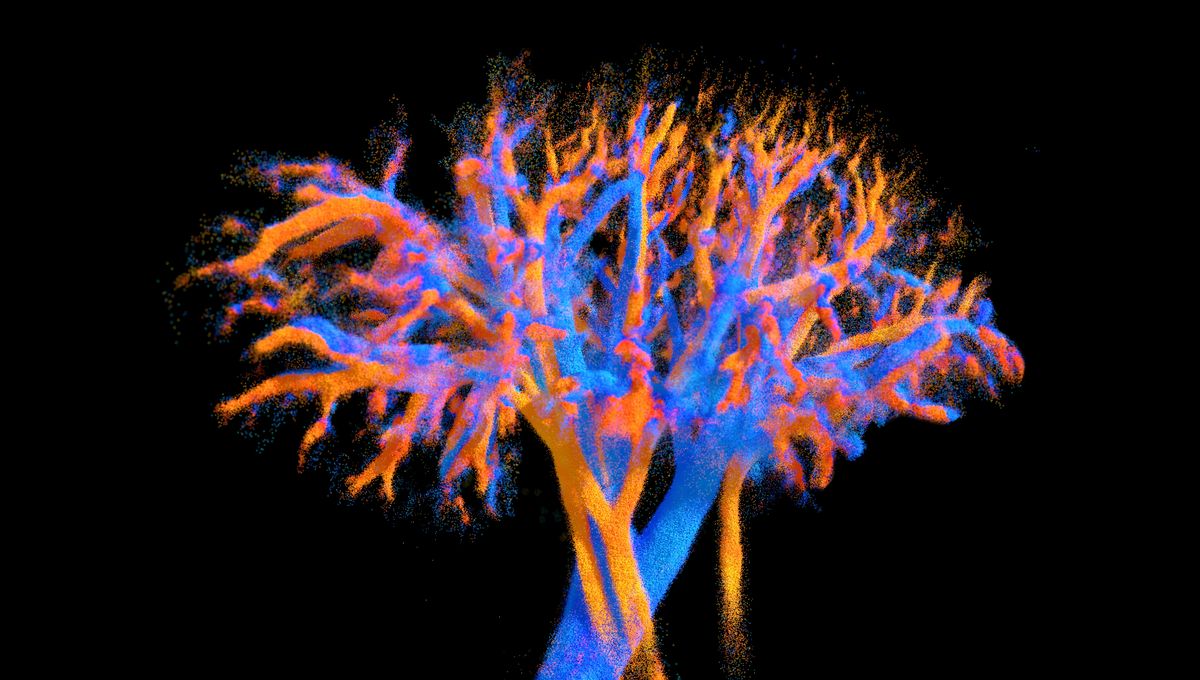
For the first time, an ultrasound probe with the capability of imaging complete organs in four dimensions has been developed by a team of scientists in France.
For as long as we’ve had bodies, humans have wanted to look inside them. This desire to understand our inner workings and fix them when they go wrong has led to the invention of lots of medical imaging methods. From X-rays to PET scans, they allow us to look at various tissues without a scalpel in sight.
One of these methods is ultrasound. For many of us, the first time we’ll come across ultrasound images is in the context of pregnancy scans, but it has many more varied uses. Getting an ultrasound is non-invasive, doesn’t involve radiation exposure, and – in a boon for claustrophobes – doesn’t require you to lie perfectly still in a narrow tube for an hour.
It also has its limitations, as do all types of medical imaging. But now, scientists at the Institute of Physics for Medicine Paris have just smashed through one of those by creating an ultrasound probe capable of imaging whole organs in incredible detail.
“The originality of these results lies in the fact that these images allow us to visualise the vessels of an entire organ at very small scales (less than 100 micrometres) – this 4D image resolution is unprecedented, as is the ability to observe an entire large organ and its flow dynamics,” said senior author Clément Papadacci in a statement.
The level of detail means that tiny blood vessels can be captured in a way that no existing imaging method is able to do. Blood microcirculation plays vital roles in health – disruptions in these networks of vessels can contribute to organ failure in the heart, liver, and kidneys.
“Used in clinical settings, this new technology could become a major tool for better understanding vascular dynamics as a whole, from the largest vessels to the pre-capillary arterioles,” explained Papadacci. “It could also help advance the diagnosis of microcirculation disorders and the monitoring of treatments for small vessel diseases, which are complex to diagnose and are diagnosed by ruling out other pathologies.”
The team tested their innovation with experiments involving simulating flow patterns through plastic tubing, before moving on to ex vivo experiments using the heart of a pig. When this was successful, they performed in vivo scans on live pigs, capturing ultrasounds of the liver and kidney.
This, the authors write, “enabled a complete visualization of the vascular network with a spatial resolution of a few tenths of micrometre (down to 125 [micrometers]) with a very high temporal resolution (312 Hz frame rate), providing anatomical details with high precision.”
Pigs are a good model for things like this as their organs are similar in size to the human versions, but the next stage will be to trial the technology in humans for real.
If all goes well, the authors hope this unprecedented image resolution might soon be available widely in the clinic. “The probe can be connected to small portable equipment, which would allow it to be integrated into medical practice,” Papadacci said.
The study is published in Nature Communications.

Source Link: Fancy Seeing Your Organs In 4D? Pretty Soon, You Might Be Able To
