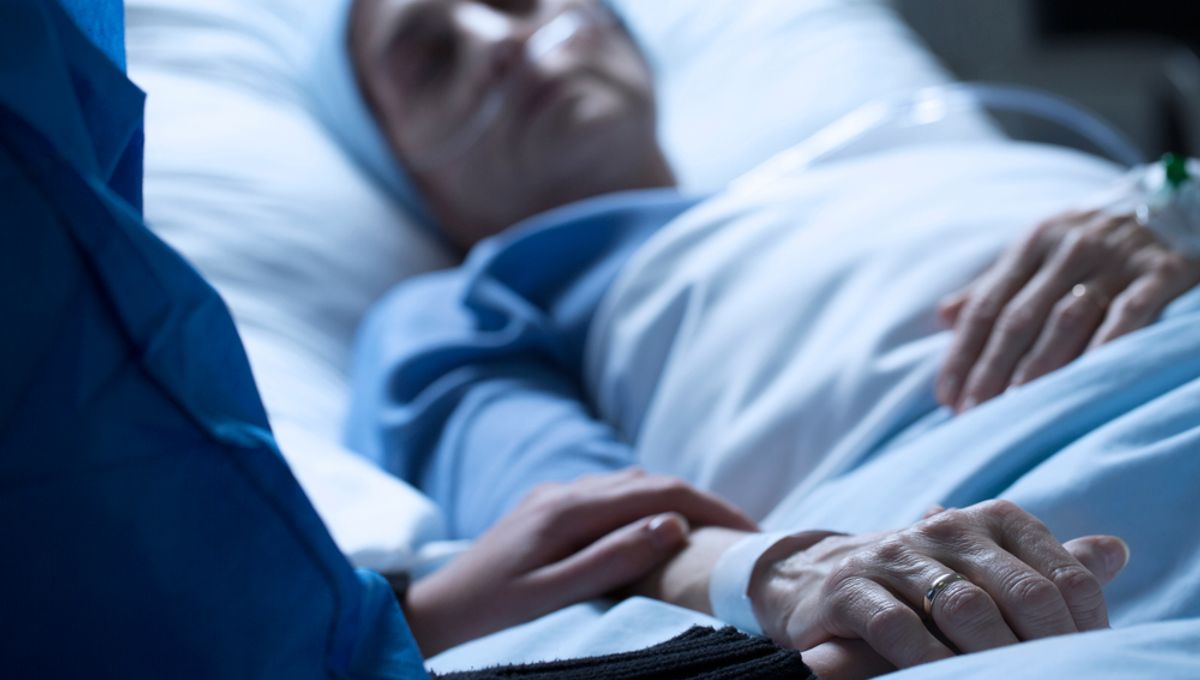
Up to an hour after apparently dying, some cardiac arrest patients display an explosion of neural signaling that mirrors conscious brain activity. Describing this unexpected phenomenon in a new study, researchers reveal that many of those who are resuscitated also retain striking memories of their deaths.
The study authors followed 567 patients who flatlined at 25 different hospitals in the US and the UK. While doctors got to work administering cardiopulmonary resuscitation (CPR), the researchers attempted to take electroencephalography (EEG) readings from the newly departed participants, ultimately obtaining readable data from 53 individuals on the threshold of death.
Unexpectedly, almost 40 percent of these patients displayed brain activity in the delta, theta, alpha, and beta ranges, indicating possible conscious activity. In most cases, these brainwaves began to appear more than half an hour after patients’ hearts stopped beating.
“Near-normal/physiological EEG activity (delta, theta, alpha, beta rhythms) consistent with consciousness and a possible resumption of a network-level of cognitive and neuronal activity emerged up to 35–60 minutes into CPR,” write the study authors.
After receiving the so-called kiss of life from medical staff, 53 participants eventually walked out of hospital alive, although only 28 were ultimately well enough to be interviewed about their death experience. In keeping with the EEG results, around 40 percent of those who gave testimonies claimed to remember details of their ordeal, suggesting that they were indeed conscious while technically dead.
For instance, some of those who returned from the brink recollected medical events, with one patient saying: “I remember when I came back and they were putting those two electrodes to my chest, and I remember the shock.” Additionally, 21.4 percent had what the authors call a “transcendent recalled experience of death”.
“This reflects a heightened sense of consciousness with paradoxical lucidity – a meaningful, purposeful review and moral re-evaluation of thoughts, intentions and actions towards others, perceptions of death and a different, ineffable reality,” explain the researchers.
“Although doctors have long thought that the brain suffers permanent damage about 10 minutes after the heart stops supplying it with oxygen, our work found that the brain can show signs of electrical recovery long into ongoing CPR,” said study author Sam Parnia in a statement. “This is the first large study to show that these recollections and brain wave changes may be signs of universal, shared elements of so-called near-death experiences.”
While the evolutionary function of this strange phenomenon is unclear, the researchers speculate that such experiences may occur as the brain becomes “disinhibited” at the moment of death. This, they say, might provide access to “new dimensions of reality” by enabling the sudden recall of all of the brain’s stored memories, resulting in a profound review of one’s life.
“These experiences provide a glimpse into a real, yet little understood dimension of human consciousness that becomes uncovered with death,” said Parnia.
The study is published in the journal Resuscitation.

Source Link: Flatlining Patients Show Signs Of Consciousness And Recall Death Experiences
