• Email Us: [email protected]
  • Contact Us: +1 718 874 1545
  • Skip to main content
  • Skip to primary sidebar

Medical Market Report

  • Home
  • All Reports
  • About Us
  • Contact Us

For First Time, The Mass And Distance Of A Solitary “Rogue” Planet Has Been Measured

January 6, 2026 by Deborah Bloomfield

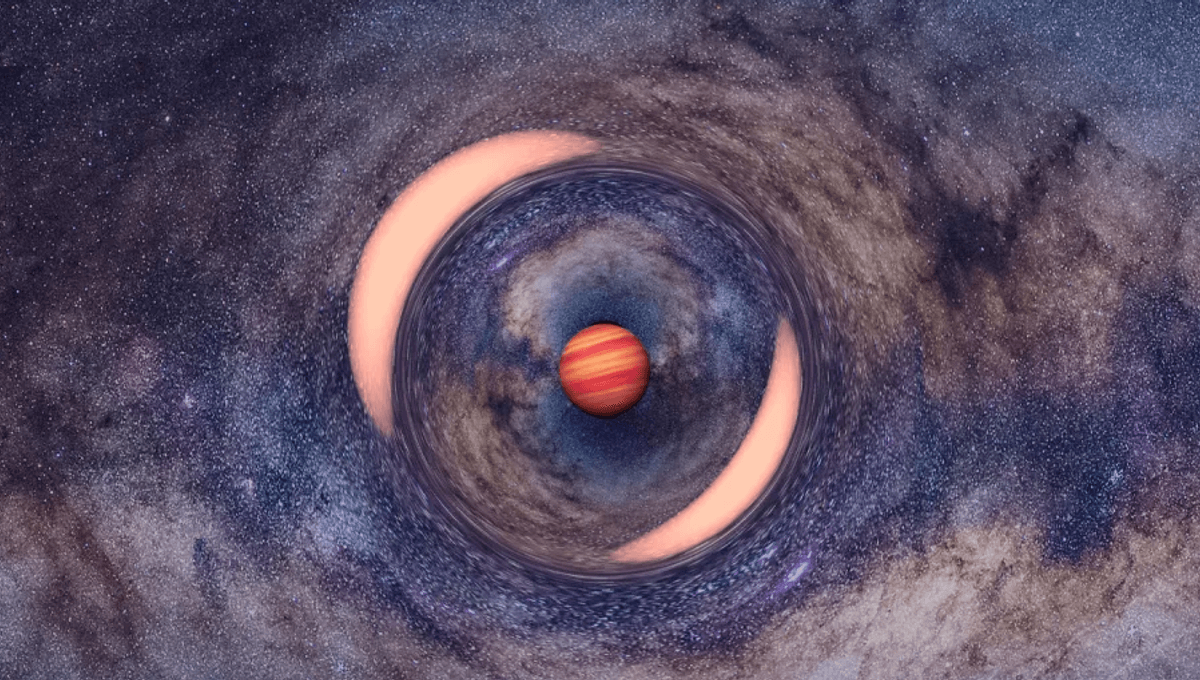
The galaxy is expected to be home to billions of free-floating, or “rogue”, planets that have no stellar companion. These worlds have been kicked out of the system where they formed, and they travel cold and alone around the Milky Way. They are found serendipitously, their properties hard to estimate, but a new approach and a lucky encounter has allowed the first mass and distance measurement of a solitary rogue planet.

The rest of this article is behind a paywall. Please sign in or subscribe to access the full content.

These worlds are too cold to be discovered directly, and they do not shine in visible light. The only way to spot them is when they produce a microlensing event. The planet passes in front of a much more distant star, briefly magnifying its light. These kinds of events will be particularly important with next-generation telescopes that can capture larger areas of the sky, so they have a better chance of catching a planet in such an act.

There is a problem with microlensing when it comes to estimating the properties of the free-floating planet, though. It is known as the mass-distance degeneracy. Basically, a smaller but closer planet might create an effect similar to a larger planet that is farther away. This was not the case for this new world, which has been dubbed KMT-2024-BLG-0792/OGLE-2024-BLG-0516. It was observed both from ground-based observatories and the now-retired Gaia space telescope. The distance between the two was enough to break the degeneracy.

The team has estimated that the planet is about 22 percent the mass of Jupiter, so roughly a Saturn-sized world. It is located about 3,000 parsecs ( 9,785 light-years) from the center of the Milky Way. That’s about two-thirds of the way there from Earth.

The team, using both statistical models and simulations, expects that this world did not form independently like a brown dwarf. That’s a stellar object – so formed like a star – with mass too low to begin nuclear fusion. This world is just too small. This Saturn-sized object formed in a proto-planetary disk, maybe with other planets, and due to dynamical processes such as planetary migration, was thrown into interstellar space.

These first measurements are extremely exciting in themselves, but also for future observations of rogue planets. The Nancy Grace Roman Telescope, scheduled for launch in 2027, is expected to discover hundreds of free-floating exoplanets, including many the size of Earth. If this approach is copied, it might deliver much better insights into the properties of these worlds and their formation.

A paper describing the results is published in the journal Science.

Deborah Bloomfield
Deborah Bloomfield

Related posts:

  1. Golf-Royal Portrush to host 2025 British Open
  2. Navy Dolphins’ Video Food Diaries Give Chaotic Insight Into How These Animals Hunt
  3. How And When To See Arizona’s Famous “Chocolate Falls”
  4. People Are Only Now Learning Where The Titanic Actually Sank

Source Link: For First Time, The Mass And Distance Of A Solitary “Rogue” Planet Has Been Measured

Filed Under: News

Primary Sidebar

  • US Just Killed NASA’s Mars Sample Return Mission – So What Happens Now?
  • Art Sleuths May Have Recovered Traces Of Da Vinci’s DNA From One Of His Drawings
  • Countries With The Most Narcissists Identified By 45,000-Person Study, And The Results Might Surprise You
  • World’s Oldest Poison Arrows Were Used By Hunters 60,000 Years Ago
  • The Real Reason You Shouldn’t Eat (Most) Raw Cookie Dough
  • Antarctic Scientists Have Just Moved The South Pole – Literally
  • “What We Have Is A Very Good Candidate”: Has The Ancestor Of Homo Sapiens Finally Been Found In Africa?
  • Europe’s Missing Ceratopsian Dinosaurs Have Been Found And They’re Quite Diverse
  • Why Don’t Snorers Wake Themselves Up?
  • Endangered “Northern Native Cat” Captured On Camera For The First Time In 80 Years At Australian Sanctuary
  • Watch 25 Years Of A Supernova Expanding Into Space Squeezed Into This 40-Second NASA Video
  • “Diet Stacking” Trend Could Be Seriously Bad For Your Health
  • Meet The Psychedelic Earth Tiger, A Funky Addition To “10 Species To Watch” In 2026
  • The Weird Mystery Of The “Einstein Desert” In The Hunt For Rogue Planets
  • NASA Astronaut Charles Duke Left A Touching Photograph And Message On The Moon In 1972
  • How Multilingual Are You? This New Language Calculator Lets You Find Out In A Minute
  • Europa’s Seabed Might Be Too Quiet For Life: “The Energy Just Doesn’t Seem To Be There”
  • Amoebae: The Microscopic Health Threat Lurking In Our Water Supplies. Are We Taking Them Seriously?
  • The Last Dogs In Antarctica Were Kicked Out In April 1994 By An International Treaty
  • Interstellar Comet 3I/ATLAS Snapped By NASA’s Europa Mission: “We’re Still Scratching Our Heads About Some Of The Things We’re Seeing”
  • Business
  • Health
  • News
  • Science
  • Technology
  • +1 718 874 1545
  • +91 78878 22626
  • [email protected]
Office Address
Prudour Pvt. Ltd. 420 Lexington Avenue Suite 300 New York City, NY 10170.

Powered by Prudour Network

Copyrights © 2026 · Medical Market Report. All Rights Reserved.

Go to mobile version