• Email Us: [email protected]
  • Contact Us: +1 718 874 1545
  • Skip to main content
  • Skip to primary sidebar

Medical Market Report

  • Home
  • All Reports
  • About Us
  • Contact Us

For The First Time, Moths Have Been Captured On Camera Feeding On Moose Tears

December 22, 2025 by Deborah Bloomfield

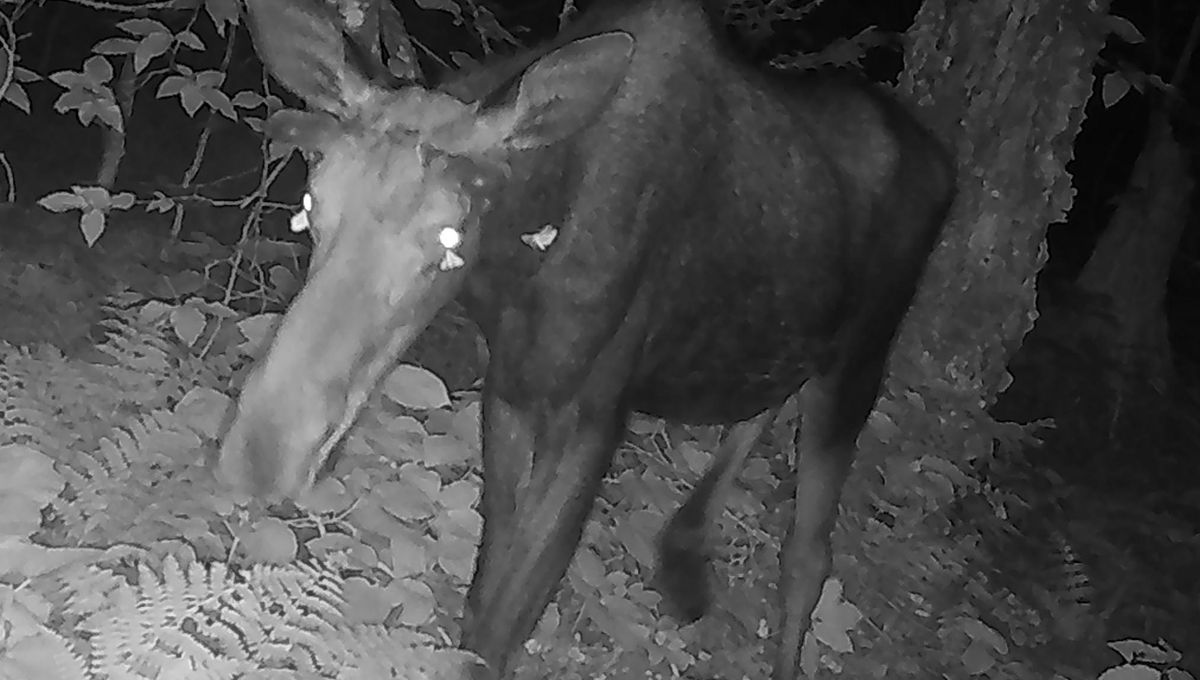
Previous observations have seen butterflies and moths drinking the tears of animals such as turtles and crocodiles in the Amazon or other tropical areas. However, in Green Mountain National Forest, USA, a camera trap has captured images of some moths slurping up the tears of a moose in only the second record of this behavior farther north. 

The rest of this article is behind a paywall. Please sign in or subscribe to access the full content.

Most species of butterflies and moths typically get their nutrients from the nectar of flowers. Some supplement this diet by acquiring other nutrients and minerals from soil, dead animals, or even human sweat in a behavior known as “puddling”. Apart from one record of a moth drinking the eye secretions of a horse, no observed lepidoptera have been seen drinking eye secretions from an animal outside of the tropics – until now. The behavior of drinking tears or eye secretions is known as lachryphagy.

A trail camera captured 80 images of a bull moose (Alces americanus americanus) with moths on its face drinking its tears. The images were taken between 1:44 am and 1:48 am on June 19, 2024. What is remarkable is that these 80 images are the only ones showing lachryphagy out of more than 247,000 images taken of moose behavior across nearly 500 sites in Maine, Massachusetts, New Hampshire, and Vermont. 


Both the moose being drunk from and the moths doing the drinking represent new species in which the behavior is known to occur. While the moth species couldn’t be exactly identified, experts think that based on the size and shape from the images, the species likely belongs to the family Geometridae. 

The team acknowledge that while this is a very rare behavior, the moths could act as a vector for disease transmission – such as keratoconjunctivitis, which can cause eye lesions and have significant health impacts for moose. However, moths have not been documented spreading diseases in other species from tear-drinking, so the possibility remains fairly remote. 

The study is published in Ecosphere.

Deborah Bloomfield
Deborah Bloomfield

Related posts:

  1. Homebuilder Berkeley warns of construction cost inflation, supply chain issues
  2. Factbox-What is Lebanon’s Hezbollah?
  3. Genetic Studies Rediscover Human Populations In Africa Thought To Be Lost
  4. Michelangelo May Have Painted An Unusual Cancer Case In The Sistine Chapel

Source Link: For The First Time, Moths Have Been Captured On Camera Feeding On Moose Tears

Filed Under: News

Primary Sidebar

  • US Just Killed NASA’s Mars Sample Return Mission – So What Happens Now?
  • Art Sleuths May Have Recovered Traces Of Da Vinci’s DNA From One Of His Drawings
  • Countries With The Most Narcissists Identified By 45,000-Person Study, And The Results Might Surprise You
  • World’s Oldest Poison Arrows Were Used By Hunters 60,000 Years Ago
  • The Real Reason You Shouldn’t Eat (Most) Raw Cookie Dough
  • Antarctic Scientists Have Just Moved The South Pole – Literally
  • “What We Have Is A Very Good Candidate”: Has The Ancestor Of Homo Sapiens Finally Been Found In Africa?
  • Europe’s Missing Ceratopsian Dinosaurs Have Been Found And They’re Quite Diverse
  • Why Don’t Snorers Wake Themselves Up?
  • Endangered “Northern Native Cat” Captured On Camera For The First Time In 80 Years At Australian Sanctuary
  • Watch 25 Years Of A Supernova Expanding Into Space Squeezed Into This 40-Second NASA Video
  • “Diet Stacking” Trend Could Be Seriously Bad For Your Health
  • Meet The Psychedelic Earth Tiger, A Funky Addition To “10 Species To Watch” In 2026
  • The Weird Mystery Of The “Einstein Desert” In The Hunt For Rogue Planets
  • NASA Astronaut Charles Duke Left A Touching Photograph And Message On The Moon In 1972
  • How Multilingual Are You? This New Language Calculator Lets You Find Out In A Minute
  • Europa’s Seabed Might Be Too Quiet For Life: “The Energy Just Doesn’t Seem To Be There”
  • Amoebae: The Microscopic Health Threat Lurking In Our Water Supplies. Are We Taking Them Seriously?
  • The Last Dogs In Antarctica Were Kicked Out In April 1994 By An International Treaty
  • Interstellar Comet 3I/ATLAS Snapped By NASA’s Europa Mission: “We’re Still Scratching Our Heads About Some Of The Things We’re Seeing”
  • Business
  • Health
  • News
  • Science
  • Technology
  • +1 718 874 1545
  • +91 78878 22626
  • [email protected]
Office Address
Prudour Pvt. Ltd. 420 Lexington Avenue Suite 300 New York City, NY 10170.

Powered by Prudour Network

Copyrights © 2026 · Medical Market Report. All Rights Reserved.

Go to mobile version