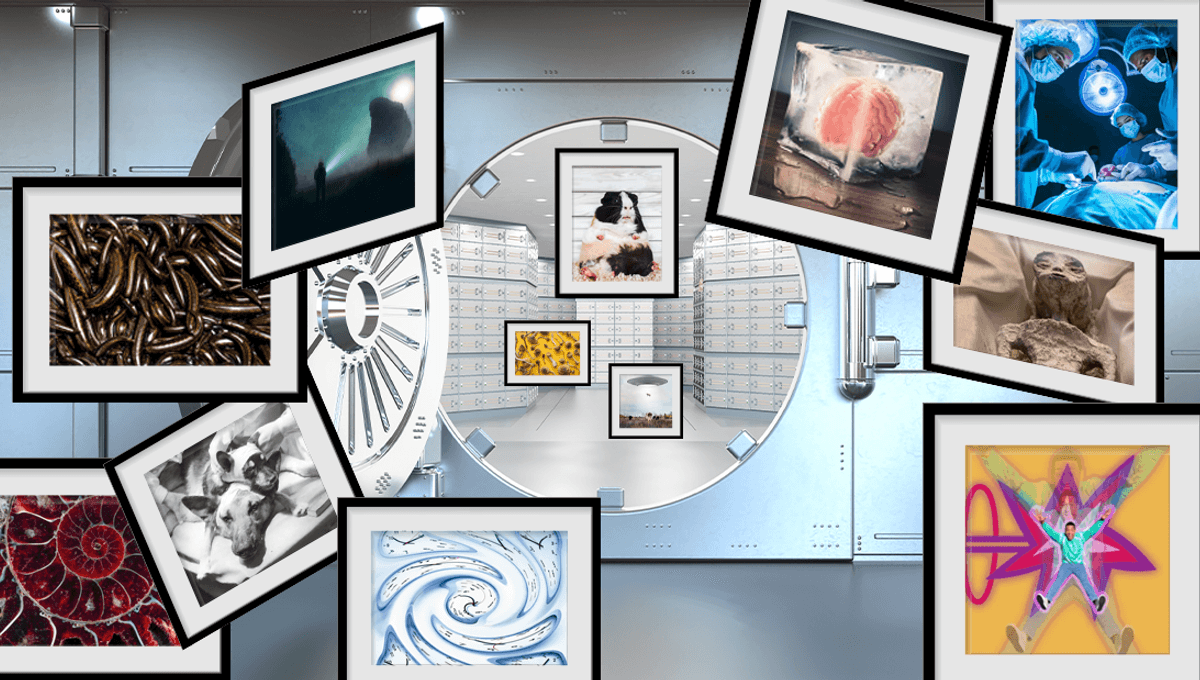
Back in January 2025, we launched the Vault with the first collection of deep dive articles into the weird and wonderful. Like some digital cabinet of curiosities, we’ve now accumulated a rare collection of unusual but revealing stories touching on the absurd, the worrying, the whimsical, and the weirder aspects of our world, science, and human experience.
We’ve gone from exploring deep problems with popular ideas like the Simulation Hypothesis or the limitations of cryonics as a way to preserve bodies, to tussling with lesser-known medical case studies and excavating scientific beliefs of the distant past.
We’ve certainly covered a lot of ground; so, as we approach the Vault’s first anniversary, I thought I’d take the opportunity to revisit some of the stories that helped make it so beautifully strange.
But where to start? I guess the first place is at the beginning. In January, the Vault opened its doors with an exploration of a popular sci-fi theme: shrink rays. But rather than looking at the angle of “could it be possible in the future?”, we decided to look at the impacts such a process would have on the human body. To put it simply, the outcome is messy for everyone involved.
But while this little piece dealt with a hypothetical situation, it offers great insights into the fundamental physical and biological factors that dictate why our bodies are the sizes they are and how things go wrong if you interfere with that reality.
In particular, to work, a shrink ray would need to overcome the very fixed size of atoms in our bodies, which would not only require a staggering amount of energy to achieve, but would also risk transforming the elements and isotopes we contain. At the same time, the energy required to do this would likely just cook the person being targeted.
And that’s just the physics concerning this impossible goal – you should read more if you want to know what would happen to our cells and metabolism if we were to become tiny!
As time went on, the Vault moved on from shrinking bodies to the ever-popular concepts and ideas associated with head-shrinking, i.e. psychology. Towards the end of January, we turned our attention to the subject of anger and how best to deal with it.
For decades, western societies have encouraged the idea that anger should be “vented” in some way (a process known as “catharsis”). Perhaps this involves screaming into a pillow when everything feels too much or maybe taking out all your rage on a punching bag at a gym. Or, in some cases, you may even pay money to swing a bat or hammer in a so-called Rage Rooms – purpose-built spaces where you can wreak havoc to let out your frustrations.
It’s a common practice for many people, but is it actually good for us? The short answer is no, not really. In fact, the whole premise, which rests on some pretty dodgy evidential grounds, has mostly been popularized and perpetuated by influential books and TV personalities since the 1970s. Rather than helping us deal with anger, seeking catharsis through venting behavior may actually make us angrier or more prone to aggression in the future.
Instead, research conducted over the last few decades has found it is better to put out the fires of anger (reduce physical arousal) rather than feed them through catharsis. There are some tried and tested ways to do it as well.
Humans are incredibly clever creature, but our minds can be a bewildering mix of impressive intelligence, odd psychology, and pretty weird beliefs. For instance, there are various medical reports of people who have developed the delusional belief that they are living in their own reality TV show, similar to the 1990s film, The Truman Show.
Although there is no formal recognized disorder underpinning this delusion, several case studies have observed it and identified common themes, such as the belief that the person is living in an artificial environment surrounded by people who are just playing a part. It could be the outcome of culturally shaped delusions (particularly depersonalization – where people feel separate from reality – persecution, and grandiose delusions).
It will be curious to see if such delusional beliefs and experiences become more common in the future, and whether technology – especially near-constant surveillance culture and the increase in digitally augmented experiences – can erode our sense of what is real and what is fantasy.
Belief is a fascinating subject and one the Vault has taken seriously. Rather than simply examining fringe beliefs that exist online and across the world, we’ve tried to ask deeper questions about why we believe the things we do.
This is an important distinction, because it helps us understand the various factors – be they psychological, cultural, or historical – that shape the internal lives of many people, without simply dismissing unusual beliefs as merely stupid. There’s always a story behind these things, and I think we demonstrated this well with our deep dives into the forces shaping the belief in things like giants, aliens, alien abductions, and even the Loch Ness Monster.
And of course, we wouldn’t be IFLScience if we did not put some serious effort into the various weird things people have done to their own bodies. The Vault is not just a repository for curious tales about the world, but also surreal stories concerning terrifying medical mishaps or sexual misadventures. To say we set out to get to the bottom of these penetrating questions would be a pun too far, but we learned a lot from the journey – and, well, if we have to suffer from the knowledge we gained then so should you!
It really has been a great experience helping to put together the stories that rest in the Vault, and we’re extremely grateful to our readers who appreciate them. Thank you for joining us on this year of exploration, and I look forward to seeing what other curiosities we can find in 2026.

Source Link: From Shrink Rays And Simulated Universes To Medical Mishaps And More: The Stories That Made The Vault In 2025
