• Email Us: [email protected]
  • Contact Us: +1 718 874 1545
  • Skip to main content
  • Skip to primary sidebar

Medical Market Report

  • Home
  • All Reports
  • About Us
  • Contact Us

Galápagos Rail Returns To Floreana Island After 200 Years – Or Was It Hiding There All Along?

February 28, 2025 by Deborah Bloomfield

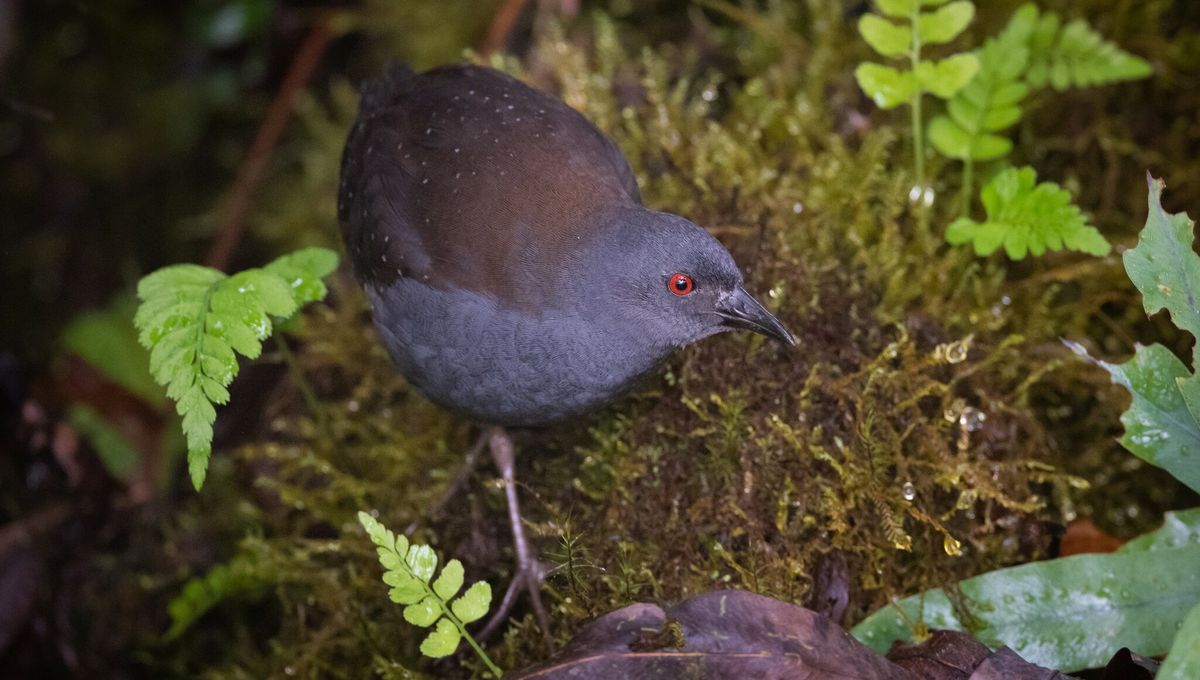
It’s surprisingly easy to lose a species: from golden moles to tap-dancing spiders, some species are so secretive they are seen once and then never heard from again. The same was true for the Galápagos rail, a shy bird species seen on Floreana Island by Charles Darwin in 1835 and then never again – that is, until now.

ADVERTISEMENT

The Galápagos Rail (Laterallus spilonota) is a ground-dwelling species that is extremely vulnerable to predators. The species is found only on the Galápagos Islands, where it hides in dense vegetation. The species is listed as Vulnerable on the IUCN Red List but has had local extinctions of different islands within the Galápagos archipelago. 

A large-scale restoration project was launched for Floreana Island 2 years ago. The project aimed to remove invasive species – especially rats and feral cats – that had severely impacted the population of Galápagos rails, which were mainly believed to be extinct on the island. Because the birds are ground-dwelling, they are also vulnerable to habitat disturbance by goats and pigs. 

The project had quick results, and species such as rails and cactus finches began to reappear on nearby Pinzon Island after the invasive species were removed. Now, the rails are back on Floreana.

“The rediscovery of the Galápagos Rail confirms what we’ve seen on islands worldwide—remove the invasive threats, and native species can recover in remarkable ways,” said Paula Castaño, Island Conservation’s Conservation Impact Program Manager, Reintroduction and Risk Mitigation, in a statement.

On Floreana Island, teams of rangers have recorded the presence of the rails in three different areas, all of which were away from human habitation and agriculture. The findings of these birds include one photograph, two visual observations, and six acoustic records. 

ADVERTISEMENT

“This is an incredible win for Floreana, and fuels our excitement about what other native species might resurface as the island continues its journey toward ecological recovery.” continued Castaño.

Currently, scientists are trying to work out the genetics of the Floreana population. Did they remain unseen for 190 years, or did they birds manage to self-reintroduce on the island from a nearby population? 

The team hopes to introduce more Galápagos rails onto the island to boost the existing population as well as 11 more locally extinct species. 

Deborah Bloomfield
Deborah Bloomfield

Related posts:

  1. Russia arrests top cybersecurity executive in treason case
  2. Is LK-99 A Superconductor Or Not? What To Know About Recent Superconductor Claims
  3. The Mystery Of The Oldest Mummy In Africa
  4. Incredibly Rare Footage Of Bigfin Squid 3,300 Meters Deep In The Pacific

Source Link: Galápagos Rail Returns To Floreana Island After 200 Years – Or Was It Hiding There All Along?

Filed Under: News

Primary Sidebar

  • Why Carl Sagan Was Way Ahead Of His Time And The Legacy He Left Behind
  • Why Were Pompeii Victims All Wearing Thick Woolly Cloaks In August?
  • We May Finally Know What Causes These Bizarre Bright Blue Cosmic Flashes
  • What’s The Biggest Rock In The World?
  • There Is A Very Simple Test To See If You Have Aphantasia
  • Bringing Extinct Animals To Life: Is Artificial Intelligence Helping Or Harming Palaeoart?
  • This Brilliant Map Has 3D Models Of Nearly Every Single Building In The World – All 2.75 Billion Of Them
  • These Hognose Snakes Have The Most Dramatic Defense Technique You’ve Ever Seen
  • Titan, Saturn’s Biggest Moon, Might Not Have A Secret Ocean After All
  • The World’s Oldest Individual Animal Was Born In 1499 CE. In 2006, Humans Accidentally Killed It.
  • What Is Glaze Ice? The Strange (And Deadly) Frozen Phenomenon That Locks Plants Inside Icicles
  • Has Anyone Ever Actually Been Swallowed By A Whale?
  • First-Known Instance Of Bees Laying Eggs In Fossilized Tooth Sockets Discovered In 20,000-Year-Old Bones
  • Polar Bear Mom Adopts Cub – Only The 13th Known Case Of Adoption In 45 Years Of Study At Hudson Bay
  • The Longest-Running Evolution Experiment Has Been Going For 80,000 Generations
  • From Shrink Rays And Simulated Universes To Medical Mishaps And More: The Stories That Made The Vault In 2025
  • Fastest Cretaceous Theropod Yet Discovered In 120-Million-Year-Old Dinosaur Trackway
  • What’s The Moon Made Of?
  • First Hubble View Of The Crab Nebula In 24 Years Is A Thing Of Beauty… With Mysterious “Knots”
  • “Orbital House Of Cards”: One Solar Storm And 2.8 Days Could End In Disaster For Earth And Its Satellites
  • Business
  • Health
  • News
  • Science
  • Technology
  • +1 718 874 1545
  • +91 78878 22626
  • [email protected]
Office Address
Prudour Pvt. Ltd. 420 Lexington Avenue Suite 300 New York City, NY 10170.

Powered by Prudour Network

Copyrights © 2025 · Medical Market Report. All Rights Reserved.

Go to mobile version