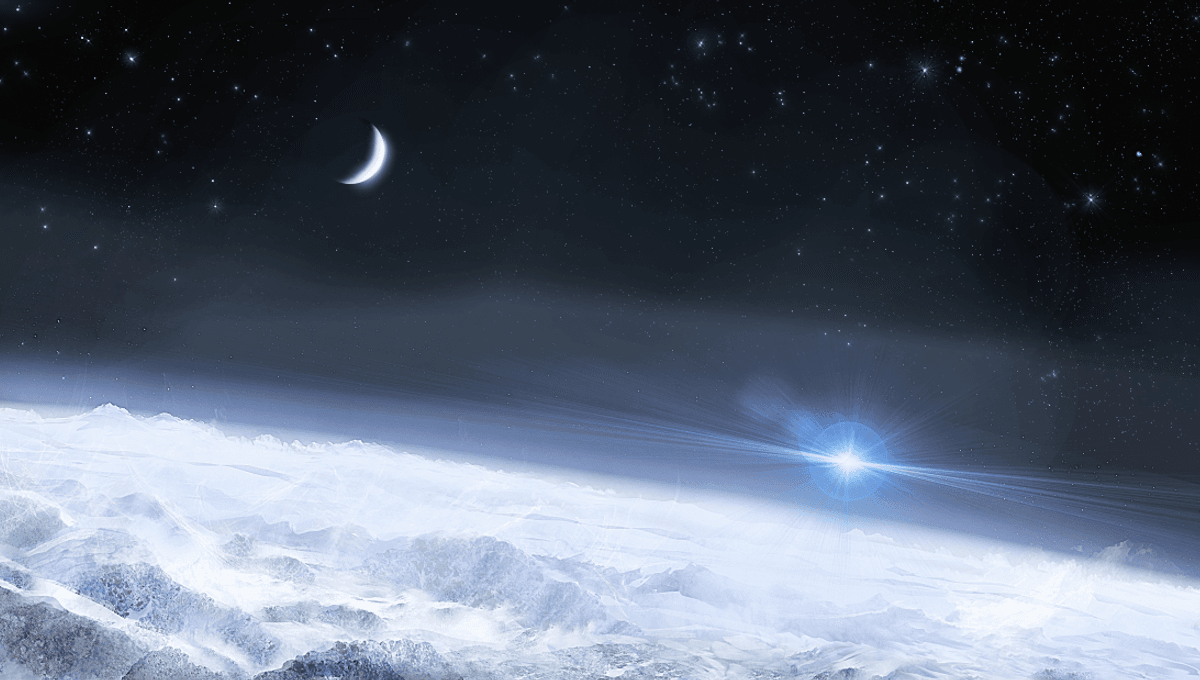
Earth was a very different place during its Cryogenian period, around 700 million years ago. It was covered head-to-toe in kilometers-deep dice as huge frozen rivers churned across the planet’s rocky surface. Now, new research has described how the destructive power of these ancient glaciers may have set the stage for life by acting like giant bulldozers that freed up minerals from the Earth’s crust.
ADVERTISEMENT
“When these giant ice sheets melted, they triggered enormous floods that flushed minerals and their chemicals, including uranium, into the oceans,” said lead study author Professor Chris Kirkland in a release. “This influx of elements changed ocean chemistry, at a time when more complex life was starting to evolve.”
“This study highlights how Earth’s land, oceans, atmosphere and climate are intimately connected – where even ancient glacial activity set off chemical chain reactions that reshaped the planet.”
Snowball Earth
There was a time when Earth didn’t look blue, but white. The Cryogenian saw two extreme global glaciation events lock the surface in ice from the poles to the equator, writes Kirkland for The Conversation. At least, that’s the story told by trace evidence in sedimentary rocks that formed at the time.
Earth’s snowy hue came to an end when volcanic activity pumped carbon dioxide into the atmosphere, warming the icy planet abruptly. The sea rose with a fresh influx of nutrients that altered ocean chemistry, potentially setting the stage for complex life to evolve. There may, however, have been another big contributor that altered the ancient Earth’s oceans.
Bulldozing the planet
Kirkland and colleagues looked at sections of rock that formed during the snowball Earth’s meltdown, creating a visual timeline of how the Earth’s rocky surface was faring under the influence of kilometers-deep glaciers that coursed across the planet. They found that as the ice ground the Earth down, the crust was being exposed at deeper and older levels. When the big melt washed in, it carried with it the exposed minerals that had once been locked into the surface, and flushed them into the ocean.
ADVERTISEMENT
This massive influx of minerals and the resulting shift in ocean chemistry may have been a pivotal moment in Earth’s history that enabled the evolution of complex life. High time we give thanks to ancient mega-glaciers, then, but Kirkland also emphasizes that this key event holds valuable lessons in the age of human-driven climate change.
“This research is a stark reminder that while Earth itself will endure, the conditions that make it habitable can change dramatically,” he said. “These ancient climate shifts demonstrate that environmental changes, whether natural or human-driven, have profound and lasting impacts.”
“Understanding these past events can help us better predict how today’s climate changes might reshape our world.”
ADVERTISEMENT
The study is published in the journal Geology.

Source Link: Glaciers Pulverized Earth’s Surface 700 Million Years Ago, Setting The Stage For Complex Life
