• Email Us: [email protected]
  • Contact Us: +1 718 874 1545
  • Skip to main content
  • Skip to primary sidebar

Medical Market Report

  • Home
  • All Reports
  • About Us
  • Contact Us

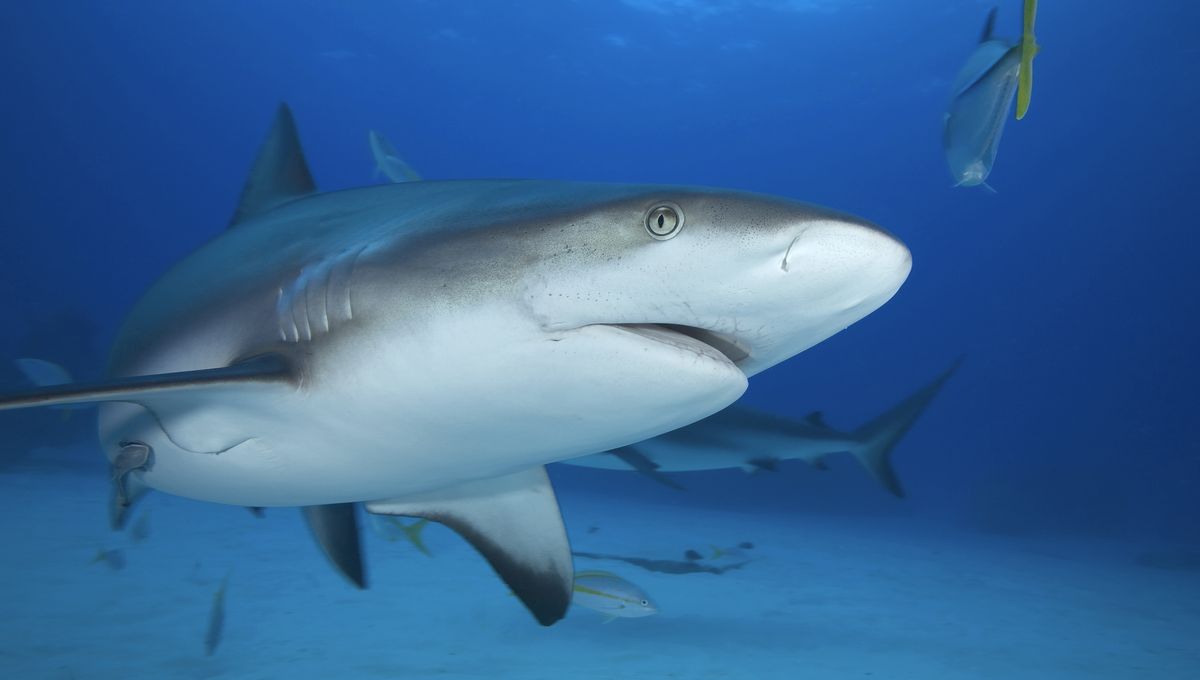
Grey Reef Sharks Caught Napping, Changing What We Know About How They Breathe

December 16, 2023 by Deborah Bloomfield

If one of us humans was found having a cheeky nap, there probably wouldn’t be a whole scientific study on it. But for sharks, getting caught snoozing is an entirely different matter, especially when some species need to keep moving in order to keep breathing, lest they end up napping for eternity. This was thought to be the case for gray reef sharks, until researchers encountered them sleeping under reef ledges in Seychelles.

Biologists have historically considered gray reef sharks as ram ventilators, meaning they have to “ram” oxygen-rich water over their gills to breathe. “On routine survey dives around D’Arros we found grey reef sharks resting under coral reef ledges,” said Dr Robert Bullock, the director of research at the Save Our Seas D’Arros Research Centre (SOSF-DRC) in Seychelles and co-author of a study describing the finding, in a statement. 

Advertisement

“This is not something we believed they could do. The grey reef shark has been considered a ram-ventilating species, unable to rest, so to find these ones resting turns our fundamental understanding of them on its head.”

So if the sharks aren’t using ram ventilation to breathe, what are they using instead?


Researchers believe the evidence points toward buccal pumping, which would involve the sharks actively pumping water over their gills whilst stationary, and it’s thought they could do this for at least 40 minutes at a time. Supporting this theory, divers observed slight lower jaw movements in the resting sharks. They also found sharks facing in different directions whilst at rest, suggesting they were not relying on currents to ram water over their gills.

Advertisement

This discovery, the team believes, opens up a whole host of other questions. As Save Our Seas CEO and study author Dr James Lea explained: “It’s key to understanding how they use their environment and also how this may change in response to shifts in environmental conditions. How important is this rest, or possible sleep, for the sharks? And what’s the impact on them if they can’t get that rest if conditions change, such as oxygen levels rising or falling due to a changing climate?”

Until those questions are answered, the researchers hope the study will encourage future research and a re-examination of our existing understanding of sharks. “I hope that these findings serve as a reminder of how much we still do not know and how exciting that is. Science is about being wrong quite a lot. And that’s OK,” said Bullock.

The study is published in the Journal of Fish Biology.

Deborah Bloomfield
Deborah Bloomfield

Related posts:

  1. Facebook questions British watchdog’s authority to order Giphy sale
  2. S.Africa’s Zuma seeks to replace prosecutor in arms trial
  3. Indonesia’s new carbon tax signals higher power costs amid calls for clarity
  4. Hot As The Sun? People Are Still Confused About The Titan Implosion

Source Link: Grey Reef Sharks Caught Napping, Changing What We Know About How They Breathe

Filed Under: News

Primary Sidebar

  • US Just Killed NASA’s Mars Sample Return Mission – So What Happens Now?
  • Art Sleuths May Have Recovered Traces Of Da Vinci’s DNA From One Of His Drawings
  • Countries With The Most Narcissists Identified By 45,000-Person Study, And The Results Might Surprise You
  • World’s Oldest Poison Arrows Were Used By Hunters 60,000 Years Ago
  • The Real Reason You Shouldn’t Eat (Most) Raw Cookie Dough
  • Antarctic Scientists Have Just Moved The South Pole – Literally
  • “What We Have Is A Very Good Candidate”: Has The Ancestor Of Homo Sapiens Finally Been Found In Africa?
  • Europe’s Missing Ceratopsian Dinosaurs Have Been Found And They’re Quite Diverse
  • Why Don’t Snorers Wake Themselves Up?
  • Endangered “Northern Native Cat” Captured On Camera For The First Time In 80 Years At Australian Sanctuary
  • Watch 25 Years Of A Supernova Expanding Into Space Squeezed Into This 40-Second NASA Video
  • “Diet Stacking” Trend Could Be Seriously Bad For Your Health
  • Meet The Psychedelic Earth Tiger, A Funky Addition To “10 Species To Watch” In 2026
  • The Weird Mystery Of The “Einstein Desert” In The Hunt For Rogue Planets
  • NASA Astronaut Charles Duke Left A Touching Photograph And Message On The Moon In 1972
  • How Multilingual Are You? This New Language Calculator Lets You Find Out In A Minute
  • Europa’s Seabed Might Be Too Quiet For Life: “The Energy Just Doesn’t Seem To Be There”
  • Amoebae: The Microscopic Health Threat Lurking In Our Water Supplies. Are We Taking Them Seriously?
  • The Last Dogs In Antarctica Were Kicked Out In April 1994 By An International Treaty
  • Interstellar Comet 3I/ATLAS Snapped By NASA’s Europa Mission: “We’re Still Scratching Our Heads About Some Of The Things We’re Seeing”
  • Business
  • Health
  • News
  • Science
  • Technology
  • +1 718 874 1545
  • +91 78878 22626
  • [email protected]
Office Address
Prudour Pvt. Ltd. 420 Lexington Avenue Suite 300 New York City, NY 10170.

Powered by Prudour Network

Copyrights © 2026 · Medical Market Report. All Rights Reserved.

Go to mobile version