Courtship, mating behaviors, and parental care of offspring are some of the most energetically draining moments in the life of any animal species but the cost is usually outweighed by the fitness benefit. It, therefore, seems counterproductive that some species that provide parental care to their offspring sometimes cannibalize their young. In the eastern hellbender salamander, a new study was carried out looking at how often whole clutches of salamander eggs are cannibalized by their parents.
Cannibalism of offspring occurs in a number of species across the animal kingdom, including fish, rodents, primates, and birds. It is particularly prevalent in species with high levels of paternal parental care, where males are responsible for guarding the nests or eggs to increase the likelihood of the young surviving.
However, consuming offspring could be of greater benefit to the parent when the energetic cost of parental care outweighs the benefit of the offspring’s survival and therefore shifts resources from current to future reproduction efforts.
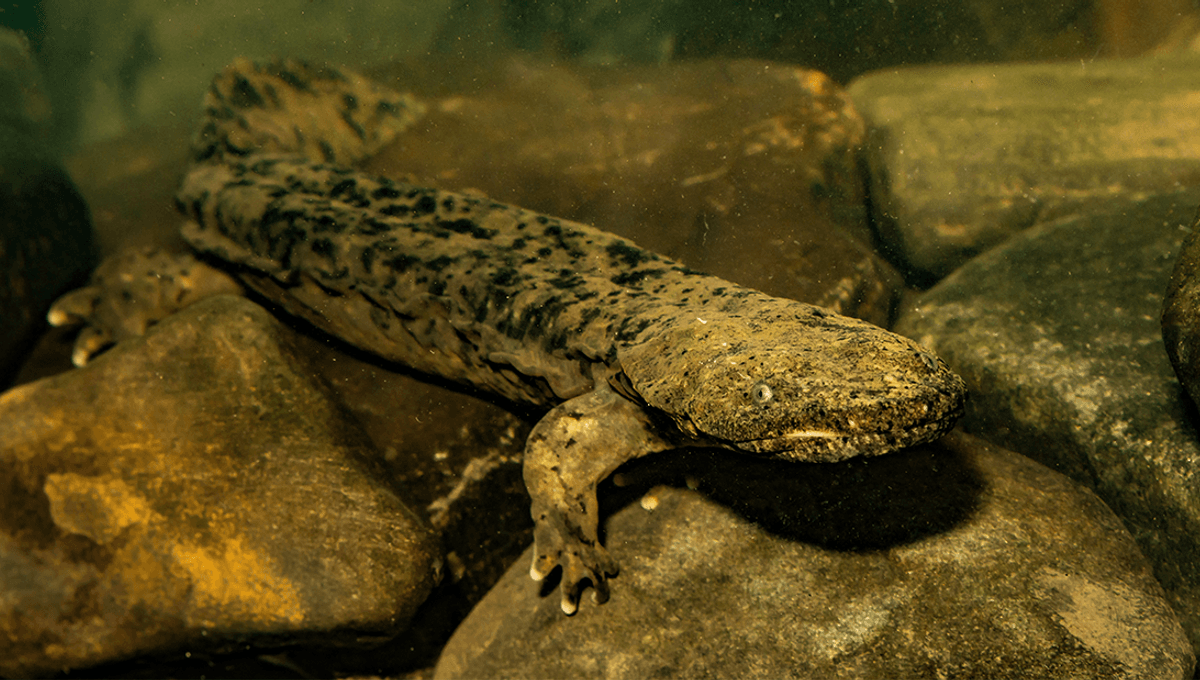
Eastern hellbender salamanders are fully aquatic amphibians that live in the streams within the eastern and central states of America. They have long lifespans that can be up to 25 years and are among one of the largest species of amphibian in the world. They are also the official amphibian for the state of Pennsylvania.
However, their populations have been experiencing a severe decline and some subspecies of eastern hellbender are endangered. The reasons for this decline are thought to be because of decreasing habitat quality including changes in water chemistry and loss of forest cover. This overall declining population also heavily skews towards older individuals, particularly in smaller groups.
In this study, the team set out 182 artificial nests at 10 sites over an 8-year period. The nests were placed at different gradients in an upstream forest.
They found that both the amount of forest cover and the cannibalism by the males were related to nest site failures. This was not because the males had poor body conditions and therefore were consuming the young out of nutritional need or even the low reproductive value of a small clutch. Instead, the team found that larger clutches at nest sites that were degraded had the highest chance of being cannibalized. One reason for this is that the water chemistry could influence the chances of the eggs hatching or even influence the health of the parents.
While the researchers suggest that parental cannibalism of whole clutches might be a normal part of hellbender life, they suggest that this is happening too often in degraded habitats.
The results show that only 14 percent of nests failed due to cannibalism in areas with sufficient tree cover, whereas 44 percent of nests failed in areas without sufficient cover. The team think that this chronic nest failure because of low riparian forest cover could be contributing to the declining population numbers of this species and the aging population.
They stress the importance of pinpointing the causes within streams that lead the parent to totally consume nests in this way, as this will inform strategies to combat the declining populations.
The paper is published in The American Naturalist.

Source Link: Hellbender Salamander Dads Keep Cannibalizing Their Offspring – Now We May Know Why
