Most big accelerators tend to dedicate some of their resources to dauntingly hard science problems and the companies taking them on… but for SOSV’s IndieBio, it’s the primary focus.
Last time we checked in with IndieBio, their companies were working on everything from lozenges to treat gum disease, to vertical farms for the sustainable production of shrimp, to saving the bees.
While IndieBio’s next Demo Day is still a few months out, the companies in their next New York batch have been selected and are already chipping away at a whole new set of problems — things like battling opioid addiction, improving crop yields amidst climate change, or making better/safer leather alternatives from stuff we’d otherwise throw away.
I hopped on a call with IndieBio NY’s Chief Science Officer Julie Wolf, who told me a bit about what each company in this latest New York batch is working on. Here’s my understanding of each company in the new class, in alphabetical order:
Ceragen: Making a microbe-based “inoculant” that improves crop production in hydroponic greenhouses, using beneficial bacteria to help plants increase heat resistance, battle root rot, and more. The team says they’ve seen yield increases of up to 20% in tomatoes (think more fruit, not bigger fruit.)
HelEx: Building what they call an “an intelligent GPS” to enable faster, safer development of CRISPR-based gene therapies.
Inso Bio: Built by a team out of Cornell, Inso is working on dramatically simplifying the process of genomic sequencing and sample processing — taking what Wolf calls a “multi-step, high touch” process that “requires a lot of lab personnel” (and is thus often backlogged for months within any given lab) and turning it into a piece of hardware that handles it all.

Image Credits: Kinoko
Kinoko Labs: Whole cut meat alternatives (think steaks and cutlets instead of nuggets and burger patties) grown/made from fungus, using fungal mycelium to create a meat-alternative with taste/textures more like that of actual meats. The company currently has both chicken and steak prototypes in development.
Kutanios: Working on a peptide-based product that, when applied topically, would help prevent damage/aging caused by the sun — all while being biodegradable and safe for the environment. One of the founders is Dr. Norman Miller, a scientist best known for co-authoring a 1975 hypothesis on HDL’s role in protecting against heart disease — in other words, for discovering that there’s such a thing as “good” cholesterol.
Kyomei: Wolf tells me that this team is working on growing meat proteins (myoglobin) within plants at scale, which could be extracted and added to plant-based meat-alternatives to “give them that umami taste.”
Pannex Therapeutics: Looking to combat the ever-worsening opioid epidemic, Pannex is working on what it expects to be a non-addictive painkiller. The company’s website says its drug (PNX3) “docks to Pannexin 1 channel and blocks it” — regulating one of the ways the brain processes excess ATP as pain.
RizLab Health: Antibiotic-resistant “superbug” bacterial infections are terrifying, and the overuse of unnecessary antibiotics only makes the situation worse. A spin-off out of Rutgers, RizLab is working on in-office/portable machine for rapid CBC tests that can help a doctor quickly determine if an infection is viral or bacterial — thus, hopefully, halting the tendency to throw antibiotics at everything.
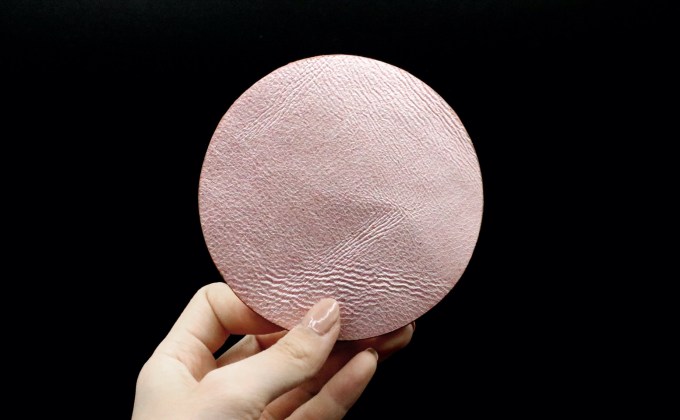
Image Credits: TomTex
TômTex: Leather alternatives made from seafood waste — they’re turning things like crab or shrimp shells into chitosan, a biodegradable polymer which they’re then able to turn into cheaper yet more sustainable alternatives to leather. The team has already won a number of awards from groups including LVHM (the holding co. behind companies like Louis Voitton, Fendi, Christian Dior, etc.)
Upright: Working on “oatmilk as nutritious as dairy”, using concentrated oat protein (rather than more commonly used things like pea protein or soy protein) to keep it hypo-allergenic.
Source Link Here’s all 10 companies from IndieBio’s latest New York cohort


Leave a Reply